
What Is Leverage Trading in Crypto
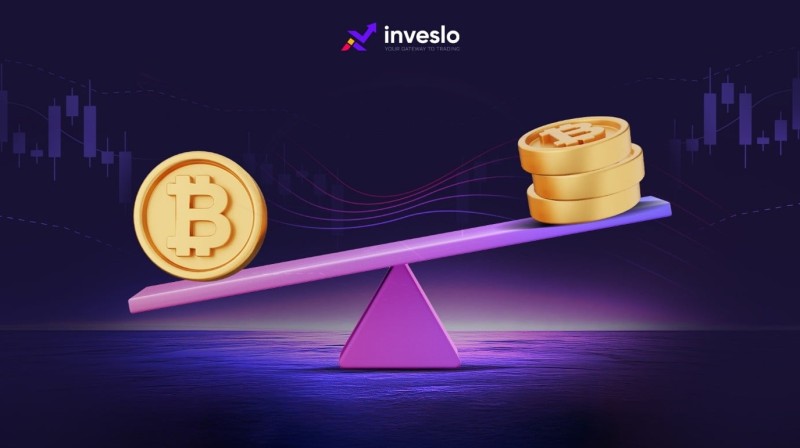
I want to talk about what makes the best crypto leverage trading platform USA worth your time. Leverage trading crypto is not free money. It is rented muscle. You borrow funds from an exchange to control a bigger position than your own cash allows. You put up a small amount called margin, and the platform lends you the rest to play the market.
In the US, this usually means trading perpetual futures or margin accounts. You are not always holding the coins. You are speculating on price moves. With 10x leverage, you can use $1,000 of margin to control a $10,000 position in pairs like BTC/USDT or ETH/BTC. The exchange lends you the $9,000. That borrowing is not free. You pay interest, so you can't keep the trade open forever.

The mechanics are simple to state but hard to live with. You deposit margin. The exchange applies a multiplier like 2x, 10x, or 125x. Profits and losses are based on the full position size. If you have $1,000 and use 10x, you control $10,000. A 5% move up gives you $500, which is 50% on your deposit. A 5% drop takes half your margin plus fees. At 100x, a 1% bad move deletes your collateral. Hey, don't skip this part. The math is small until it isn't.
Leverage is borrowed funds that help multiply purchasing power, but the cost is real and the risk is total.
Key Terms You Need Before Trading
Before you look for the best crypto leverage trading platform USA , you should know the words people throw around. Margin is the deposit you need to keep a position open. Leverage ratio is how much you borrow compared to that margin. Liquidation is the point where the exchange closes your trade because losses ate your collateral. In US crypto leverage trading, this happens automatic to protect the lender.
Core concepts
- Margin: your own capital posted as collateral
- Leverage ratio: scale of borrowing relative to margin
- Liquidation: forced close when loss hits collateral limit
- Funding payment: fee between longs and shorts in perpetual futures
The two main leveraged products are perpetual futures and margin accounts. Perpetual futures track an index price and do not expire. Funding payments move between longs and shorts to keep the contract near spot. Margin accounts let you borrow quote or base currency to trade the spot market. Interest is charged hourly or daily. Both are common on a crypto exchange leverage setup if you can access one.
How Leverage Trading Actually Works Step by Step
Here is the plain path. First, you deposit margin from your own funds. The exchange applies a multiplier to boost exposure. Your profit or loss is figured on the total position, not just your margin. A small adverse move can hurt a lot more than spot buying. That is the whole trick and the whole danger.
For example, a user places a 10x margin spot trade. They keep $100 as margin and open an order worth $1,000. The exchange lends $900. If price goes their way, they win big on the $100. If it slips, the $900 loan and the $100 can vanish fast. This is why most normal advice says margin trading is the riskiest form of trading and a strict no for beginners.
Margin trading is the riskiest form of trading; strict NO for beginners.
Rewards and Risks of Leverage
The rewards are real. You get amplified purchasing power from a small account. You can open larger lots, spread across pairs, and short in bear markets. The risks are also real. You can lose all margin in a flash dip. Losses are magnified. Liquidation can hit without warning. Funding rates eat profits. And the mental toll of watching a leveraged position is heavier than spot investing.
What you gain
- Amplified purchasing power from small balance
- Capital efficiency for larger position sizes
- Diversification across multiple pairs
- Ability to short during bear markets
What can burn you
- Total loss of margin during fast drop
- Magnified losses beyond spot exposure
- Liquidation and margin calls
- Funding rates and extreme volatility
One case from the source shows a trader using 5x on $10,000 of Bitcoin in a steady uptrend. A 5% move made $500. Another shows a trader using 10x on Ethereum. Bad news dropped the market 5% and the entire $1,000 margin was wiped by liquidation. Different leverage, different day, same brutal rule.
Trading Pairs Used for Leverage
Common pairs are BTC/USDT, ETH/USDT, BTC/USD, ETH/BTC, and other liquid altcoin pairs. Highly volatile low-liquidity altcoins bring more risk. If you are browsing what are the best crypto exchanges for this, check which pairs they list and how deep the order book is.
Bitcoin is the king of leverage. It has the most liquidity. A 5% move against 10x wipes collateral. Flash crashes trigger mass liquidations. Ethereum carries the same punch on leverage. A trader with 10x on ETH lost entire margin on a 5% drop after bad news. The coins are fine. The leverage is what bites.
US Rules Change the Game
You can leverage trade crypto, but the US rules are different. Most high-leverage international giants are off limits. Finding the best crypto leverage trading platform USA takes care, not luck. Coinbase is the most reliable regulated choice with 10x leverage and fees around 0.4% to 0.6%. Kraken is a staple but usually needs Eligible Contract Participant status. dYdX is a leading decentralized option with 20x and no middleman.
Kraken is based in San Francisco. It is the second-largest US exchange after Coinbase. For margin, US clients must self-certify as an Eligible Contract Participant under the Commodity Exchange Act. That means over $10 million in assets invested on a discretionary basis for an individual. Without that, no margin trading. Some source text says Kraken offers up to 5x and is good for US residents. Another note says US citizens can't use margin unless ECP. Both are included here because the conflict is real.
US regulatory environment is tightening, forcing clearer standards and risk disclosures for retail traders.
Global Platforms Vs US Access
For global traders, Binance is a gold standard with deep liquidity and up to 125x leverage. MEXC offers up to 500x on BTC and ETH with no-KYC for basic accounts. Bybit has a big following with up to 100x. OKX is favored for low maker fees. But US residents cannot use Binance margin. BitMEX is not available for US customers. Phemex does not cater to US residents. KuCoin is not specifically US restricted in the source.
Global names and limits
- Binance: top liquidity, up to 100x derivatives, US margin blocked
- Bybit: up to 100x, no KYC for high withdrawals, global focus
- MEXC: up to 500x BTC/ETH, no-KYC basic accounts
- BitMEX: up to 100x BTC, not for US customers
If you live in the US, your path is narrower. You can still use regulated venues or decentralized ones. A crypto trading app from a US-approved venue may give you 10x but not 100x. That is the trade-off. Less freedom, more paperwork, fewer blown accounts.
Best Crypto Margin Trading Exchanges Compared
The source lists several platforms with key features. Bybit is a specialized derivatives platform started in 2018 with over 10 million users. It offers up to 100x margin. No KYC for fiat. It has an insurance fund and a mobile app. Binance is the world's best for liquidity with up to 10x spot and 100x derivatives. US cannot use margin. Kraken supports BTC, ETH, USDT, XMR, BCH, EOS, XRP, LTC and more for margin with up to 5x for eligible users.
Exchange snapshots
- Bybit: up to 100x, insurance fund, mobile app, no KYC for fiat
- Binance: max liquidity, up to 100x derivatives, US margin blocked
- Kraken: up to 5x, US ECP needed, many supported tokens
- KuCoin: up to 10x spot, 100x derivatives, leveraged tokens
- CEX.io: up to 10x margin, FinCEN registered, margin not for US
CEX.io was founded in 2013 in London and is registered with FinCEN. Margin goes up to 10x. It is available in most US states but margin trading is not for US residents. That nuance matters. A platform can be present in the US but block the exact feature you want. When you scan crypto platforms usa , read the margin footnote, not just the homepage.
Prop Firms for US Traders
A crypto prop firm gives qualified traders funded capital to trade without risking personal funds. You buy a challenge account, show profit and risk control, then get a funded account with profit sharing. The crypto part runs 24/7 with different liquidity. Legitimate firms give direct connectivity to major exchange order books like ByBit or Binance.
The US scene shifted when regulatory pressure forced non-compliant operators out. Legitimate firms moved to MatchTrader, DXtrade, or direct exchange integration. Look for documented payout history, US compliance, exchange connectivity, drawdown enforcement, and real support. HyroTrader, BrightFunded, and FTMO are named as top options for US traders.
Top three prop firms
- HyroTrader: direct ByBit and Binance via CLEO, up to 1:100, payout 12-24h
- BrightFunded: up to $200k, crypto leverage 5:1, payout around 4h USDC
- FTMO: founded 2015, crypto CFD pairs, leverage 1:3 standard, US restrictions
A crypto proprietary trading firm provides funded capital without risking personal funds if you pass the eval.
HyroTrader starts at USDT 200,000 scaling to 1,000,000. Profit split is 70% to 90%. BrightFunded was established in 2023 in the Netherlands with accounts up to $200,000 and unlimited scaling. Profit splits run 80% to 100%. FTMO was founded in 2015 in Prague. Its OANDA partnership expanded US access but platform limits exclude MT4, MT5, and cTrader for US users. These are not your normal best brokers for crypto trading , but they show another road.
Brokers and Leverage for USA Traders
If you want high leverage through a broker, the US makes it tough. XBTFX is a crypto and CFD broker begun in 2019 with up to 200:1 crypto and 500:1 forex. It is not accessible in the USA. Afterprime was founded in 2018 with up to 1:100 forex and 1:3 crypto. Regulated US brokers like OANDA, IG, and Forex.com offer only up to 1:50 leverage with MT4 and bank funding.
A forum thread in the source shows a US trader seeking 1:500 leverage with MT4. Replies noted that 1:500 and "regulated" are mutually exclusive under real regulators. Only offshore entities offer that. Many stopped serving US clients. The takeaway is simple. If you are in the US, the lever you want may not be the lever you get. A gemini cryptocurrency app or similar US venue will be safe but capped.
Strategies for Safer Leverage Trading
Set your leverage level with care. Beginners should stick between 5x and 20x. High leverage leaves zero room for error. More volatile coins need lower leverage. Sustainable leverage trends toward 2x to 5x focused on macro moves. Use stop-loss orders to auto cut losses. Use take-profit to lock wins.
Risk tools to know
- Stop-loss: automatic cut at a price you set
- Take-profit: locks in gains at target
- Isolated margin: loss limited to one position
- Cross margin: whole account as collateral, can wipe all
Isolated margin limits loss to one trade. Cross margin uses your entire balance and can prevent quick liquidation but can also wipe the whole account. Trailing stops adjust as price moves. Insurance funds protect against hacks. Technical analysis helps too. RSI shows overbought. MACD spots trend. Moving averages show direction. Entry should be backed by data, not a hunch.
Use demo accounts, start small at 2x-3x, and never skip stop-loss.
Leverage With Bitcoin and Ethereum
Bitcoin is the undisputed king of leverage. It has the most liquidity. A 5% move against 10x wipes collateral. Flash crashes trigger mass liquidations. The step-by-step is pick a platform with depth, deposit, choose conservative 5x to 10x, analyze trend, place long or short, never skip stop-loss, take profits.
Ethereum tells the same story. A trader with 10x on ETH lost entire margin on a 5% drop after bad news. Kraken margin supported tokens include BTC, ETH, ETC, XTZ, DASH, REP, LTC, TRX, USDT, XRP, ADA, LINK, XMR, BCH, EOS, and USDC. If you open a coinbase trading account for US leverage, you will see a smaller set but cleaner rules.
DeFi and the Future of US Leverage
DeFi evolved with dYdX and Aave offering conditions with full custody. Dynamic liquidity pools recalibrate to volatility. Cross-chain margin lets you use ETH on mainnet as collateral for Solana or Arbitrum. Layer-2 dominance with ZK-rollups brings near-zero gas. Institutional DeFi gateways add KYC. Real-time proof of reserves is coming.
AI and automation are part of this. Bots do sentiment analysis and suggest ideal leverage based on volatility and history. Complex if-then order chains become normal. The shift is toward sustainable leverage. Pros use 2x to 5x. Fee rebates appear for lower leverage. Future may bring crypto derivatives inside banking and brokerage apps with limited secure leverage under US oversight.
What US traders can expect: less risk of exchange hack, less freedom for high-stakes gambles.
Psychology of Leverage Trading
Leverage amplifies profit and anxiety. Define your maximum pain, the percent of account you can lose. Detach from the screen. Journal emotions. Do mindfulness if it helps. Respect emotional capital as much as financial capital. A tradingview crypto brokers setup can show charts but not save your nerves.
The source is clear that the psychological toll of a leveraged position is higher than spot investing. You watch a bigger number move faster. That is not a skill issue. It is human wiring. If you can't sleep, lower the leverage or close the trade. No platform feature fixes a shaky hand.
Risk Management You Should Not Skip
Hey, pay attention here. Risk management is the only thing between you and zero. Stop-loss orders cut losses automatic. Take-profit locks wins. Isolated margin limits loss to one position. Cross margin can use entire account and wipe it. Trailing stops move with price. Insurance funds like SAFU protect against hacks, not against your own bad calls.
Standard tools
- Trailing stops that follow price
- Insurance funds for hack protection
- Isolated margin wallets per trade
- Strict daily loss limits
Practice on demo accounts from Bybit or MEXC. Start small at 2x to 3x. Educate on margin, liquidation, and ratio. Inveslo suggests steps: educate, choose platform, practice demo, start small, implement risk management, stay updated. If you use a coinbase trading stocks style account, the same rules apply even if the UI feels calm.
Frequently Asked Questions
Is crypto leverage trading safe for beginners? No. It is the fastest path to a zero balance. Use demo, keep below 5x. Which exchange offers highest leverage? MEXC up to 500x BTC/ETH. Binance and OKX up to 100x to 125x. Niche 1000x should be avoided. Can US residents legally trade with leverage? Yes but regulated. Global Binance and Bybit are blocked. Coinbase 10x and Kraken ECP are legal. dYdX decentralized 20x works.
Quick answers
- Cross vs isolated: isolated limits risk, cross can wipe whole account
- Prop firms: gray zone, most offshore, stick with proven payouts
- Margin call: alert to add funds or face liquidation
- Beginner leverage: 2x to 5x only
Can you lose more than initial? Potentially yes in extreme volatility despite auto-deleveraging. Best exchange to short? Binance and Bybit. Can Bitcoin be bought on margin? Yes on listed exchanges. Broker for USA 1:500? Not with real regulation. Offshore only, and many stopped US. Regulated OANDA, IG, Forex.com max 1:50. That is the wall US traders hit.
Margin call is an alert when margin account worth drops to maintenance margin; deposit or liquidation.
My Plain Take on Picking a Platform
I look for the best crypto leverage trading platform USA by starting with what I can legally use. If I am US-based, Coinbase or Kraken ECP are the clear on-ramp. If I qualify for a prop firm, HyroTrader or BrightFunded may fit. I skip any venue that promises 500x with no paper trail. The borrow is rented muscle. I want the lender to still be there tomorrow.
The source shows US state rules differ. New York, Hawaii, and Washington have extra limits. Some prop firms exclude residents. CFTC oversees crypto derivatives. FinCEN KYC is required. If a firm has no KYC, that is a compliance red flag for me. I would rather trade less than trust a ghost.
Cost of Leverage You Must Count
Borrowed money is never free. Exchanges charge hourly interest on margin loans or a funding fee in perpetual futures. These micro-costs add up and must be in your profit-and-loss math. A trade that looks green can be red after fees. The source is blunt about this. Include the cost before you size the position.
For perpetual futures, funding moves between longs and shorts to pin the contract to spot. In margin accounts, interest is hourly or daily. If you hold for days, the sum is not small. The best crypto leverage trading platform USA for you is the one where you understand the fee table without a calculator.
State and Tax Notes for US Traders
State-by-state rules matter. Washington, Hawaii, and New York have historical differences. Tax on prop profits is likely self-employment income with 1099-MISC or none and a 15.3% self-employment tax. Challenge fees run $499 to $999 for $100k and may be refundable or not. Monthly platform fees run $50 to $300. Stablecoin withdrawal is usually free.
Only about 7% of traders achieve payout in prop challenges. Master drawdown math, treat it as a risk management test, use position sizing tools, exploit unlimited time, study platform rules. That is the grind. The best crypto leverage trading platform USA is not the one with the wildest leverage. It is the one you can survive on.
US regulations are tough, and many brokers refuse US clients. That is the reality.








Comments on “What Makes the Best Crypto Leverage Trading Platform USA?”
No comments yet. Be the first to share your thoughts.