
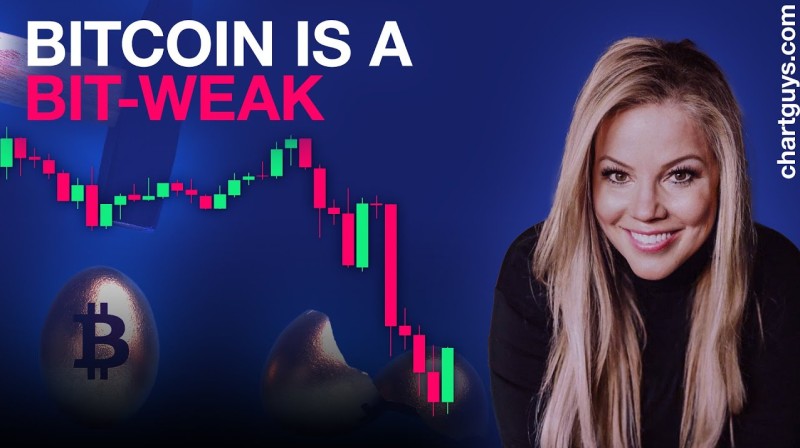
Bitcoin and the Stock Market
Bitcoin keeps showing up in stock market discussions. The question is simple: how does a digital asset with no dividends behave when treated like a financial instrument? You can look at price, mining cost, and expected return. Then you see how bubbles and boom-and-bust cycles affect trading. The debate over Bitcoin as money continues, and buying it with dollars is the same trade in reverse. Easier access for institutions has changed the market too.
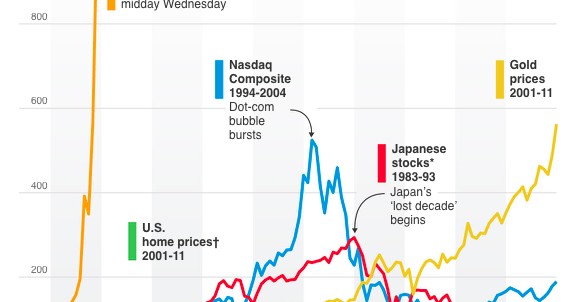
John Cochrane looked at Bitcoin in late 2017 and asked whether it was a bubble or just irrational crowd behavior. He saw it as a recurring financial-market phenomenon. You see similar patterns in some excess stock valuations, gold, commodities, and money itself. The first equation of asset pricing says price equals the expected present value of dividends. Bitcoin has no cash dividends, and Cochrane argued it never would. A positive price therefore requires either a noncash benefit from holding Bitcoin, an expected return lower than stocks and bonds, or an expectation that the price will keep rising.
Convenience Yield and Speculation
The noncash benefit is commonly described as convenience yield. A holder may accept a lower financial return because the asset is useful for transactions, privacy, capital movement, or avoidance of certain controls. The rising-price explanation is associated with a rational bubble. Cochrane treated a permanently rising price as implausible because Bitcoin's value would eventually exceed all U.S. wealth, all world wealth, all interplanetary wealth, and eventually the value represented by all atoms in the universe. In his view, a greater-fool or Ponzi theory must eventually break down or depend on irrational belief in another buyer.
Cash provides an analogy for convenience yield. Dollar bills pay no interest or dividends. People hold dollars because they are convenient for purchases, tolerate small losses, and reduce the amount held as interest rates rise. Higher rates lead people to hold less cash and visit ATMs less often. This creates a small overpricing of dollars associated with short-term investors, high turnover, and frequent trading. Some of cash's convenience yield comes from its use in tax evasion and illegal transactions such as drugs and bribes. Bitcoin has an analogous but stronger ability to move wealth beyond the reach of governments and financial intermediaries.
Cochrane listed ransomware, money laundering, and avoidance of capital controls, including moving money out of China, as examples. He also cited parallel benefits associated with offshore investing. These uses contain both harmful and beneficial effects, but the demand for the asset can exist regardless of whether its uses are socially beneficial.
Rational Bubble Theories and Critiques
Cochrane's characterization of a rational bubble as a price that rises forever was challenged in the discussion. One commenter said rational-bubble theory concerns the relationship between the expected rate of return and the growth rate of wealth or the economy, rather than the idea that every participant must be irrational. Under that interpretation, Bitcoin could survive as a rational bubble while representing a declining fraction of total wealth, particularly when other assets yield returns below the economy's growth rate.
Nick Rowe cited Samuelson's 1958 analysis of a fixed-supply, non-dividend-paying asset. In that model, its rate of return can equal population, GDP, or wealth growth, making it a form of sustainable Ponzi trade. Land also generates rent, however, and has lower liquidity. A question was also raised about a "semi-rational" bubble in which 99% of investors could earn positive expected returns at the expense of a smaller group that does not understand the bubble.
A more technical objection defined a rational bubble through mathematical finance. Under that usage, the discounted price can be a strict local martingale and therefore a strict supermartingale under an equivalent risk-neutral probability measure. The current price exceeds its risk-neutral discounted expected future price, but the process can be consistent with rational equilibrium behavior. This definition does not require the price to keep rising and does not require a sequence of irrational "greater fools."
Mining Cost and Supply Limits
A commenter proposed a framework that explicitly includes Bitcoin mining cost. The variables were BC for quantity of Bitcoin in circulation, P for market price of one Bitcoin in dollars per Bitcoin, C for extraction cost of one Bitcoin in dollars per Bitcoin, and RR for annual rate of return on Bitcoin as a percentage per year. The proposed return calculation treated the change in the value of the Bitcoin stock as income, subtracted the cost of newly mined coins, and divided the result by the beginning value of the Bitcoin stock. Its author argued that mining is an extraction industry and that its cost must be included when measuring return.
The 21-million supply limit produced conflicting descriptions. Some participants described it as a fixed supply because mining was expected to become difficult enough that 21 million coins would eventually be mined and no more could be issued. The return formula's author agreed that future supply was fixed but argued that much of it remained unmined and that extraction costs could increase as remaining coins became harder to produce. Others maintained that Bitcoin's supply was algorithmically determined and that changing it would require consensus among the thousands of participants operating and validating the software.
Supply and fork debates
- A hard fork that added coins would reduce scarcity relative to the original protocol
- The original chain could continue under its own rules
- One participant stated that a hard fork increasing supply would cause him to lose confidence in Bitcoin and sell
- Bitcoin and clones all depend on collective belief
One commenter said hard forks function as a form of distribution or dividend, challenging the description of Bitcoin as producing no income. This was a proposed analogy rather than a cash dividend. The original 21-million limit and any fork-created supplies therefore have to be distinguished when measuring return.
Bitcoin as Money or Financial Asset
Bitcoin's classification as money was disputed on several grounds. Supporters described it as a medium of exchange because Bitcoin can purchase ordinary goods and services just as dollars can. Critics responded that a token's name or format does not establish that it functions as currency. One commenter argued that Bitcoin's "financial asset" role had developed faster than its currency role because extreme volatility and apparent hyper-deflation make it difficult to use for everyday transactions.
Another commenter argued that real money stores labor across time and space. As an example, the U.S. minimum wage in 1964 was $1.25, or five silver quarters. The face value of those five coins would be described as poor wage value by 2017 standards, while their stated silver value of approximately $16 was said to be closer to a reasonable wage. In this view, labor used to produce the silver stored purchasing power better than the government-decreed unit. The commenter argued that proof of work attempts to reintroduce labor input, but claimed Bitcoin would fail as a store of value if substitution remained unrestricted and demand were primarily speculative.

Gold comparisons were also disputed. One commenter argued that gold exists independently of human approval, its supply is set by geology, and its issuance limit cannot be changed by a small group. Bitcoin, by contrast, depends on a human community that validates transactions and can disagree over its software. A reply pointed out that gold has industrial uses, is supplied through mining, recycling, and existing stocks, and has a market price that can vary considerably. The claim that "one ounce of gold is always worth one ounce of gold" was accepted, while the claim that gold's price never varies was rejected.
Minsky's Bubble Cycle
A November 2017 analysis by Lee Reiners, Ryan Clements, and Sean Semmler argued that cryptocurrency prices were in the euphoria phase of a bubble even though the technology and cryptocurrencies were likely to persist. The article used Hyman Minsky's five phases of an asset bubble: displacement, boom, euphoria, profit taking, and panic. Not every bubble fits the framework exactly, but it can be used to identify broad changes in price, participation, expectations, and leverage.
Minsky's five phases
- Displacement: A new technology or financial innovation leads investors to expect higher economic growth and profits
- Boom: Asset prices rise steadily and eventually outpace the fundamental improvements associated with the innovation
- Euphoria: Prices rise in a speculative frenzy because investors expect to sell to someone willing to pay more
- Profit taking: Sophisticated investors reduce positions and realize gains while less experienced investors continue buying
- Panic: Investors rush to sell, and leveraged positions can accelerate the decline
Distributed ledger technology was identified as the catalyst for the cryptocurrency bubble. Bitcoin was described as the first cryptocurrency and as relying on blockchain, a shared, visible ledger with a protocol for reaching consensus. The system promised to transfer value globally, nearly instantaneously, without conventional intermediaries. That ability eventually attracted traditional financial institutions to distributed ledger technology even while they remained cautious about cryptocurrency itself. By 2017, nearly every large financial institution was developing or using distributed ledger technology in at least part of its business.
Crypto Winters and Bull Markets
A 2022 article by Vladimir Kozlov described an extended crypto winter. Bitcoin had fallen by about two-thirds from its November 2021 all-time high of just over $69,000. Other major assets, including Ether, also declined. The total crypto market had lost roughly $2 trillion over more than six months. Traditional financial markets alternate between bull runs and bear markets. Crypto follows the same broad pattern, but its cycles can be shorter because of greater volatility. A prolonged bear market is called a crypto winter; the previous major occurrence was around 2017-2018.
A simple Bitcoin cycle model treats major halvings as the midpoint. Bitcoin halved in 2012, 2016, and 2020, creating an apparent four-year rhythm. The article said this model became less straightforward as Ether and other cryptocurrencies became prominent and as traditional finance became more closely integrated with crypto. Innovation was one recurring catalyst. Early Bitcoin rallies in 2011-2013 coincided with the emergence of crypto exchanges. Silk Road and Mt. Gox were major venues at the time, and both later collapsed. Ethereum's launch in 2015 and the ICO boom produced another rally. Most ICO projects never developed into sustained businesses. The 2021 bull run was linked to rapid growth in decentralized finance, which sought to challenge parts of traditional finance.
Bitcoin began falling from its highs in December 2021 amid uncertainty about COVID-19 and the new Omicron variant. Rampant inflation then led the Federal Reserve and other central banks to raise interest rates. Bitcoin reached an approximately 18-month low around the time U.S. inflation reached a 40-year high.
Institutional Access and Regulated Markets
Institutional investors have gained more ways to obtain Bitcoin exposure, and Bitcoin futures have grown significantly over the years. Access can be direct or indirect through custody, regulated exchanges, futures, options, perpetual contracts, and exchange-traded products. The 2017 institutional-access argument was that legal restrictions, acquisition difficulties, and volatility had kept many institutions on the sidelines. Regulated derivatives were expected to allow participation without direct ownership and to provide tools for hedging and shorting.
The August 2017 announcement of planned cash-settled Bitcoin options and futures by the Chicago Board Options Exchange provided another route for exposure without owning Bitcoin, subject to CFTC review. The Chicago Mercantile Exchange separately announced plans for Bitcoin futures. A Bitcoin ETF was described as another potential access route. The authors expected an ETF could eventually be approved despite the SEC's rejection of a proposal that March, but that prediction was not certain at the time.
Buying Bitcoin and Selling Dollars
An October 2024 discussion presented buying Bitcoin and selling dollars as two descriptions of the same trade. A trade occurs when both sides exchange something they value less for something they value more. In a supermarket, the customer gives up dollars, euros, or shekels for food and calls the transaction buying food. The store calls it selling food. A traveler exchanging dollars for euros may describe the same transaction as buying euros or selling dollars, while currency markets generally call it an exchange. No practical difference separates buying Bitcoin with dollars from selling dollars for Bitcoin. The terminology reveals which asset the trader treats as money.
The author came from a conservative financial environment in which stock-market investing was described as reckless gambling. Economics and finance education broadened his view, but he remained conservative and was initially wary of cryptocurrency. Over the five years before the post, he came to see Bitcoin as a possible hedge against risks in other asset classes. Under the dollar-centered view, dollars were real money and Bitcoin was a speculative risk asset intended to be sold later for more dollars, much like a stock.
Over time, he became more confident in Bitcoin and less confident in fiat currency. Money printing and inflation raised concerns about holding future wealth in fiat currencies. Stocks were the traditional inflation hedge, but he increasingly regarded a fixed total supply as the most important property for long-term storage. This raised a question about whether the investor was buying Bitcoin or selling dollars. He argued that a hard fork that increased Bitcoin's supply would undermine the mechanism and cause him to sell. He viewed Bitcoin as a deflationary currency with a maximum supply of 21,000,000 BTC. Gold was the asset he viewed as closest to Bitcoin on fixed supply, but he still considered Bitcoin's maximum supply difficult to alter.
Clones, Forks, and Security
Cochrane described the ability to create Bitcoin substitutes as Bitcoin's long-term Achilles' heel. Other participants argued that technical copying alone does not reproduce Bitcoin's monetary value. A Bitcoin clone can be created by changing the hashing algorithm or copying the software, producing a currency with similar mathematical guarantees but a different network and history. The existence of thousands or even infinitely many possible cryptocurrencies was presented as evidence that no individual coin has a unique fixed supply. It was also used to support the view that Bitcoin could become a greater-fool asset in which buyers intend to sell to later buyers at higher prices.
The opposing view emphasized network effects, liquidity, branding, security, development talent, and adoption. A clone would have fewer users, lower liquidity, and less-established infrastructure. Bitcoin's developers were said to benefit from years of testing, while copied code would not reproduce the talent, judgment, or incentives behind the original software. A hypothetical savings example asked whether someone preserving $100,000 for five years in 2025 would choose a Bitcoin network used by 10% of the population and costing hundreds of millions of dollars to attack over a clone used by 0.1% of the population and costing $50,000 to attack. Proof-of-work, development resources, and accumulated consensus were therefore described as barriers to entry even though the basic protocol could be copied.
Why Bitcoin may survive clones
- Network effects and liquidity make it hard to displace
- Branding and accumulated consensus matter
- Development talent and years of testing create barriers
- Security and proof-of-work are difficult to reproduce
The importance of network effects was compared with dominant platforms such as Wikipedia and Craigslist, which remained difficult to displace despite being technically easy to copy. Successful cryptocurrencies were also said to market themselves as meaningfully distinct rather than merely offering identical implementations. At the same time, Bitcoin forks showed that network governance and branding can split an existing community, so technical similarity alone does not settle whether value is preserved or divided.
The Fixed Supply Argument
Several commenters also rejected a strict commodity view of money. In that view, a monetary asset ultimately has value because it can be exchanged for something useful. Other commenters argued that government institutions provide support for dollars. The Federal Reserve holds assets, principally government bonds, and the U.S. government can collect taxes in dollars. The Federal Reserve can expand its balance sheet, while the government can issue more currency and debt. Critics of the dollar argued that neither monetary issuance nor the government's taxing power is inherently constrained, creating the possibility of inflation, hyperinflation, or loss of confidence after a government collapse.
A commenter challenged the direct application of dividend-discount models to currencies. Such models are designed to value assets with future cash flows, while no generally accepted model determines the fundamental value of a euro, dollar, or Bitcoin. The commenter argued that a valid cryptocurrency analysis would first need a model of relative currency value, show how other currencies conform to it, and then measure Bitcoin's deviation from that model. An equation of exchange was also proposed in the discussion as a possible analytical tool.
One commenter argued that physical cash and digital cash should be compared through their methods of preventing double spending. Paper cash is visibly authenticated through features such as a watermark but still carries a finite counterfeiting risk. Bitcoin depends on network consensus. Another commenter stated that monetary systems are systems of mutual trust and that Bitcoin, despite being described as trustless, still relies on people accepting its rules. The fixed-supply argument alone did not explain why Bitcoin should prevail over every other coin. Anyone could invent a token and give it a fixed per-coin limit, creating an infinite number of candidate units. The author treated this as a competition with the dollar. The dollar had institutional support, a clear regulatory framework, tax requirements, and widespread payment acceptance. Bitcoin competed by offering a fixed-supply monetary system with no centralized control.
Bit Gold: A Proof-of-Work Proposal
In a December 2008 post, Nick Szabo proposed "bit gold," a system intended to create costly digital objects with less dependence on trusted third parties. Money has historically depended on third parties for value, even when backed by precious metals. Inflationary and hyperinflationary episodes in the 20th century demonstrated the risks of monetary arrangements dependent on an issuing authority. Private banknote issuance could have advantages and disadvantages but also required trust in the issuer.
Szabo's proposal sought a protocol in which costly bits could be created online, securely stored and transferred, and independently verified with minimal reliance on trusted parties. The system was based on a challenge string and a proof-of-work or secure-benchmark function. The work was intended to be costly to compute but easy for others to verify. The proposed steps included creating a public challenge string, generating a proof-of-work string from the challenge bits using a benchmark function, securely timestamping the proof of work through distributed timestamp services, and adding the challenge string and timestamped proof of work to a distributed property-title registry for bit gold.
Hal Finney implemented a related system called RPOW, or Reusable Proofs of Work. It published the source code for a remote, tamper-evident computer acting as a mint. The main problem was that proof of work depends on physical computer architecture rather than an abstract mathematical compute cycle. A new architecture could reduce mining cost by several orders of magnitude and flood the market. Unlike fungible gold atoms, bit gold would resemble collector's items. A large supply of a particular kind during a given period would reduce that item's price. Bit-gold units would therefore not be fungible simply according to string length.
Why Bitcoin Volatility Matters
One commenter argued that Bitcoin's volatility would decline if it became a widely accepted store of value. In that scenario, current demand would be dominated by expectations of large future appreciation; successful adoption would instead produce more holders expecting Bitcoin to preserve rather than rapidly increase its purchasing power. Security and network effects could allow it to survive alongside clones, and that argument did not require Bitcoin's supply to become mathematically non-scarce.
The unit of account was also raised. If there were at most 21 million dollars, or if the total supply of a fiat currency were fixed, the relative value of one BTC, one dollar, and one euro would depend on the comparison. Because the available unit of account affects how the price is understood, the same BTC/USD rate can be expressed either as $50,000 per bitcoin or 0.00002 BTC per dollar. One uBTC is one millionth of a Bitcoin.
A later technical comment proposed observing the futures basis on centralized exchanges. It claimed that the basis rises when BTC/USD rises and falls when BTC/USD falls, interpreting those movements as changes in convenience yield. The comment asked why holders prefer spot Bitcoin when its price is falling if Bitcoin behaves like gold.
Where to Buy Bitcoins and How to Invest
For someone wondering where to buy bitcoins , the options have expanded over time. You can use regulated exchanges, futures, options, perpetual contracts, and exchange-traded products. Access can be direct or indirect through custody. The 2017 institutional-access argument was that legal restrictions, acquisition difficulties, and volatility had kept many institutions on the sidelines. Regulated derivatives were expected to allow participation without direct ownership and to provide tools for hedging and shorting.
If you are asking How to buy Bitcoin , the same trade framework applies. Buying Bitcoin with dollars is the same as selling dollars for Bitcoin. The terminology reveals which asset you treat as money. Most people view the dollar as money and Bitcoin as the risky asset being acquired. Under the dollar-centered view, you buy Bitcoin when expecting the dollar price to rise and sell Bitcoin when expecting it to fall. Under the Bitcoin-centered view, you buy dollars when expecting the dollar price in BTC to rise and sell dollars when expecting it to fall.
If you are worried about why is crypto market down , the Minsky framework helps. A panic phase involves falling prices encouraging simultaneous selling. Leverage can intensify the decline because borrowers must liquidate to meet margin calls. The authors observed little borrowed money in cryptocurrency markets at the time but expected regulated derivatives to introduce more. Algorithmic and high-frequency trading could add instability. Limited liquidity allowed a large program to move prices quickly, and synchronized sell signals could leave no natural buyer.
Crypto Brokers and Trading Tools
For those checking tradingview crypto brokers , the landscape has changed. Institutional investors have gained more ways to obtain Bitcoin exposure. LedgerX was described as the first regulated platform offering Bitcoin derivatives, with significant institutional demand. Its CEO said the regulated, institutional-grade platform enables participants who were sitting on the sidelines to enter the digital currency market. Robinhood expanded following its acquisition of the Bitstamp crypto exchange. These developments illustrate how Bitcoin and broader crypto adoption can affect traditional financial stocks.
The value of a brokerage, bank, exchange, or payment company can respond to regulatory approval, Bitcoin-linked trading volumes, stablecoin distribution, AI-enabled financial tools, and broader retail-investing activity even when those companies do not hold Bitcoin themselves. Robinhood shares rose 10% on a Friday, extending a two-session gain of more than 20%. The stock's gains were linked to crypto, artificial intelligence, and retail-investing developments rather than to Bitcoin's own monthly performance.
SoFi shares rose 7% after the company rolled out SoFiUSD, a dollar-backed stablecoin, to 15 million users of its banking app. The rollout made SoFi the first U.S. national bank to offer a stablecoin directly to retail customers on a public blockchain. These examples show how crypto-linked equities can move independently of Bitcoin's own price action.
Crypto ETFs and Institutional Products
A Bitcoin ETF was described as another potential access route. The authors expected an ETF could eventually be approved despite the SEC's rejection of a proposal that March, but that prediction was not certain at the time. The CFTC approved Bitcoin perpetual futures on a regulated exchange operated by Kalshi, described as the first domestically regulated perpetual-futures product in the United States. The agency also cleared a Coinbase affiliate to connect customers with global options and perpetual-futures markets. CFTC Chairman Mike Selig called the decisions "a major step forward" for U.S. crypto policy.
Regulated derivatives could accelerate product development at companies expanding crypto trading infrastructure. Robinhood, for example, had expanded following its acquisition of the Bitstamp crypto exchange. These moves show how institutional access has grown from the 2017 discussions to actual regulated products in the market.
What Is Best Cryptocurrency to Invest In
If you are asking what is best cryptocurrency to invest in , the source material suggests Bitcoin's fixed supply as its main argument. The author still needed dollars for living expenses and remained open to buying stocks, fiat-related assets, metals, or other assets he believed would appreciate. He therefore separated money into three roles: short-term money held for expenses, long-term storage of value, and speculative investment in an asset expected to outperform the default safe asset.
This distinction resolves the apparent inconsistency between viewing Bitcoin as the safer long-term asset and retaining dollars for short-term needs. Investors are advised in general financial language not to invest money they may need for groceries, because a market decline could force a sale at an unfavorable time. The same reasoning can be applied to Bitcoin, stocks, or any other volatile asset. The author's stated framework was to keep enough dollars for near-term expenses, invest speculative amounts when he had strong beliefs about an asset's direction, and hold the remainder beyond those needs in Bitcoin rather than dollars.
Cryptocurrencies by Popularity and Market Position
When you look at cryptocurrencies by popularity , Bitcoin stands apart in discussions. The author described Bitcoin as a monetary system based on fixed supply, no centralized control, resistance to censorship, and pseudonymous use. He viewed many NFTs and meme coins as get-rich-quick schemes, while assigning Ethereum intrinsic value for its ability to execute and record complex financial applications on a secure blockchain. The fixed-supply argument alone did not explain why Bitcoin should prevail over every other coin. Anyone could invent a token and give it a fixed per-coin limit, creating an infinite number of candidate units.
The dollar had institutional support, a clear regulatory framework, tax requirements, and widespread payment acceptance. Bitcoin competed by offering a fixed-supply monetary system with no centralized control. In his view, a new personal coin could not reproduce Bitcoin's security, network, liquidity, branding, and adoption, while Ethereum's ability to execute smart contracts did not yet appear likely to displace Bitcoin as the leading monetary asset. The competition is not just technical but institutional and behavioral.
Bit Coin Trading and Market Behavior
For those interested in bit coin trading , the source material offers several frameworks. Cochrane combined convenience yield, speculative demand, temporarily restricted supply, a limited supply of substitutes, and limits on short selling to explain a price surge. Asymmetric information and sharply divided opinions can increase trading. He noted that Bitcoin demand was unusually opaque because there are no conventional annual reports showing, for example, how much money criminals or political actors might move through the network.
This approach produces a testable pattern: price surges should occur with restricted supply and should be accompanied by high volatility, large trading volume, and short holding periods. Cochrane said this pattern appeared consistent with Bitcoin and did not by itself distinguish rational financial mechanisms from crowd irrationality. The same pattern appears in other asset bubbles, though the specific triggers vary.
Vanguard and Cryptocurrency
Regarding vanguard and cryptocurrency , the source material does not mention Vanguard directly. However, the broader institutional access discussion applies to large asset managers and traditional financial firms. The 2017 institutional-access argument was that legal restrictions, acquisition difficulties, and volatility had kept many institutions on the sidelines. Regulated derivatives were expected to allow participation without direct ownership and to provide tools for hedging and shorting.
The planned CBOE and CME products, LedgerX derivatives, and a potential Bitcoin ETF were presented as steps toward broader access. A Bitcoin ETF was described as another potential access route. The authors expected an ETF could eventually be approved despite the SEC's rejection of a proposal that March, but that prediction was not certain at the time. These developments show how institutional access has grown from theoretical discussion to actual regulated products.
How Do I Invest in Crypto Currency
If you are asking how do i invest in crypto currency , the source material suggests a framework. The author separated money into three roles: short-term money held for expenses, long-term storage of value, and speculative investment in an asset expected to outperform the default safe asset. He argued that stocks should be analyzed through expected future revenues, dividends, or another objective measure, but that many investors instead bought them because they expected someone else to pay more later. He called that behavior a Ponzi process, while acknowledging that his views were unusually risk-averse and not representative of all investors.
His preferred mechanism for evaluating Bitcoin was its fixed supply rather than its performance history. He argued that a hard fork that increased Bitcoin's supply would undermine the mechanism and cause him to sell. He viewed Bitcoin as a deflationary currency with a maximum supply of 21,000,000 BTC. Gold was the asset he viewed as closest to Bitcoin on fixed supply, but he still considered Bitcoin's maximum supply difficult to alter. The framework leaves room for short-term Bitcoin purchases when the available dollar balance exceeds liquidity needs.
Crypto ETFs List and Access Routes
For those tracking crypto etfs list , the source material describes the evolution from 2017 to later regulatory developments. The August 2017 announcement of planned cash-settled Bitcoin options and futures by the Chicago Board Options Exchange provided a route for exposure without owning Bitcoin, subject to CFTC review. The Chicago Mercantile Exchange separately announced plans for Bitcoin futures. A Bitcoin ETF was described as another potential access route.
The CFTC approved Bitcoin perpetual futures on a regulated exchange operated by Kalshi, described as the first domestically regulated perpetual-futures product in the United States. The agency also cleared a Coinbase affiliate to connect customers with global options and perpetual-futures markets. These regulatory milestones show how the access routes for institutional and retail investors have expanded over time.
Final Observations
The article's framework cannot identify the exact date or form of a bubble burst, but the authors expected a bubble to burst. The timing and depth of the decline remained uncertain. The previous major crypto winter was around 2017-2018, and the sector had survived earlier winters and returned stronger. Bear markets could remove weak projects and unsustainable business models while giving stronger projects time to develop. A JPMorgan report cited in the article said highly leveraged projects with low capital were most vulnerable, while projects with healthier finances and stronger technology were more likely to survive and emerge stronger.
The author acknowledged that Bitcoin might be a complete scam and fall to zero. His argument was presented as a challenge to assumptions about which asset should be treated as money, rather than as a claim that Bitcoin's historical rise proved its future performance. He considered a fixed total supply more persuasive than a short and irregular price history, especially when compared with the much longer empirical record of stocks. The continuing loss of dollar value was presented as a certainty unless monetary policy changed substantially, while treating Bitcoin's ability to preserve value as dependent on enough people continuing to regard it as scarce money rather than a Ponzi scheme.

Bitcoin and the stock market share some behaviors but differ in fundamental ways. Bitcoin has no cash dividends, no earnings, and no conventional valuation method. Its price depends on convenience yield, speculative demand, restricted supply, and collective belief. The 21-million supply limit creates scarcity, but forks and clones complicate the picture. Institutional access has grown from theoretical discussion to actual regulated products. Whether Bitcoin behaves as money, an asset, or a speculative vehicle depends on which framework you apply and what you treat as money. The debate continues because the underlying question is unresolved: is Bitcoin a store of value, a speculative risk asset, or something new that does not fit old categories?















Comments on “How Bitcoin Behaves in the Stock Market Through Cycles and Bubbles”
No comments yet. Be the first to share your thoughts.