
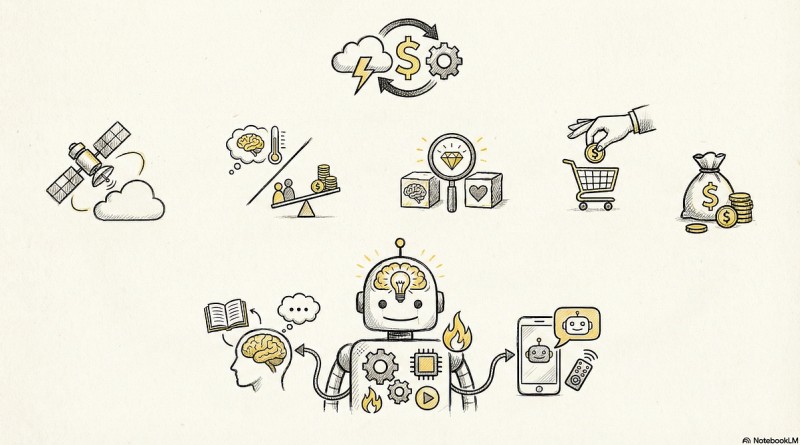
What Trading Bots Can Do for You
I've spent a lot of time reading about and tinkering with trading bots. They are just software that trades for you. You set some rules, and the bot watches the market and places buys or sells without you staring at charts all day. For crypto, this matters because the market never sleeps.
A trading bot crypto tool can run while you sleep. It checks prices, reads data, and acts fast. From the stats I saw, bots execute trades in about 0.01 seconds, while a human takes 0.1 to 0.3 seconds. That speed cuts out the lag you feel when you try to click the mouse yourself.

Automation in trading started back in the 1980s with simple algo systems in old finance markets. Later, when crypto showed up, people adapted those ideas to digital coins. The round-the-clock nature of crypto made bots a natural fit. If you're starting crypto trading, a bot can take the grunt work off your plate.
These bots have become an integral part of modern crypto trading, especially for those seeking efficiency and consistency in such a fast-paced environment.
Types of Crypto Trading Bots
There are a few common kinds of trading bots. Each one follows a different plan. Some buy a fixed amount at set times. Others trade inside a price range. You pick based on how much risk you like and what the market is doing.
Main bot types
- DCA bots - invest fixed amounts at regular intervals, show better returns in volatile markets.
- Grid trading bots - trade within set price ranges, grab small daily gains from buy low sell high.
- Arbitrage bots - exploit price gaps across exchanges, catch most chances in under 3 seconds.
- Market making bots - give liquidity and earn from bid-ask spread on each trade pair.
- Scalping bots - do rapid micro trades, often 100-200 per day with tiny profit each.
Trend-following bots use old data and indicators to catch a move. They work well when price goes straight up or down. In choppy markets they struggle. Coin lending bots lend your coins to margin traders for slow passive income. If you just hold and don't want to trade, that type fits.
If Bitcoin is trading at $93,000 on Exchange A and $93,200 on Exchange B, an arbitrage bot can buy Bitcoin on Exchange A and sell it on Exchange B simultaneously, pocketing the $200 difference per Bitcoin.
AI Auto Trading Bots and Learning
The newer wave is ai auto trading bots. They don't just follow a fixed script. They learn. Through machine learning they read both old and live data, find patterns, and shift how they act when the market changes. That's a big step from the old static bots.
These bots process over 1 million data points per second. They also use natural language processing to read news and social mood. In the source, advanced bots using machine learning hit around 82% success in tests. That doesn't mean you will never lose, but the bot adapts faster than a plain script.
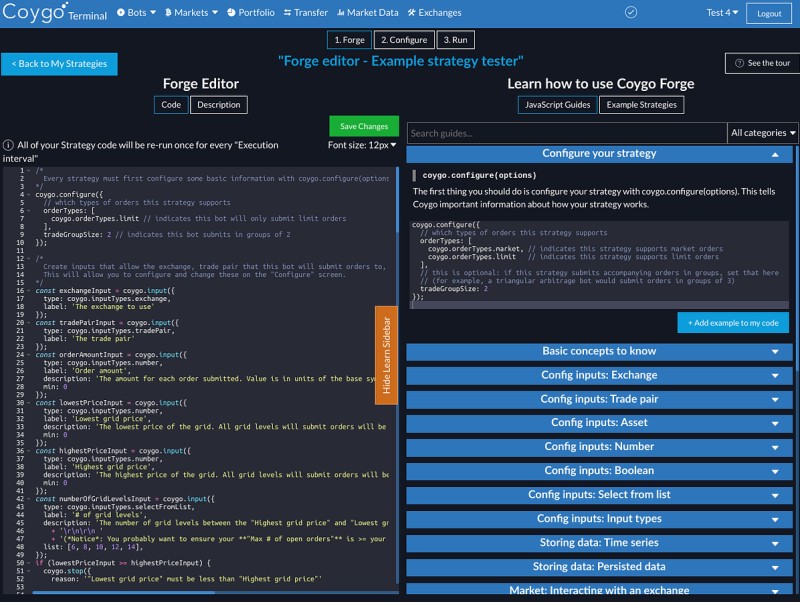
One cool example is a news bot built on ProfitView. It reads Google News RSS, sends headlines to a small OpenAI model, gets a sentiment score from -1 to 1, and places trades on BitMEX. The whole thing was under 25 lines of code. It's a real proof that you don't need a huge team to build something useful.
Building an AI News Trading Bot
I liked the news bot build because it stays simple. The goal was a bot that reads news in real time and makes a trade signal. They used RSS from Google News since scraping the site was slow and got blocked. A small Python lib called feedparser parsed it for free.
For sentiment, they needed a number from -1.0 to 1.0. VADER and TextBlob were fast but missed context. A headline about limited Bitcoin supply scored negative for them, which is wrong. OpenAI's model got the nuance. So they sent a batch of headlines to gpt-4o-mini to save cost and time.
Steps in the news bot
- Find news source - used Google News RSS via feedparser.
- Get sentiment - collate headlines, send to OpenAI mini model for score.
- Deploy - run on ProfitView, link to BitMEX, set trade size from score.
- Protect - add stop-loss because big news can flip mood fast.
Because of additional libraries, necessary to sign up to ProfitView Active Trader account. With that you can ssh into container and pip install those libraries (feedparser and openai).
The code is short. It loops every minute, pulls news from the last hour, asks the model for a score, and sends a signal. After deploy it traded okay in normal times. But on a surprise news event it was too slow to catch the mood shift. That's why a stop-loss is not optional, it's a must.
Building a No-Code Weather Trading Bot
Not all bots trade crypto. One build used Polymarket weather markets. A bot checked NOAA forecast temp, compared to Polymarket price, and bet on the forecast when the market was off. NOAA short-term forecasts are right about 85 to 90% of the time.
The setup used OpenClaw as a free local assistant, ChatGPT Plus as the brain, Telegram to talk to it, and Simmer SDK for the trades. You start with around $100. The bot scans every 2 minutes and messages you on Telegram. If you want a trading bot app with no code, this is a clean path.
What you need to start
- Modern computer with internet - Mac, Windows, or Linux.
- ChatGPT Plus subscription - about $20 a month for the brain.
- Telegram account - to send plain English commands to the bot.
- About $100 to trade - small bet sizes are fine at first.
- 30-45 minutes - to install and connect the pieces.
They set entry below 15% price and exit above 45%, max position $2. In tests the win rate was 70-85% because forecasts are solid. But NOAA is wrong 10-15% of the time, so you will take losses. Start with money you can lose.
NOAA forecasts via supercomputers, satellites, weather stations; one-to-two-day forecasts accurate roughly 85 to 90 percent of time.
Best AI Crypto Trading App Options
When you look for the best ai crypto trading app, you should check what it supports. Does it link to your exchange? Can you set your own strategy? Is the code or config open enough to trust? A good app lets you start with a demo or free trial before paying.
For automated trading bots for beginners, ease of use is the key. You want a clear interface, some support, and a community forum. The source notes that free bots lack advanced features, while paid plans add tools and help. Some take a cut of your profit instead of a fee up front.
a good ai crypto appI'd say pick one that shows a backtest on old data and has a dashboard. If you can't see how it did last month, don't trust it this month. The best ai for crypto trading is the one you understand, not the one with the loudest ad.
Algorithmic Trading Cryptocurrency Basics
At the root, algorithmic trading cryptocurrency is just code that follows rules. The bot grabs market data, runs your strategy, and places orders. Components usually include data analysis, trade execution, custom strategies, and portfolio help.
You can set stop-loss limits or profit targets. Some bots rebalance your holdings for you. The source says bots monitor 50+ exchanges at once and run 24/7. A human can't match that without losing sleep and making dumb calls from fear or greed.
algo trading with coinsCommon bot parts
- Market data analysis - gather and read large volumes of data for trends.
- Trade execution - place buy or sell orders from your set rules.
- Customisable strategies - set stop-loss, profit targets, and other params.
- Portfolio management - rebalance and diversify crypto holdings over time.
Trading Bot App and Brokers
A trading bot app is only as good as the place it trades. You need a solid exchange or broker behind it. The source lists best brokers for crypto trading as a thing to check when picking a bot, since the bot uses their API to act.
If you use a weak broker with slow API or odd rules, your bot will fail on real trades. Also look at the gemini cryptocurrency app as one example of a platform people use. The bot should support the broker you already trust and not push you to a shady one.
good brokers for coins gemini app for coinsConsider features and functionality: Customisation, Supported exchanges, Trading strategies.
APIs and Data for AI Trading Bots
Under the hood, bots need good data. The real bottleneck is not speed of execute but getting clean past data. You need replayable history, normalized symbols, and steady feeds. Without that, your backtest lies to you.
The source names a few APIs. CoinAPI gives normalized data across 400+ exchanges with tick-level trades. CoinStats mixes market and wallet data. EODHD has equities and macro data. Alpaca is for execution. CoinMarketCap is for discovery. Pick by what your bot must know.
APIs to know
- CoinAPI - normalized data, order books, replayable market files.
- CoinStats API - wallets, DeFi, portfolio, news in one integration.
- EODHD - stocks, macro, forex, crypto for cross-asset models.
- Alpaca - execution layer for equities and crypto with paper trading.
- CoinMarketCap - rankings, token discovery, exchange monitoring.
MCP (Model Context Protocol) is mentioned as a way to give AI structured access to tools like order books and wallets. It keeps schema steady so agents don't break. If you build your own, this kind of pipe matters more than the trade logic at first.
AI Agents in DeFi
DeFi is moving to intent-based trades. You say "swap 10 ETH to USDC at best rate" and the agent finds the path. It pulls liquidity, splits orders, bridges chains, and signs the final tx. This flips the old command style where you set each step.
Agents watch price and liquidity after the trade too. They can rebalance within your limits. But you still set the rules. If you misconfigure a smart wallet, that's on you. The agent is only as good as the execution layer it uses.

AI agents are turning DeFi trading into a one-step process: define your goal, let system handle rest.
Advantages of Trading Bots
The numbers from research are hard to ignore. Bots run at 0.01s vs 0.3s for humans. They cover 168 hours a week. They handle 50+ exchanges. And they cut emotional errors by 47%. That's the main draw for most people.
On profit, the source says automated systems showed 23% higher returns than old methods in one study. Advanced bots got 82% success vs 43% manual. They process 1M+ data points per second. And they do arbitrage capture 89% of chances vs 12% for a person.
Why bots help
- Speed - execute in 0.01s, no lag from clicking.
- Coverage - 24/7 monitor, 168 hours vs 40-50 for human.
- Multi-exchange - watch 50+ venues at once.
- No emotion - 47% fewer mental mistakes.
- Risk control - auto stop-loss and live rebalance.
Challenges and Best Practices
Bots break too. Bugs, lost connection, or a crash can cause bad trades. API keys are a security risk if the dev is shady. And a bot can't think when a flash crash hits unless it was built to adapt. You still need to watch it.
Best practice from the source: check trades every 4 hours, track P/L vs 0.5% daily bench, keep VaR under 2%. Update params with daily analysis. Back-test on 90 days. Review trades over 5% of portfolio by hand. Set circuit breakers at 7% drawdown.
Balanced approach: combine automated capabilities with human expertise.
Safety steps
- Regular monitoring - real-time track every 4 hours, review P/L.
- Market alignment - daily param update, back-test 90-day data.
- Human oversight - manual review big trades, weekly strategy check.
- Emergency protocols - circuit breakers at 7% drawdown, capital preserve.
Choosing the Right Trading Bot
When you pick, match the bot to your goal. Want DCA? Get that. Want grid? Get that. Check supported exchanges and if the dev ships updates. Read real reviews, not just the landing page. And start with a free trial before you pay.
Security is not optional. Use API keys with restricted access. Don't give a bot withdraw rights if you can avoid it. Cost varies: free lacks features, sub adds tools, rev-share takes profit cut. For automated trading bots for beginners, a clean UI beats a fancy engine.
bots for new tradersBacktesting and a dashboard should be there. Ease of use matters if you're not a coder. The source says beginners should prioritize intuitive interface, customer support, and community forums. Don't dive into complex setup on day one.
Legal and Ethical Notes
Rules differ by place. Some need licenses. Wash trading and spoofing are illegal. You owe tax on gains. Ethically, avoid manipulative plays. Arbitrage and rebalancing are fine. Use devs who are open about what the bot does.
Encourage responsible trading (arbitrage/rebalancing healthy). Use reputable developers with transparent practices.
I won't tell you what jurisdiction you're in. But check it. A bot that breaks local law is a risk no profit covers. Keep records, pay what you owe, and don't let the bot run dark.
One Builder's Story
The source shares a story from a coder named Konstantin. He built bots with his brother, a trader. They sat for hours, one explained patterns, the other wrote code. That early work shaped his career in payments tech. It shows bots can be a real learning path, not just a money printer.
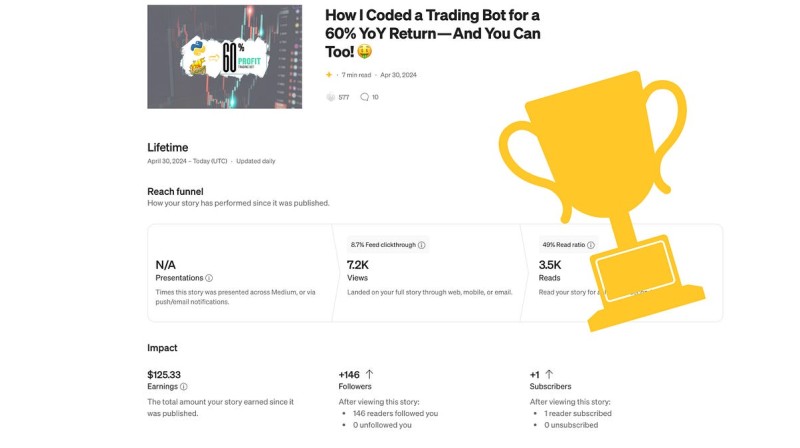
He wrote a post about a simple strategy with EMA and bollinger bands. It got 8,000 views and earned $125. Most of his 80 posts made little. But that one opened doors: mentors, a consulting gig, and fintech skills. The point wasn't the cash, it was the proof that sharing real work helps.
One blog post contributed more to career trajectory than any single project.
His advice: write what you're doing, show real numbers, show failures too, and code with explanation beats code alone. He published weekly and 79 flopped before the hit. That's just how it goes with public builds.
Start Simple and Iterate
From the news bot and weather bot, the lesson is the same: start small. A 25-line script can trade news. A no-code setup can trade weather. You don't need a complex system to learn. Build the minimal thing, run it, see what breaks.
Then iterate. Try new news sources. Swap sentiment models. Add cities or coins. The source says test fast, drop what fails, keep what works. AI is strong for nuance, but you still set the guardrails. And hey, don't skip the stop-loss part, that one will bite if you do.
My takeaways for you
- Start simple - minimal code or no-code can work fine.
- Iterate fast - test sources and models, drop the weak ones.
- Use AI for nuance - GPT reads mood better than old libs.
- Guard rails - stop-loss and small size from day one.
What the Future Holds
Bots will keep learning. AI and machine learning will take a bigger role in how they adapt. The source sees them as a normal tool for traders who want to optimize in fast markets. I think the barrier to build your own keeps dropping.
We already see agents that take intent, not commands. Data pipes like MCP make AI access clean. For a regular person, that means you can run a trading bot crypto setup without a tech co-founder. The tech is here, the rest is your rules and your watch.









Comments on “How to Pick and Build Trading Bots That Actually Help You Trade”
No comments yet. Be the first to share your thoughts.