

Block Chain: What Is It?
I kept seeing the term block chain pop up and figured I'd write down what it actually is, in plain words. Block chain: what is it? It's a shared record of transactions, secured with cryptography, that tracks data safely. You don't need a tech background to get it. The first block chain was devised by Satoshi Nakamoto as the engine for Bitcoin. In that original context, it records who paid whom, how much, and when.
No single person or org has control or "admin rights" over the database. Instead, all members of the network hold a record of all changes. That makes the data almost impossible to tamper with. If you have an account with a normal bank, the bank keeps a centralized record of your balance. Block chain enables those records to be stored in a decentralized manner among all the "nodes" in the network.
Once a transaction is verified and that data enters a blockchain, it can't be removed or amended by anyone.

The basic idea is to decentralize the storage of data so that data cannot be owned, controlled, or manipulated by a central actor. This gives a level of transparency, security, and authenticity. Some folks argue that while societies traditionally needed governance institutions such as governments and banks to deal with trust, block chain could render those institutions obsolete by enabling individuals to exchange value safely and transparently with technology alone.
What Is a Distributed Ledger Technology
When people ask what is a distributed ledger technology, they usually mean the same thing as a block chain. It's a record shared across many computers instead of one central server. Each node keeps the full history. That way no one can quietly change the past without everyone noticing.
The source calls block chain a decentralized digital ledger that records every transaction ever made. It functions as a shared public record of transactions. In my view, that's the simplest way to explain it without drowning in jargon. The ledger is not owned by anyone, which is the whole point.
Traits of the ledger
- Censorship proof, as no single individual can unilaterally dictate the content.
- Reliable, as one can trust it in clarifying and transferring assets correctly.
- Pseudo anonymous, using individual pseudonyms instead of real names.
- Secure, as it prevents ownership from being manipulated or spent twice.
Those traits matter because they shape why people build stuff on top of a block chain. Resilience is another one. It can clarify and transfer ownership even under difficult conditions. Consistency means the chance of getting consistent results increases over time.
Block Chains Are Records of Transactions
Block chains are fundamentally records of transactions. The term "transaction" is broader than financial exchange. Transactions can be about approval or disapproval, social status, or large or small interactions. A book is a transaction which takes a long time to execute. A hand-written letter takes less time. An online forum post or blog post less still.
As a general trend, more and more transactions of shorter and shorter size are being sent. Mobile tech captures small transactions like a Facebook like, a retweet, a Whatsapp message. Wearable, ambient, and IoT tech will decrease transaction size and increase frequency even more. Formal education has the longest transaction times of any social activity we engage in apart from possibly mortgages.
Formal education has the longest transaction times of any social activity we engage in apart from possibly mortgages; it is the least flexible of all social activities.
How Blockchain Records Transactions
When a transaction occurs, details are sent to every computer in the network. Then it is simultaneously and independently verified by all of those "nodes" using a complex algorithm. In the Bitcoin protocol, this verification process is known as "mining". Miners are rewarded with bitcoins as an incentive to keep the block chain going.
To understand the mechanics, consider a simplified digital currency called Infocoin that evolves into Bitcoin. A user signs a message such as "I, Alice, am giving Bob one infocoin" with a private cryptographic key. To prevent double spending, the network collectively acts as the bank. Everyone using Infocoin keeps a complete record of which infocoins belong to which person.
This shared public ledger is called the block chain. Transactions are broadcast, and network users validate them. Proof-of-work is used to avoid takeovers by fake identities. Miners compete to solve a computational puzzle. The difficulty adjusts so a block takes about ten minutes on average to validate.
The successful miner broadcasts the block. Others verify and append to their chain. Each block includes a pointer, a hash, to the previous block, forming a linear chain. Occasionally a fork appears when two miners validate near-simultaneously. The rule is to extend whichever fork is longest. Shorter forks are abandoned.
A transaction is considered confirmed when it is part of a block in the longest fork and at least 5 blocks follow it, which gives the network time to agree on ordering.
What Is Mining for Crypto
If you wonder what is mining for crypto, it's the work miners do to verify transactions and add blocks. In Bitcoin, miners solve a puzzle where the hash of a block header must be below a target. Often that means many leading zeros. The first to solve it broadcasts the block and gets new coins plus fees.
The mining reward started at 50 bitcoins per block. It halves every 210,000 validated blocks. The smallest unit is a satoshi, one one-hundred-millionth of a bitcoin. Genesis crypto mining refers to the very first block, the Genesis block, with a coinbase transaction creating initial supply. That block is the root of the whole chain.
Bitcoin transaction parts
- Inputs reference previous transaction outputs.
- Outputs hold value and a script with recipient address.
- Multiple inputs and outputs allow change to yourself.
- Genesis block is the first block with initial supply.
If you receive 0.2 bitcoins and want to send 0.15, you send 0.15 to recipient and 0.05 to your own address as change. That's just how the record keeps balances straight without a bank in the middle.
Finality and Why It Matters
Block finality refers to the irreversible confirmation of transactions on a block chain. It ensures security and prevents double-spending. Finality is primarily achieved using the network's consensus mechanism. It isn't always immediate because finality and latency work parallel.
A block chain's finality rate is linked to its latency level, which measures time taken to confirm a transaction. Types of finality from the source include a few clear flavors. Probabilistic finality is used by most major public block chains. Instant finality is primarily seen in private or permissioned block chains. Economic finality means a transaction is final when reversing it becomes economically unviable.
Finality hurdles
- Network latency delays disrupting order and validation.
- Change in network state such as forks destroying finality.
- 51% attacks where an entity gains majority power to alter history.
- Smart contract vulnerabilities enabling reversal.
Finality prevents double-spending: once a transaction is recorded on-chain, the digital asset is spent and cannot be used in further transactions.
Consensus: Proof-of-Work and Proof-of-Stake
Proof-of-Work is used predominantly by Bitcoin. Mining new blocks requires solving complex cryptographic puzzles. The miner who does so first validates the transaction, broadcasts it, and receives new crypto plus fees. The puzzle requires the hash of a block's header to be lower than or equal to a target, adjusted to average ten minutes per block.
Proof-of-Stake was shared in a 2012 paper by Sunny King and Scott Nadal as a solution to Bitcoin mining's energy use. Peercoin was first to employ staking. Ethereum converted from PoW to PoS in September 2022, an event called the Merge. In PoS, token holders participate as validators by locking tokens and running software.

The more crypto staked, the higher the odds of being chosen to verify a new block. Validators risk losing staked crypto via slashing if they validate false transactions. Delegators lock a smaller stake and delegate to validators, earning a portion of rewards. Ethereum requires at least 32 ETH to be a solo validator. Polkadot nominators must stake at least 502 DOT.
Popular PoS tokens by market cap
- Ethereum (ETH) around 382 billion dollars.
- Solana (SOL) around 69 billion dollars.
- Toncoin (TON) around 21 billion dollars.
- Cardano (ADA) around 18 billion dollars.
Staking rewards vary. ETH validators typically get about 3.6%. Cardano delegators about 4.6%. Polkadot historical about 14.9%. Methods include solo staking, delegated staking, pooled staking, and staking via centralized exchanges. Risks are illiquidity during lockup, token devaluation, counterparty reliance, regulatory uncertainty, and network bugs.
Make My Own Cryptocurrency
Some readers will ask how to start your own crypto coin after learning the basics. The source doesn't give a step-by-step, but it shows the building blocks. You need a shared record, a consensus method, and a way to verify transactions. Creating my own crypto means defining those rules and getting nodes to run them.
If you want to make my own cryptocurrency, study how Infocoin became Bitcoin in the source. A user signs a message with a private key. The network keeps the full record. From there, how is cryptocurrency made is mostly about consensus and issuance rules like mining rewards or staking. I'm not saying it's easy, just that the core idea is simple to grasp.
make my own cryptocurrencyWhen folks talk about how to start your own crypto coin , they often skip the hard part: getting others to trust and run your chain. Without nodes, your record is just a file on one laptop.
What Is a Blockchain Smart Contract
You might hear about what is a blockchain smart contract. It's code on the chain that runs when conditions are met. The source ties smart contracts to finality. Finality is crucial for smart contracts and dApps, guaranteeing irreversible outcomes. If a contract says pay on receipt, finality makes that stick.
Smart contract flaws are listed as a finality hurdle. A bug can enable reversal of what should be final. So when you read about contracts, remember they live inside the same record of transactions we already covered. They aren't magic, just scripts with states.
what is a blockchain smart contractDouble-Spending and Security
Double-spending is a digital dilemma where a single unit of crypto is illicitly spent more than once. Imagine spending the same $10 bill at two stores. Finality prevents this. Once a transaction is recorded on-chain, the digital asset is spent and cannot be used again.
In PoW, an attacker needs enormous resources, generally control of more than 50% of network hashing power, to catch up to the longest fork. Network users detect double spends by checking signatures and previous ownership. The public ledger means transactions are visible. Bitcoin addresses are pseudonymous, but de-anonymization is possible through analysis.
The blockchain is perhaps the most open financial instrument ever.
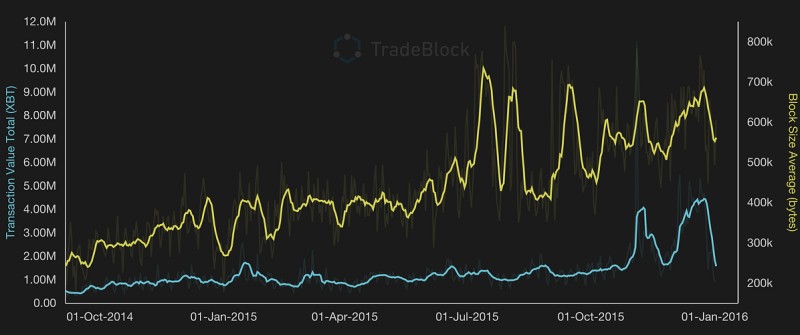
Security challenges include 51% attacks, smart contract flaws, and network latency. In Bitcoin's history, an artificial capacity cap of one megabyte per block was not removed. That caused the chain to become "full", with peak near 700 kilobytes per block. Chinese miners controlling majority hash power refused to raise the limit, citing decentralization concerns.
How Do I Make an NFT
A common side question is how do i make an nft. The source does not build one, but an NFT is just a record on a chain pointing to a unique item. You need a block chain, a transaction that mints the token, and a way to track ownership. The same finality that stops double-spending protects the NFT's owner.
If you map it to the Infocoin story, an NFT is a special transaction where the output says "this belongs to that address". So learning block chain basics first makes the NFT part less confusing. I'd warn: don't skip the part about lost private keys. Lost keys mean lost coins or tokens permanently.
how do i make an nftUse Cases Across Industries
Early block chain startups were heavily fintech. Of 140 European and Israeli startups identified in one research set, 68 fell into fintech. But the vast number of use cases beyond finance spurred predictions of explosion. Sectors represented: healthcare, Internet of Things, science, decentralised government.
Healthcare example: DNA.Bits uses block chain cryptography to tag, track, and cross-reference health data securely and anonymously. Supply chain authentication: Project Provenance gives each physical item a "digital passport" tracked from raw materials to shop shelf. Decentralised infrastructure: Colony aims to crowdsource a company by paying contributors crypto linked to activity.
International development uses
- Financial services such as business payments.
- Remittances with low-fee cross-border transfer.
- Peer-to-peer energy trading.
- Land registry and identity for refugees.
UK led the sampled startups with 58 of 140 based there. Only 21 of 140 were more than two years old, indicating the technology was still very young at the time of that research. Afghanistan later showed grassroots adoption ranked 20th globally after banks closed and cash got scarce. Services enabled conversion of local money to Bitcoin.
Genesis Crypto Mining and Early Supply
Genesis crypto mining is the act of creating the first block. In Bitcoin, the Genesis block holds a coinbase transaction creating initial 50 BTC supply. From there, mining reward halves on a schedule until supply ceases to increase. The source places that cease around 2140 as a historical-looking forecast from the protocol rules.
That slow stop in new supply is why some call Bitcoin scarce. But stablecoins peg price to fiat to reduce volatility. They are still crypto on a block chain, just tied to a real-world asset. The record of transactions stays the same underneath.
Challenges and Conflicting Perspectives
One perspective says block chain is already blowing up and will impact healthcare, IoT, science, and government. Another says the Bitcoin experiment failed at one point because the community was controlled by a handful and the network neared technical collapse. The block chain was full due to the 1MB cap and fees were high.
HR tech conferences often called block chain in HR "probably just a sales pitch". A verified LinkedIn where info cannot be changed fails the "who watches the watchmen" test. Also GDPR conflict: a user wanting to delete data cannot because it resides in block chain. No HR app observed solved these.
A verified version of LinkedIn fails the "who watches the watchmen?" test - how is initial data verified?
Education may need to adapt to shorter transactional model driven by mobile and IoT. Staking risks include illiquidity and token devaluation during lockup. Pseudo-anonymity is not true anonymity. Lost private keys mean lost coins permanently. Theoretical quantum computing threats to public-key crypto are noted, but hashed addresses give some resistance until spent.
Scalability Ideas and Fast Finality
Bitcoin's block size limit caused congestion. The Chain-Fibers proposal for Ethereum split the state-space into strata called "fibers". Accounts belong to a subspace by address bits. Collators validate transactions on fiber overlays. Validators maintain a Master Chain referencing fiber headers. Fishermen challenge invalid blocks and claim bonds.
BNB Smart Chain introduced Fast Finality with BEP-126, mixing Proof-of-Stake Authority with Byzantine Fault Tolerance. Originally BSC required about 15 blocks to finalize, near 45 seconds. After Fast Finality it needs average 2.5 blocks, about 7.5 seconds. Comparison of expected finality time: Bitcoin probabilistic near 1 hour, Ethereum 1.0 near 78 seconds, BSC after near 7.5 seconds.
Finality times from source
- Bitcoin probabilistic around 1 hour.
- Ethereum 1.0 probabilistic around 78 seconds.
- Ethereum 2.0 explicit around 16 minutes.
- BSC after Fast Finality around 7.5 seconds.
Is Chainlink Crypto a Good Investment
People ask Is Chainlink crypto a good investment. The source I used does not mention Chainlink at all. So I can't tell you from this material if it's good or bad. What I can say is that any token lives on some block chain and faces the same finality and security traits we covered.
Is Chainlink crypto a good investmentIf you evaluate a token, check its consensus and staking rules. The source shows PoS tokens by market cap and staking rewards. That lens helps more than hype. And hey, don't skip the risk list: illiquidity, devaluation, counterparty, regulation, bugs.
How Is Cryptocurrency Made
Stepping back to how is cryptocurrency made, it starts with a record of transactions and a rule for who confirms them. PoW uses mining. PoS uses staking. Issuance can be via block reward, as in Bitcoin, or via genesis and fees. The chain keeps the history so ownership is clear.
Creating my own crypto means picking these parts and hoping nodes join. The source's Infocoin tale is a clean way to see it. A signed message, a shared ledger, and collective checking replace the bank. That's the whole trick behind most coins.
creating my own crypto how is cryptocurrency made






Comments on “Block Chain: What Is It? How It Records Transactions and Why That Matters”
No comments yet. Be the first to share your thoughts.