What Is Coinbase Wallet
Coinbase Wallet is a free self-custodial app for holding crypto and using apps built on public blockchains. You keep control of your private keys instead of letting Coinbase hold the funds for you. The wallet started as Toshi in 2017 and got renamed in 2018. It began with Ethereum and later added EVM chains plus non-EVM networks like Bitcoin, Solana, and Dogecoin. Think of it as a decentralized wallet that lives on your phone or browser.
Custodial Exchange Account vs Self-Custodial Wallet
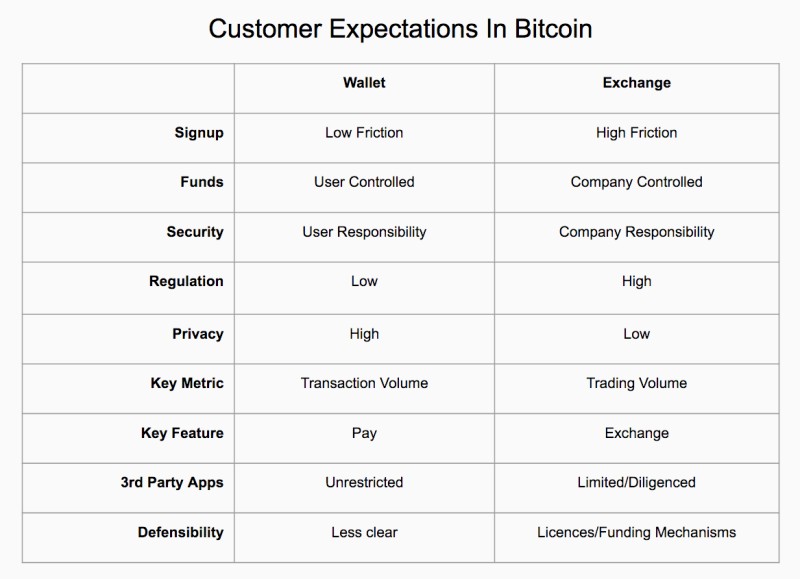
The main Coinbase exchange and Coinbase Wallet are different products with different custody models. On the exchange, Coinbase safeguards your funds - you rely on them for access and can face account controls or restrictions. Coinbase Wallet is self-custodial. You hold a 12-word recovery phrase and have direct control. Coinbase support cannot reset a lost phrase. This distinction goes back to 2016 when Brian Armstrong wrote that Coinbase began as a wallet but became an exchange. He compared exchanges to internet service providers (the on-ramp) and wallets to web browsers (where you actually use the network).
We set out to build a bitcoin wallet, but it turns out we were building an exchange.
Self-Custody, Recovery, and Security
A self-custodial wallet means you protect the 12 words used to restore access. Lose the phrase and you may lose everything - no support ticket can fix it. Coinbase Wallet is a hot wallet (software connected to the internet), convenient for transactions and dApps but dependent on your device security. It supports Ledger hardware wallets so you can keep keys offline while using the app as an interface. The wallet also offers passkeys and cloud backup as extra recovery options, though the 12-word phrase remains the baseline. MetaMask works similarly with a 12-word phrase and password, plus biometric login on mobile, and connects to both Ledger and Trezor.
Recovery and hardware options
- Coinbase Wallet: 12-word phrase, passkeys, cloud backup, Ledger support
- MetaMask: 12-word phrase, password, biometric login, Ledger and Trezor support
- Coinbase Prime Onchain Wallet: MPC-based, institutional controls, optional key export
- Hardware wallet adds cost but keeps keys off the internet-connected device
Supported Assets, Networks, and dApp Access
The wallet has grown into a multichain tool. You can hold Ethereum and EVM-compatible networks, Bitcoin, Solana, Dogecoin, and Base. It works as a Web3 browser - connect to Uniswap for trading, OpenSea for NFTs, Aave and Compound for lending, plus other DeFi, DEX, identity, and social apps. The Base app announcement says integrated trading can buy, sell, and swap millions of onchain coins. Not every chain or asset is supported; for example, Bitcoin Cash, Ethereum Classic, and XRP integrations were discontinued in 2023. Support can change over time.
If you're wondering how to get a cryptocurrency wallet that covers multiple chains in one interface, this is one option. The Prime Onchain Wallet (institutional) has a separate network list including Solana, Arbitrum, Avalanche C-Chain, Base, BNB Chain, Fantom Opera, Gnosis, OP Mainnet, and Polygon PoS.
Fees, Network Costs, and USDC Rewards
The wallet software itself is free. Onchain transactions still incur network fees and can be affected by congestion. MetaMask gives more direct control over gas settings. Prime Onchain Wallet adds a dynamic fee mode and transaction simulation to reduce failed or delayed transactions. The Base app highlights a few specific cost points: send or receive USDC on Base via NFC tap-to-pay with no stated fee, instant USDC transfers in chat with no fees, merchant checkout via Base Pay with automatic local-currency conversion and no foreign-exchange fees, and Base Chain targeting sub-second transactions under one cent. USDC Rewards for eligible U.S. users (linked Coinbase account required) currently show up to 4.1% APY, though the rate can change and isn't available in the EU or Canada.
Base Chain was described as capable of transactions faster than one second and at a cost below one cent.
Coinbase Wallet Becomes the Base App
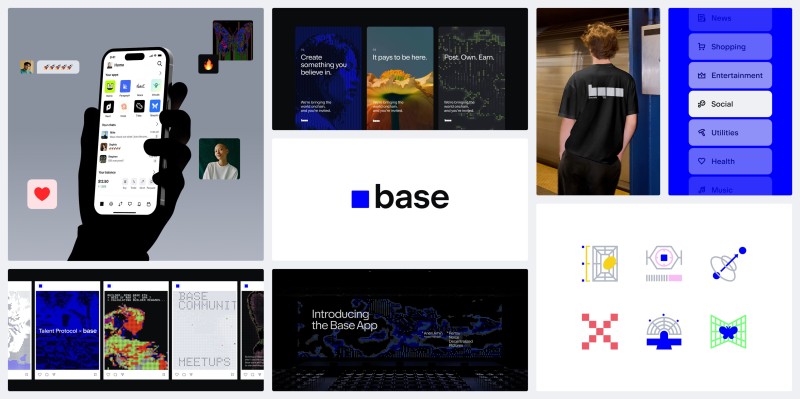
In 2025 the wallet was rebranded as Base App, described as a larger rebuild into an "everything app" combining wallet, social, mini apps, chat, payments, identity, and trading. Existing users didn't need to move - wallets updated automatically. The Base stack has three layers: Base Chain (Ethereum L2, now with Flashblocks for 200ms block times), Base Build (developer tools for mini apps), and Base App (consumer layer). The social feed runs on Farcaster, letting users control profiles and content, tip creators, and see what friends are trading. Mini apps like Remix (game creation), Noice (auto-tipping), and Decentralized Pictures (onchain cinema) run inside the feed. Chat uses XMTP with end-to-end encryption and supports USDC transfers, AI agents like Bankr and Mamo, and shared apps.
Base Account, Sign-In, and Base Pay
Signing up creates a Base Account automatically - a universal sign-in for the open internet built on a smart wallet model. It works across apps and chains, and developers can add "Sign in with Base" to their apps. Base Pay is an express checkout for USDC: save name, address, and email in Base Account, then check out in seconds at supported merchants. A Shopify partnership brings USDC payments to Shopify stores (Erewhon's shop was the example), with 1% cash back for U.S. customers paying with USDC and automatic local-currency settlement for merchants. The product info includes a forward-looking disclaimer - features may not be available yet, may change, and aren't financial advice.
For someone researching what is wallet for cryptocurrency beyond just storage, the Base App adds payments, social, and identity in one package.
Coinbase Prime Onchain Wallet (Institutional)
This is a separate institutional product, not the consumer wallet. Announced in December 2024, it's a non-custodial wallet using MPC technology with institutional controls: user permissions, multi-signer consensus, policy engine, key and device recovery, trusted address book, optional key export, transaction simulation, labeling, and a mobile approvals app. It supports Solana and the EVM networks listed earlier. API access for programmatic sending, trading, and automated approvals was planned as a future iteration. Only Full Access Prime clients can use it. Reporting and activity history help reconcile onchain transactions with the rest of the Prime account.
Prime Wallet institutional controls
- User access controls and new onchain signers
- Multi-user consensus requirements
- Policy engine for transaction rules
- Key and device recovery, trusted address book
- Transaction simulation and labeling
- Coinbase Prime Approvals mobile app
- DApp permissions and token-approval management
- Optional key export
Coinbase Wallet vs MetaMask
Both are self-custodial hot wallets for desktop and mobile. The biggest difference is multichain support. Coinbase Wallet (Base App) covers Bitcoin, Ethereum, Solana, Dogecoin, and EVM chains out of the box. MetaMask centers on Ethereum and EVM chains (BNB Chain, Avalanche, Polygon) with Snaps for extensions. Coinbase Wallet emphasizes a simpler, beginner-friendly interface and direct Coinbase integration. MetaMask prioritizes functionality and customization - steeper learning curve but more control over gas settings and dApp parameters. Hardware wallet connections: Coinbase Wallet works with Ledger; MetaMask works with Ledger and Trezor. Recovery: Coinbase Wallet has 12-word phrase, passkeys, cloud backup; MetaMask has 12-word phrase, password, biometric login. Fiat on-ramps: Coinbase Wallet uses bank transfers, debit, credit cards; MetaMask uses third parties like PayPal and Revolut. MetaMask is open-source and has a Mastercard debit card in some regions.
Coinbase Wallet or Base App is presented as the more convenient option for multichain access, a simpler interface, Coinbase integration, and non-EVM networks. MetaMask is presented as the more configurable option for experienced EVM users, developers, and people who prioritize transaction settings and dApp customization.
Moving Between Wallets
Transferring from MetaMask to Coinbase Wallet is straightforward. Copy the destination address from Coinbase Wallet, open the asset in MetaMask, enter the amount, paste the address, confirm, and wait for confirmation. Arrival depends on gas fees and network congestion - usually minutes. Neither wallet supports every asset; the source notes Coinbase discontinued Bitcoin Cash, Ethereum Classic, and XRP integrations in 2023 as a historical example of how support lists change.
Spending Features and a Third-Party Alternative
There's a conflict in the source material about spending. A BenPay tutorial from early 2026 says Coinbase Wallet has no native card and everyday spending usually means sending back to the exchange, selling, and using the Coinbase Card (which is custodial). The Base app announcement describes newer functions: NFC tap-to-pay with USDC on Base, direct USDC transfers in chat, Base Pay merchant checkout. These may reflect different product generations. The same tutorial says funds "sit idle unless you manually stake them," while the Base app cites up to 4.1% APY on USDC for eligible users - different scopes again.
BenPay positions itself as an alternative focused on direct payment utility: a global payment card spending from self-custody, zero-knowledge key management, DeFi Earn module with one-click access to Aave and Compound yields across chains, and a workflow for freelancers receiving USDT on Tron then tapping to pay via Apple Pay without bridging or depositing to an exchange. The tutorial calls BenPay superior for users prioritizing ownership and everyday payment utility, contrasting with Coinbase Wallet's lack of a directly attached self-custodial card. BenPay states it's a U.S.-registered fintech with FinCEN MSB registration and SlowMist-audited smart contracts.
ENS, cb.id, and Human-Readable Identity
Coinbase integrated ENS to replace long hex addresses with readable names. In 2022 they launched cb.id (like jesse.cb.id) using ENS and CCIP-Read (EIP-3668). It offered free registration for Coinbase customers, multichain compatibility, and onchain profiles usable across dApps. Over 11 million cb.id names were registered - more than five times the.eth domains at the time. This pushed Coinbase toward onchain base.eth subnames on Base L2. The cb.id system stores metadata offchain (centralized database) and retrieves it via CCIP-Read through a gateway. Base.eth moves names and data onchain for a more decentralized model. The transition illustrates a shift from offchain namespace with centralized metadata toward a scalable onchain identity system.
A user-friendly name system can make blockchain applications easier to use and reduce address-entry errors.
CCIP-Read and the Resolution Flow
CCIP-Read lets Ethereum smart contracts fetch offchain data. Three components: client (wallet or UI), resolver (onchain contract that points to the gateway), and gateway (API server like Coinbase's that returns signed data). The flow: client looks up a name, resolver tells client to fetch from gateway, gateway queries database and returns signed response, client submits to resolver, resolver validates and returns resolved info. The signed response protects integrity. Early adopters faced delays because many wallets and dApps didn't yet support EIP-3668 or ENSIP-10. Lessons: interoperability across wallets, resolvers, and infrastructure matters; docs and open-source implementations help ecosystem adoption; decentralized protocols encourage independent adoption; onchain usernames can reduce phishing if users verify the correct name and chain.
ENS integration practices from the case study
- Use permissionless protocols like ENS for independent participation
- Abstract hex addresses behind human-readable names
- Offer username registration during onboarding
- Publish technical docs, demos, and reusable implementations
- Treat onchain identity as cross-application infrastructure
- Evaluate developer resources and domain expertise before operating a namespace
- Work with ENS DAO for technical guidance
Future Identity Model and Portability
The ENS case study presents Base's model for companies with large user bases: launch a branded L2, issue branded ENS subdomains on it, onboard users through the existing interface, provide a stablecoin for payments, connect the L2 to Ethereum. Companies can choose how open or closed the L2 is while maintaining the Ethereum connection. Onchain usernames are portable across apps - names and profiles reduce dependence on a single platform and make dApp interaction easier without re-entering long addresses. The glossary at the end of the source defines terms like blockchain, cryptocurrency, Ethereum, ENS, EIP-3668, cb.id, base.eth, namespace, onchain, offchain, smart contract, Layer 2, interoperability, dApp, EVM, hexadecimal address, gateway, resolver, mainnet, and decentralization.
If you're comparing options like Zengo wallet app or treasure wallet crypto hardware devices, the key question stays the same: who holds the keys. Coinbase Wallet puts that responsibility on you - with the convenience of a mobile wallet that now bundles social, payments, and identity. Whether that tradeoff fits your needs depends on how much you value direct control versus custodial ease. For anyone asking how to create a personal crypto wallet that spans multiple chains and connects to the Base ecosystem, this is worth a look. Just back up those 12 words.










Comments on “Coinbase Wallet: A Clear Look at Self-Custody, Fees, and MetaMask”
No comments yet. Be the first to share your thoughts.