
Choosing the Best Personal Stock Trading App
I’ve been poking at stock apps for a while now. The barriers to picking the best personal stock trading app have really collapsed. You don’t need to be an expert to start. Low fees, a clean interface, and a way to practice with virtual money before you risk real cash are the big things that matter to me.
The new world of retail trading rewards validation over speculation. That means you should check an app works for you before you trust it with your money. In this post I break down what makes an app worth your time, using plain words and real facts from the source material.

What To Check Before You Pick
Before diving into any platform specifics, you should assess your investment goals and trading style. Are you a beginner, an occasional trader, or an active trader? Beginner platforms prioritize ease of use, while advanced platforms cater to active traders with complex order types and charting tools.
You also need to ask what asset classes you want to trade. Look for platforms offering stocks, options, ETFs, mutual funds, or other instruments. And what is your risk tolerance? Some platforms offer margin trading for leveraged investing, others focus on cash accounts for conservative approaches.
Core features to evaluate
- User interface and ease of use: a simple design helps beginners nest trades without overcomplicating.
- Trading tools and resources: charting, technical indicators, research reports, educational stuff.
- Account fees and commissions: trading commissions, maintenance fees, inactivity fees hit your returns.
- Market access and order types: make sure you get the exchanges and market, limit, stop-loss orders.
- Customer service: responsive support is essential when something breaks.
- Security measures: two-factor auth, encryption, solid data protection.
- Mobile app availability: a friendly mobile app makes trading accessible on the go.
- Research and analysis tools: advanced platforms give deep reports, fundamental analysis, real-time news.
Robinhood’s app offers a simple and easy-to-use design; many have found this useful for nesting their trades without overcomplicating them. Some brokers like Ventura offer brokerage at Rs. 9 per trade, stated as 55% lower than industry standard. Compare pricing structures before you commit.
Extra Ways To Evaluate An App
Beyond the core features, you can read online reviews and check independent ratings. Take advantage of free trials or demo accounts when they are offered. That hands-on time tells you more than any ad.
Practice with simulators with export and interface matching live. Consider AI tools as assistants not replacements.
I like to use paper view trading before I put real money in. It shows me if the buttons make sense and if the delay is tolerable. You should do the same.
Must Have Features In A Real Platform
A real trading platform that people trust with real money must support clean onboarding, funding, real-time data, orders, portfolios, and alerts. The quiet features keep operators out of trouble: immutable audit logs, role-based access, monitoring, incident workflows, record retention.
User-facing minimum experience
- Onboarding and verification: fast but not sloppy; in-app forms like W-8 and FATCA/CRS.
- Brokerage account opening: multiple account types supported.
- Funding and withdrawals: cards, wire, e-wallets, instant transfers.
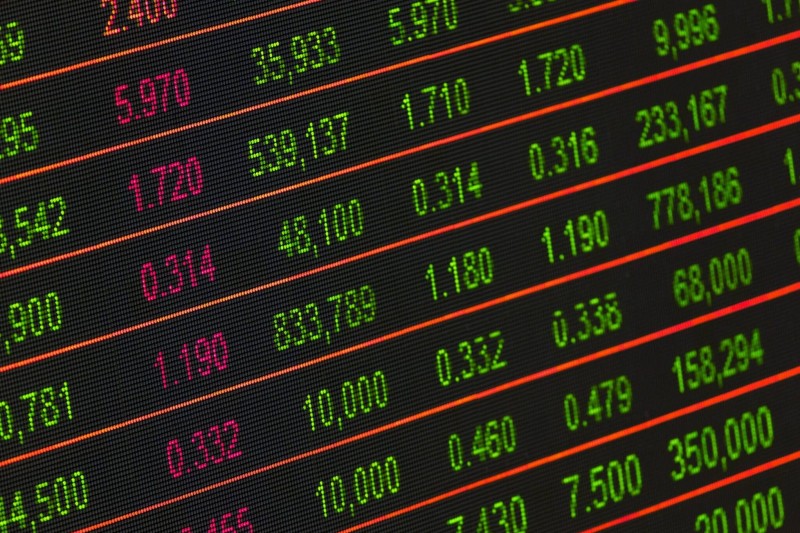
- Quotes, charts, market data: bid/ask, last price, OHLC, volume, updating charts.
- Order placement: market, limit, stop, time-in-force rules.
- Portfolio view: holdings, P&L, allocation, currency views.
- Alerts and notifications: price, order status, news.
- Activity and history: order history, statements, export.
The quiet features for audits and incidents matter more than most users think. Immutable audit logs for trading actions, funding, KYC, signatures, consent. Role-based access controls for staff tools. Monitoring and alerting for latency, failed orders, vendor timeouts.
Incident workflows and post-incident reporting keep a platform honest when stuff breaks.
Rules That Shape The App Architecture
Compliance basics shape architecture up front. FINRA Rule 4511 requires firms to make and preserve books and records. SEC Exchange Act Rule 17a-4 sets format and retention with non-rewriteable storage or audit-trail alternative. Every order lifecycle step needs immutable event trail with timestamps.
Major regulations to know
- FINRA Rule 4511 (US): records preserved, baseline retention at least 6 years.
- SEC Rule 17a-4 (US): non-erasable storage, recreate original record.
- MiFID II Article 27 (EU): best execution policy, venue transparency.
- DORA (EU): ICT risk, incident reporting, applies from 17 January 2025.
- FCA guidance (UK): third-party management, resilience.
- GDPR Article 32 (EU/EEA): security of processing.
- PCI DSS (Global): card data security.
- OWASP MASVS (Global): mobile app security baseline.
EU DORA applies from 17 January 2025 for ICT risk management; that is a historical milestone date from the source. UK FCA guidance covers outsourcing and resilience. Data privacy uses GDPR Article 32 with encryption. Mobile security follows OWASP MASVS as a verification standard for hardening, storage, auth, network.

How Big Platforms Are Built
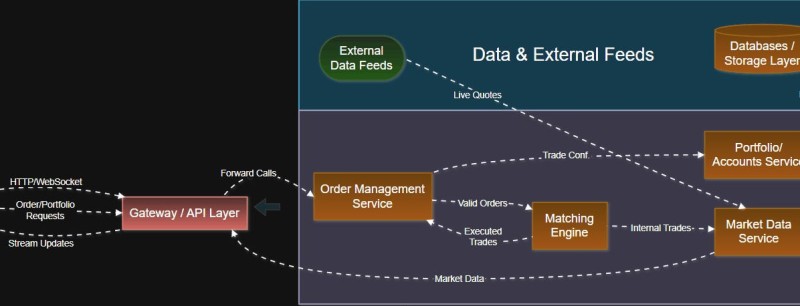
Large-scale platforms require partitioned matching engines, sharded databases, load balancing, geo-redundancy. Functional needs include user onboarding with MFA/KYC, account management, real-time market data feeds, order placement and execution, trade settlement, risk compliance, notifications, analytics.
Non-functional needs: scalability with sub-50 ms order ack ideal, high availability, data integrity with strong consistency for balances, security with TLS and encryption, observability. Core services are gateway API, market data service, order management, matching engine, portfolio accounts, clearing, risk, notification.
Core services in the stack
- Gateway/API layer: REST/WebSocket, auth, routing.
- Market data service: ingests exchange feeds, normalizes, publishes via pub/sub.
- Order management service (OMS): validates, risk checks, routes orders.
- Matching engine: order book per symbol, price/time priority, in-memory.
- Portfolio/accounts service: updates positions, cash, P&L.
- Clearing and settlement: T+2 or local rules.
- Risk and compliance: margin, short constraints, audit logs.
- Notification service: email, SMS, push.
Databases: NewSQL like CockroachDB for orders and trades; time-series like InfluxDB or kdb+ for market data; relational or NoSQL for accounts; Redis for caching. APIs example: POST /auth/login, POST /orders/place, GET /market-data/subscribe, GET /portfolio.
Stock Tracking Apps To Watch
For investors needing to monitor positions across brokers, these tracking apps were highlighted. WallStreetZen is best stock tracking app overall. Its watchlist covers stock price and 1 day/week/month/year changes. Free daily email report. Premium feature Why Price Moved gives one-sentence catalyst synopsis.
Empower, formerly Personal Capital, is best free stock tracking mobile app. Free tools track all finances in one place: dashboard aggregates savings, checking, investment, credit cards. For investors: fee analyzer, investment checkup, tracks across 6 asset classes. M1 Finance is best for beginners with visual Pie portfolios and commission-free stock/ETF investing.
Tracking apps by user type
- WallStreetZen: best overall, free watchlists, Premium $19.50/month billed annually.
- Empower: best free mobile app, tracks net worth, cash flow, budget.
- Stock Rover: best all-in-one, research and portfolio management, paid $34-$199/month.
- TradeStation: best for intermediate to advanced, simulated trading and backtesting.
- Morningstar: best for experienced investors, Portfolio X-Ray, $249/year.
- M1 Finance: best for beginners, visual Pie portfolios, free over $10,000 assets.
- Seeking Alpha: best for intermediate, community analysis, $299/year.
- Yahoo! Finance: best free news aggregator, no cost watchlists.
Yahoo! Finance is good for news not deep analysis. If you want the best place to buy crypto and stocks in one spot, some of these trackers link accounts but not all are brokers. A crypto trading app may sit beside your stock tracker if you watch both markets.
AI-Powered Trading Platforms
AI trading software works best as a system of specialized agents for research, execution, risk management. You stay in control; AI scans and executes rules. Horizon is first agentic platform: create strategy in plain English, backtest, connect broker, deploy live.
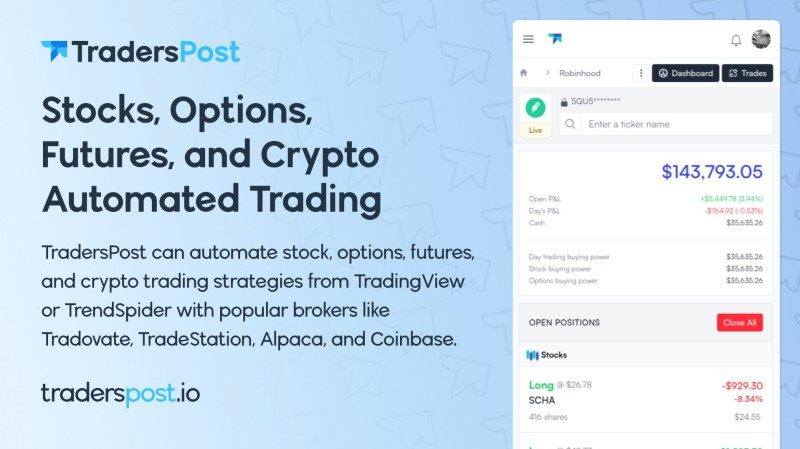
Trade Ideas uses Holly AI engine for scanning and real-time signals. TrendSpider does automated pattern recognition. Tickeron uses ML with confidence ratings. QuantConnect is cloud algo trading. TradingView is charting hub plus social network. Many folks ask if coinbase trading stocks is a thing; Coinbase is more crypto, but some best stock and crypto trading platform tools bridge both.
AI platforms and pricing
- Horizon: Essential $59/mo, Pro $99/mo, Elite $199/mo, Institutional contact.
- Trade Ideas: Birdie $127/mo, Eagle $254/mo, free plan delayed.
- TrendSpider: Standard $51.30-$77.90/mo, 14-day trial $5.
- Tickeron: ML bots, backtesting, steep learning curve.
- QuantConnect: Free $0, Researcher $60/mo, Team $120/user.
- TradingView: Basic $0, Essential $12.95/mo, Plus $28.29, Premium $56.49.
- StockHero: Lite $29.99/mo, Premium $49.99, Professional $99.99.
- Composer: Free build/backtest, Pro $5/mo automated execution.
Key takeaways: AI works best as system of specialized tools; you stay in control; specialization beats generalization; custom agents add flexibility; start small with paper trading. If you watch the next big crypto, some crypto market apps pull those feeds into the same screen as your stocks.
AI works best as system of specialized tools; you stay in control; specialization beats generalization.
Practice With Simulated Trading
Practicing with virtual money builds execution confidence without financial pressure. Simulated trading mirrors real market conditions using virtual capital, often starting with $100,000. Orders execute on live or delayed feeds; analytics show gain/loss.
The psychological gap is real: many traders lose money first year, discipline from simulation can evaporate under real capital stress. Many platforms gate real-time data behind paywalls. Export of trade data is crucial for improvement. Interface consistency between sim and live reduces mistakes.
Top simulated platforms
- TradingView: Replay tool, 100+ indicators, 30-day trial then Essential $16.95/mo.
- eToro: Demo with $100,000 virtual, CopyTrader, social, free core demo.
- thinkorswim (Charles Schwab): paperMoney free, real-time feeds, 400+ indicators.
- TradeStation: Simulation identical to live, unlimited virtual capital.
- Moomoo: Paper trading multiple global exchanges, up to $1M virtual.
- MarketWatch: Virtual stock exchange game, $1,000,000 virtual, custom contests.
- NinjaTrader: Futures/forex sim, market replay tick-by-tick, free simulator.
- Webull: Commission-free paper, up to $1M virtual, Level 2, 60+ indicators.
People ask Can you day trade Crypto on Webull. Webull has paper trading and extended hours; crypto access depends on the venue rules, not just the app. Use paper view trading there before any real bet. Cash competitions like Wall Street Survivor award payouts and help you learn.
Apps For Beginners
A beginner roundup noted Robinhood’s app offers a simple and easy-to-use design useful for nesting trades without overcomplicating. The core image and title indicate beginner-focused roundup of stock trading apps.
M1 Finance is also best for beginners with user-friendly visual Pie portfolios, automated contributions, IRAs, savings, trusts. Free for accounts with $10,000+ assets; otherwise $3/month platform fee. Commission-free stock/ETF investing keeps cost low for new folks.
Robinhood's app offers a simple and easy-to-use design useful for nesting trades without overcomplicating them.
Tracking Trades With A Journal
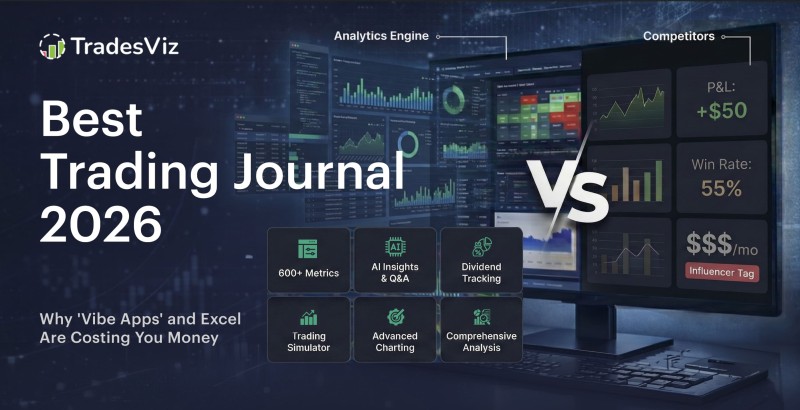
Beyond execution, tracking trades via journal helps. Critique of vibe apps and spreadsheets shows need for better tools. Professional standard includes market context, pivot grids, real AI, custom dashboards, all assets, broker sync at scale.
TradesViz example parses OPRA options flow, seasonality for 20k+ symbols, pivot grid 90 columns 600+ combos, AI Q&A, 600+ widgets, supports US/IN/CA/AU, auto-sync 200+ brokers. Free tier 3,000 executions/mo; paid $15-$22/mo. Processed 50M+ trades for 150k users.
Six must-have journal criteria
- Market context integrated: screener, options flow, seasonality.
- Pivot grids: query engine for fast lookups.
- Real AI: four systems, not fake labels.
- Custom dashboards plus AI widgets.
- All assets all markets in one view.
- Broker sync at scale without manual work.
Who should use what: under 10 trades/mo spreadsheet ok; 50+/mo single asset broker metrics or TradesViz Pro; options or multi-account need pro infra; outside US TradesViz supports multiple countries. Swing trading programs can log entries here too if you hold days.
System Design View Of A Platform
Functional requirements for a large platform: user onboarding/KYC/MFA; account management with funding; real-time market data ticker feeds; order placement with matching; trade settlement; risk/compliance; notifications; analytics/charting.
Non-functional: scalability to 100M concurrent, low latency sub-50ms, high availability, data integrity strong consistency, security/regulatory, observability. Capacity estimate: 100M users, 5% trade peak = 5M/min = 83k orders/sec, plan 200k/sec. Market data millions updates/sec. Storage ~1.4TB/day raw trade data.
Architecture pieces
- Gateway: auth and routing for REST/WebSocket.
- Market data service: pub/sub for normalized feeds.
- OMS: validates and risk checks orders.
- Matching engine: partitioned by symbol, in-memory.
- Portfolio/accounts: ACID updates to positions and cash.
- Clearing: trade settlement after execution.
- Risk: margin and audit controls.
- Notification: push, email, SMS alerts.
Databases: CockroachDB for orders, InfluxDB or kdb+ for market data, Redis cache. Matching engine uses sorted lists, price/time priority, atomic per symbol. Portfolio service updates positions and cash with margin checks. This is the quiet part that makes your best personal stock trading app safe.
Why Is Crypto Market Down And Mixed Use
You might wonder why is crypto market down on some days. That is a market move, not an app flaw. If you track both stocks and coins, a crypto trading app or crypto market apps can show the drop next to your equity watchlist.
The best personal stock trading app for you may also link to a best stock and crypto trading platform if you want one login. But keep the stock app and the coin app separate in your head; fees and rules differ. Use virtual money in both before real cash.
Practice with virtual money builds execution confidence without financial pressure.
My Simple Picking Process
Selecting the right platform is an investment in itself. Prioritize needs, evaluate features like fees, UI, tools, security, mobile. Conduct research with reviews, ratings, trials.
For practice, use simulators with export and interface matching live. Consider AI tools as assistants not replacements. Use journals for post-trade analysis. Compliance and architecture ensure safety and reliability when you trade.
Steps I use
- Write down goals: beginner, occasional, or active trader.
- Check fees, UI, tools, security, mobile app.
- Try free trial or demo with virtual money first.
- Read reviews and independent ratings.
- Use journal after trades to learn.
- Keep AI as assistant, not the boss.
The best personal stock trading app is the one that fits your style and lets you learn without bleeding cash. Low fees, clean interface, practice mode. That is what I look for, and what the source keeps showing as the core.
Compliance and architecture ensure safety and reliability.









Comments on “Key Things to Check Before Picking the Best Personal Stock Trading App”
No comments yet. Be the first to share your thoughts.