Good Crypto to Buy: No Hype, Just a Clear Map
I got tired of crypto tips that drown you in noise. Most of them yell "buy this now" with zero context. The good crypto to buy is not about chasing the next big crypto that some guy on X said will 10x. It is about understanding real options that actually do stuff on chain. In this post I walk through real-world asset tokens, dollar-pegged stablecoins like RLUSD, and a plain beginner path to buy crypto. No finance degree needed, I promise.
You don't need to be a wall street kid to find good crypto to buy. The source info I pulled shows clear buckets: RWA tokens, stablecoins, and basic steps for new folks. I'll keep it simple and skip the brain melt. And yeah, some parts of the source were blocked or just legal text, so I'll say when we don't have the full picture.
Real-World Asset Tokens and the Missing List
Real-world asset crypto tokens (people say RWA tokens) are coins tied to stuff off chain. Think property, bonds, or gold moved onto blockchain. The source had an article titled about top RWA tokens by market cap, but the site blocked access from my region. I only got a message: "access restricted for users from your region." So I can't list the top tokens or their market caps from that source.
What I can say is the idea behind RWA tokens is real. They put traditional assets on chain so you can trade them fast. But hey, don't skip this part: if a source hides the actual token names, you can't just trust some random list from a blog. The good crypto to buy in RWA needs real project data, not a locked page. A disclaimer from Tangem AG also showed up in the source. They only make hardware wallets and non-custodial software. They are not a financial advisor and don't hold your assets. That's a nice honest note, but it don't give us token picks.
Dollar-Pegged Stablecoins Like RLUSD
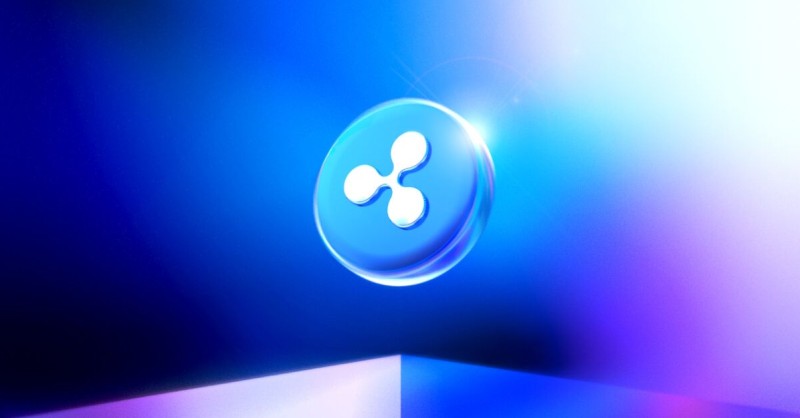
A stablecoin is a digital asset built to keep a steady value. Most times it is tied to a traditional currency like the US dollar or euro. You get the price stability of fiat with the speed and global reach of blockchain. These are used for real-time cross-border payments and enterprise stuff. When you look for good crypto to buy, stablecoins are the calm corner of the market.
Ripple USD (RLUSD) is Ripple's dollar-backed stablecoin. Each RLUSD token is supported one-to-one by cash, US Treasuries, and cash equivalents. It is designed to stay at one US dollar. RLUSD is issued on XRP Ledger and Ethereum, with maybe more chains later. You can redeem it 1:1 for dollars through Ripple Mint. Availability depends on where you live, so check your jurisdiction. This is a clear case of how to purchase stablecoin options that are backed and regulated.
Ripple USD is not the same as XRP: XRP is the native cryptocurrency of the XRP Ledger, decentralized, with value determined by open market; RLUSD is regulated and maintains stable value tied to USD.
RLUSD Rules and Oversight
RLUSD is issued under regulatory oversight. It has approval from the New York Department of Financial Services (NYDFS) and the Dubai Financial Services Authority (DFSA). In some places it is built into Ripple Payments, a licensed product. The reserves are held in segregated accounts at depository institutions and securities custodians. Ripple provides monthly third-party attestations of reserve assets. That means they verify backing by short-term liquid reserves.
If Ripple stops issuing RLUSD, the stablecoin would remain redeemable for US dollars as long as tokens are in circulation. That is due to full backing and regulatory requirements. Security is handled through ISO 27001 and SOC 2 Type II compliance. For me, that is a boring but good sign. You don't want your stablecoin run by a guy in a basement.
What RLUSD Does on Chain
RLUSD enables businesses to send funds worldwide with stability and compliance. Transactions settle in seconds on XRP Ledger, Ethereum, and other chains. Payment providers can tap new markets with a compliance-focused stablecoin. Centralized exchanges can drive trading volume with a trusted partner. For a beginner, this is the kind of cheap crypto currency type asset that holds value instead of swinging 20% a day.
RLUSD key features
- Multi-chain issuance on XRP Ledger and Ethereum
- Near real-time settlement with minimal fees
- No bank account required to send or receive
- Programmable finance with easy on-ramping and trading
The Ripple Stablecoin Mint gives institutions one platform to mint, redeem, and manage RLUSD liquidity. Remittance and money transfers get near-instant cross-border settlement. Exchanges get a transparent stablecoin pair. All of this matters when you ask crypto what to buy for actual use, not just speculation.
Beginner's Guide to Buying Crypto
Cryptocurrency is a digital asset that uses cryptography for security. For something to be "money" it needs three traits: unit of account, medium of exchange, and store of value. Unlike government money, crypto runs on decentralized networks using blockchain. If you are new, this is where cryptocurrency for beginners actually starts - with the base terms, not the hype.
Key terms from the source: Blockchain is a distributed ledger that is hard to change. Wallet stores, sends, receives. Bitcoin (BTC) is the first crypto, often called digital gold. Altcoins are any crypto other than Bitcoin, like Ethereum, Polygon, Avalanche. Keys are private/public codes. Seed phrase is a 12 or 24 word version of your private key. Write that down on paper, not in your phone notes.
Steps to Buy Your First Crypto
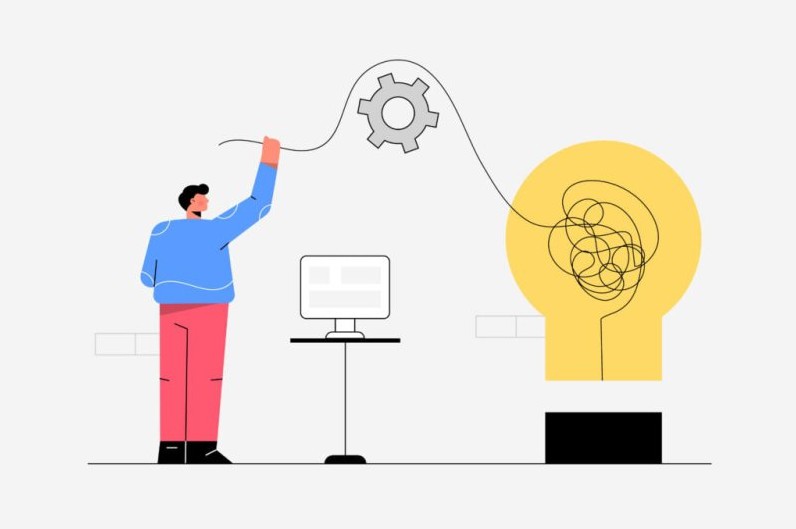
The short version for beginners goes like this. Choose a wallet. Understand key security concepts. Create and secure an account, save your 12-word seed phrase. Buy crypto by connecting a fiat ramp to your wallet. Confirm tokens in wallet and view the transaction on a block explorer. That's the whole flow. If you ever wonder how do i invest in crypto , these five steps are the door.
TL;DR steps for beginners
- Choose a wallet
- Understand key crypto security concepts
- Create and secure account with seed phrase
- Buy crypto via fiat ramp and wallet
- Confirm tokens and check block explorer
Seed phrase is critically important, best practices include not storing on digital device or anything connected to internet, never sharing.
Pick a Wallet That Fits You
Selecting a wallet means answering custodial or non-custodial. Non-custodial means you own and control tokens, hold the private key, and are responsible for security. Custodial means an organization controls assets, like traditional finance, with risk if the company fails. Types include software, hardware, and mobile wallets. Hardware is better for long-term storage; software and mobile give flexibility.
Examples of self-custody wallets from the source: Nash Wallet, MetaMask, Safe, Brave, Uniswap, Trust Wallet. Custodial options include Coinbase (also has non-custodial), Binance, Gemini, BitGo, Anchorage Digital. When you start with cryptocurrency investments for beginners , pick a wallet you can actually understand, not the one with the loudest ad.
Keep Your Coins Safe
Securing your wallet is not optional. The seed phrase should never touch a digital device or anything online. Private key theft loses your assets for good. Multi-Party Computation (MPC) spreads transaction computation so the private key is never shared. Use a strong password, 2FA, and biometrics. Use a third-party authenticator app, not SMS. Biometrics like face scan add a solid layer.
The Nash platform shows these steps in practice: clean interface, compliance via Liechtenstein and Netherlands registrations, MPC security, self-custody, fiat ramp, IBAN account, DeFi access. But the general steps apply broadly to any wallet you pick. Don't overthink the brand, just follow the security basics.
Buy Crypto with Fiat
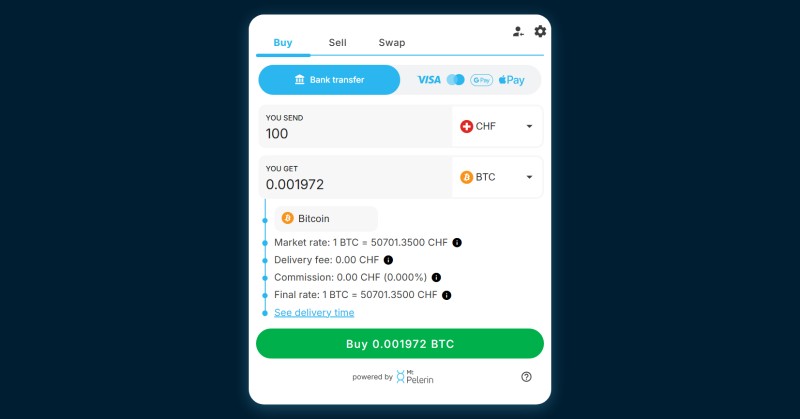
Buying your first cryptocurrency starts with research. Look at the project, market cap, and your risk tolerance. Step one is the fiat to crypto ramp: connect a bank, debit, credit, PayPal, or Plaid. Compliant platforms require KYC (Know Your Customer). Step two is the purchase: select token, input fiat amount, review quote, click buy, confirm. That's it, you own crypto.
If you are still asking how to get rich off crypto , slow down. The source shows a doctor who bought despite dips and kept a tiny 2% allocation. Getting rich is not the base plan; not blowing up your savings is. A public crypto exchange with KYC is where most people actually start, and that is fine.
One Doctor's Crypto Allocation
A physician named Dr. Francis Bayes shared a simple approach. His thesis: "Some smart people will figure out some useful things with crypto, and I do not want my FOMO to affect other aspects of my financial plan." He bought crypto despite Bitcoin being in the $40,000s in December 2021 and below $20,000 in 2022. Later Bitcoin passed $90,000 and then $100,000 a few days after. Those are historical price points, not a forecast.
His allocation settled at 98% stocks (index funds) and 2% crypto. The 1% to 5% range is the sweet spot for volatility and weak correlation with stocks. Going from 2% to 5% adds a lot of risk. He rebalances when crypto hits 1.6% (lower) or 2.5% (upper). Gains from selling buy stocks; buy crypto with cash from checking. A spreadsheet alerts him when thresholds break.
Settled on 2% because 1%-5% is sweet spot for volatility and weak correlation with stocks; going from 2% to 5% adds significant risk.
Reader Views on Bitcoin and Crypto
The comment section was a mixed bag. Some Bitcoin maximalists say BTC is a hard asset, better than gold, unconfiscatable, with fixed supply. They think nation states will buy and point to books like The Bitcoin Standard. They call other cryptos scams. Skeptics, including the site editor, say Bitcoin is speculative, produces nothing, and is not usable for daily buys. Past returns can't continue forever.
One editor note: if Bitcoin replaced all world money ($80T), it's only about 40X from a $2T base, so even a 2% allocation wouldn't double your money. Some readers compared gold: from $193/oz in 1978 to $2680 later, about 5.6% yearly plus mining. Others see crypto as pure speculation, zero-sum. The author says follow your plan, don't let FOMO break compounding. That is a calm take I respect.
Two Paths to Use Crypto Holdings
A guide on making money with crypto outlines two main paths. Path one: buy and hold, then borrow against a portion. This lets owners diversify into cash-flowing assets without selling core exposure. Use case: get a crypto mortgage, buy property, rent creates what some call bitcoin-yield. Centralized lenders offer custodians and cure windows; decentralized protocols use smart contracts but carry code risk.
Path two: buy and hold, then sell a slice after appreciation. Cleanest way to turn coins into cash without leverage. Set sell bands: after 50% gain sell 10%, then 5% if it rises another 10%. Simple example: start $300,000, up 50% to $450,000, sell 20% = $90,000, keep 80%. Trade-offs: tax event, regret if price rises, but no collateral risk. Both paths depend on time horizon and how much complexity you can handle.
Guardrails for borrowing against crypto
- Match loan duration to the asset
- Keep loan-to-value conservative
- Pre-fund top-up liquidity
- Model worst drawdown and rate increase
- Document ownership proofs
Critical View of Web3 Centralization
A cryptographer (Moxie Marlinspike, writing in January 2022) explored web3 and found that despite decentralization claims, practical use consolidates around centralized platforms. People don't want to run their own servers. Blockchain protocols move slow; platforms iterate fast. He built dApps and saw "distributed" only meant state on chain, but clients can't be blockchain peers.
Almost all dApps use Infura or Alchemy to talk to Ethereum. Those APIs don't verify chain state; they trust two companies. MetaMask shows balance via Infura, transactions via Etherscan, NFTs via OpenSea APIs. When OpenSea removed an NFT, it vanished from the wallet because the wallet used OpenSea's API. NFT standards mostly store a URL, not data on chain. Decentralization is not of immediate practical importance to most users, he argues. Design systems that distribute trust via crypto without distributing infrastructure.
web3 immediately tends to centralization through platforms; decentralization not of immediate practical importance to most participants.
Where RWA and Stablecoins Meet the Map
So when you search good crypto to buy, the map is clearer now. RWA tokens are real but the source list was blocked, so we stay cautious. Stablecoins like RLUSD give a dollar-pegged option with oversight. Beginner steps are just wallet, security, ramp, buy, confirm. The doctor's 2% rule keeps you sane. The web3 critique reminds you that "decentralized" is often a label, not a fact.
I would not call any single coin the next big crypto because the source don't give us that. What it gives is structure. You can use a deck screener crypto type tool on your own later, but the base learnings are here. Keep it simple, check the backing, and don't let some loud post drain your cash.
Plain Beginner Path Recap
If you do nothing else, remember the beginner path. Get a non-custodial wallet if you want control, or a custodial one if you want ease. Write the seed phrase on paper. Connect a fiat ramp with KYC. Buy a small amount, confirm on explorer. That is cryptocurrency investments for beginners without the circus. Stablecoins can be your first stop before volatile coins.
And for the calm investor, a 2% allocation with rebalancing bands is a sane frame. RLUSD or similar dollar-pegged tokens fit if you want stability. RWA tokens need more research since our source list was locked. The good crypto to buy is the one you understand and can secure. That's the whole post, no hype, just a map.






Comments on “Where to Find Good Crypto to Buy: From RWA Tokens to Stablecoins”
No comments yet. Be the first to share your thoughts.