
What Beginners Get Wrong About a Trading Bot App
I keep seeing the same thing with new folks who try a trading bot app. They think the hard part is the strategy. It is not. Most traders break because of bad execution. They see a move, freeze, enter late, exit early, and blow up a decent plan. A trading bot app fixes that by doing the same steps over and over without the panic.
You don't need to be a coder to start. The edge is not a smarter brain behind the screen. It is that the bot follows your rules when you would not. And hey, don't skip this part: small money first, always.
Execution Beats Strategy for Most New Traders
Most people fail at trading because they can't stick to the plan. A trading bot app takes the repetitive work and just runs it. You set the rules once. Then the system buys or sells the same way each time. That cuts the dumb emotional moves that kill accounts.
When I read about this, the point was clear: a trader sees movement, hesitates, enters late. The bot does not hesitate. That is why automation helps normal retail users more than a clever new idea.
Most traders don't fail because of strategy - they fail at execution.
Start Small With a Trading Bot App
The source walks through setting up a trading bot app on a small budget. You can begin with $100 to $200, use BTC/USDT, and stick to spot trading. That is enough to see how the bot behaves without risking rent money.
One setup described uses a LOOP Bot on Bitsgap. You connect exchange by API, pick the bot, choose BTC/USDT, set budget, and launch. The bot then places buy and sell orders in a range and repeats the cycle. This is a plain way to learn the ropes of starting crypto trading without going deep into code.

With a $100 setup, you should expect many small trades in the first days. The goal is not big profit. The goal is to confirm the bot stays active and follows its logic. If you stop it too early, you break the test.
How Exchanges Actually Fill Orders
A trading bot app sends orders to an exchange. The exchange checks rules first. If your order breaks a limit, it gets rejected before it hits the book. For example, a request to buy 1 satoshi of BTC gets rejected by many exchanges because the fee is not worth it.
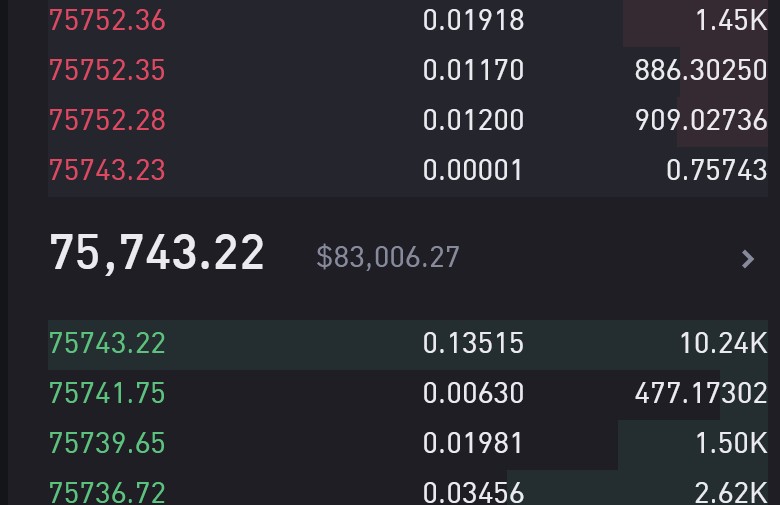
Then the order goes into the order book. The matching engine pairs it with other orders. A market buy of 0.02 BTC may take several asks to fill. You pay a weighted average, not just the top price. And watch the tiny "trap" ask: a small order before big ones can make your average price worse than it looks.
The lifetime of each order ends when the order is either fully filled or when the order is canceled by the person who placed it.
Order Fills and Partial Fills
When an order matches another, we call it a fill. If only part of your order is matched, that is a partial fill. A market order often fills in one shot. A limit order can sit and fill in pieces over a long time.
The source shows code where a bot waits for fills and logs each one. The fill data has cumulative size and last size. You don't need to store that by hand. Focus on the trade logic, not the math bookkeeping. But you should know what a partial fill is, or your trade view will confuse you.
Common fill terms
- Fill - the order is fully matched with another order
- Partial fill - only part of the order size is matched
- Cumulative size - total filled size so far
- Last size - most recent size from the last trade report
AI Trading Bot for Beginners Is Not Magic
An AI trading bot for beginners should not feel like a black box. At best, it is a tool that reads market data, runs parts of the trade, follows your logic, and watches risk better than you can by hand. At worst, it is a label that makes risky trading sound easy.
The CFTC warns that AI cannot predict the future or sudden market moves. Claims of high or guaranteed returns should be treated carefully. A better goal is a bot that is clear, shows its work, and is easy to watch. This is where best ai for crypto trading talk gets noisy, so stay calm and read the fine print.
AI cannot predict the future or sudden market changes.
Basic Bots vs AI Bots
A basic crypto bot follows fixed rules. Buy when price drops below X. Sell when average crosses. That is useful but stiff. An AI bot may look at more inputs and shift risk by volatility.
BitradeX is described as a packaged product inside a platform, not a build-from-scratch tool. Its AI Bot maps strategy output to execution and risk. For a new user, that can lower the wall. But you still need to know the product terms. A best ai crypto trading app claim means little if you can't see your own trade records.

Beginner Checklist Before You Use a Bot
Before you put real funds in a trading bot app, you should know a few things. Crypto prices move fast. Bots can lose money. AI does not guarantee accuracy. High return claims need a hard look. Fees and spreads matter. Risk controls beat return screenshots.
The source gives a plain checklist. Use it. A good bot shows what it does, explains the logic, shows transactions, and lets you withdraw. If it says guaranteed profit, that is a red flag. Also, don't trust social media over official pages.
Questions to ask any bot
- What does the bot actually do?
- Does it explain its strategy logic?
- Does it show transaction records?
- Are risks explained clearly?
- Can you withdraw or redeem easily?
- Is there real-time monitoring?
Flexible vs Fixed Bot Products
Beginners should note if a bot product is flexible or locked. Flexible products let you pull funds easier. Fixed-term products may pay more but lock your money for a cycle. DIY API bots give control but need setup. Managed platform bots are simple but you give up some control.
BitradeX lists AI Daily as flexible and AI 30-360 as fixed with set cycles. For a first bot, flexibility is often the safer pick. Locking funds only makes sense after you know the product. This matters when you compare automated trading bots for beginners across platforms.
Product styles
- Flexible bot - easier access to funds, maybe lower return
- Fixed-term bot - lock funds, can't redeem early
- DIY API bot - full control, needs tech skill
- Managed platform bot - simple, less direct control
Risk Controls You Should Look For
Risk control is more important than return language. A beginner bot should explain how it handles volatility, drawdown, and weird markets. Look for max position size, stop-loss, drawdown watch, and clear records.
BitradeX says its risk system has daily stress tests, real-time exposure balance, and a max daily drawdown target. Those are good claims to review. But risk control is not zero risk. Market loss can still happen. The CFTC and SEC warn about fraudsters using AI words for guaranteed returns.
Useful risk features
- Maximum position sizing
- Stop-loss logic
- Drawdown monitoring
- Real-time exposure balancing
- Stress testing
- Transaction records
Build a Simple Bot With Claude Code and Alpaca
The source shows a paper trading agent built with Claude Code and Alpaca API. It wakes on schedule, reads market data, places trades, and writes a journal. You start on paper, then flip to live when ready. Starting on paper is the only sane move.
The agent has three jobs: research, trade, journal. It never uses market orders by rule. It uses limit orders within 0.2% of ask. If a position drops 8%, it closes. That is a plain guard rail. A setup like this is a real example of trading bots that you can run without a big team.

The journal is the most useful part. Every decision is logged. You can read why the bot did something and catch bad behavior. Over time, that log helps you improve the rules. The source says paper results look better than live because of slippage and partial fills.
Paper Trading First, Then Scale
Every code example I read starts on paper trading. Alpaca gives paper keys. You test the bot, watch fills, and read the journal. Only after that do you switch to live keys. Live trading has real slippage and tax stuff.
A public challenge ran an AI agent with $10,000 and shared the losses too. Takeaway: agents are good at steady execution, not at guessing direction. Paper trading shows you the shape of the system before money is on the line.
Paper trading results will look better than live results because of slippage and partial fills.
Stock Info Bot With RASA
One person built a bot with RASA to get stock info fast. It shows price, news, sentiment, community mood, and institutional activity. It does not auto trade. The user sends commands, the bot replies. That is a narrow but real use of a trading bot app for stock folks.
The builder says normal retail investors do best with human judgment. Predicting stock prices is hard. You need modeling, data, and coding skill to build a real predictor. So the bot just serves info. For algorithmic trading cryptocurrency users, the lesson is similar: start with clear data, not blind trust.
Scaling a Trading Bot With Time-Series Data
As tick data piles up, a small bot can slow down. The source uses QuestDB to store market data separate from the bot. You ingest candles, then load them into memory for trades. This keeps the bot fast and lets many strategies read one source.
The investing-algorithm-framework works with OHLCV data as a dataframe. You register a source, then a strategy reads it. When data grows, a time-series db is the backbone. This is the part most demos skip, but it is how you go from toy to real trading bot crypto use.

TradersPost as a Bot Platform
TradersPost links strategies from TradingView or TrendSpider to brokers. You set entry and exit rules, connect accounts, and send signals. It runs across stocks, crypto, options, and futures. It is non-custodial, so it does not hold your funds.
The platform fits retail and systematic traders. It connects with many brokers and exchanges. For a new user, it removes the need to code API calls. But the risk disclosure is clear: automated trading has real loss risk. When you look at best brokers for crypto trading , check if the bot platform supports them.
Common Beginner Mistakes
The source lists mistakes that show up across bot apps. Most come from messing with the system. Starting with too much capital, running many strategies, stopping early, manual changes mid-process. Also picking by advertised return, ignoring lock-in, not reading risk.
Another big one: assuming AI means guaranteed profit. It does not. And not checking transaction records is a silent killer. The CFTC and SEC warn about AI language used for guaranteed return schemes. Slow down when a product sounds too easy.
Mistakes to avoid
- Starting with too much capital before you understand setup
- Running multiple strategies and creating confusion
- Stopping the bot before the cycle plays out
- Making manual changes that break strategy logic
- Choosing based only on advertised returns
- Not checking transaction records
Gemini App and Beginner Access
Some beginners look at simple mobile tools to start. A gemini cryptocurrency app is one way to watch account activity and market state from a phone. The source notes that a crypto trading app matters for beginners who want to check status on the go.
I am not saying one app is the answer. The point is visibility. You should see current status, subscribed amount, trade history, and redemption terms. If the bot feels invisible, that is a problem. Pick tools that show you what is happening.
Why Transparency Matters
Beginners often don't know what the bot does after they click start. A good bot shows status, amount, history, P&L, risk alerts, and rules. BitradeX says it gives real-time data and reports. That fits what a new user needs: not just automation, but sight.
The CFTC warning is simple. AI can't see sudden changes. So the bot should show you enough to step in. A trading bot app that hides behind "AI" is one to avoid. Clear records beat shiny words.
A good AI bot should not feel invisible.
My Take on a First Bot
If I were new, I would start with paper or $100 live on a simple cycle bot. I would read the risk page before the return page. I would keep the journal or trade history open. And I would not touch lock-in products until I get it.
The source is clear that execution is the win, not the brain. A trading bot app that follows your rules beats a clever plan you break by hand. Stay small, watch fills, and learn the boring parts. That is how you avoid the common traps.











Comments on “What Beginners Get Wrong About a Trading Bot App”
No comments yet. Be the first to share your thoughts.