
Why the Cheapest Exchange on Paper Is Not Always the Cheapest
I have been comparing lowest fees crypto exchange options for a while now. The headline rate looks great until you add withdrawals, spreads, and the network fee that hits when you move coins off the platform. A 0.1% trading fee can turn into a much higher all-in cost once you factor in how you fund the account, how often you withdraw, and which network you use. This post breaks down what actually moves the needle.
What Makes Up the Total Cost
Trading fees are only one line item. A complete comparison needs to include maker and taker rates, bid-ask spreads, fiat deposit charges, crypto deposit costs, exchange withdrawal fees, blockchain network fees, spread-based pricing on consumer apps, custody or inactivity fees, native-token discounts, staking-based tiers, subscription costs, and the cost of converting between fiat, stablecoins, and crypto. Miss any of these and the comparison is incomplete.
Cost components to check
- Maker and taker trading fees
- Bid-ask spreads and slippage
- Fiat deposit fees
- Crypto deposit costs
- Exchange withdrawal fees
- Blockchain network or gas fees
- Spread-based pricing on consumer apps
- Account, custody, inactivity, transfer, and margin fees
- Native-token discounts
- Staking-based fee tiers
- Subscription costs
- Fiat, stablecoin, and crypto conversion costs
Exchange Fees Versus Network Fees
Exchange fees are set by the platform. They cover trade execution, withdrawals, deposits, custody, and premium services. Network fees go to the blockchain - miners on Bitcoin, validators on Ethereum, gas on other chains. The exchange does not control them, though it may pass them through during a withdrawal. Ethereum-based tokens often cost more to move than assets on Solana, Avalanche, or BNB Chain. Congestion can spike the cost in minutes. Check the network fee right before you withdraw; do not treat it as a fixed exchange charge.

Maker and Taker Fees Explained
A maker places a limit order that sits on the book and adds liquidity. A taker removes liquidity by matching an existing order. Market orders are almost always taker orders. A limit order can still be a taker if it crosses the spread - for example, a buy limit at or above the best ask executes immediately and pays the taker rate. Maker fees often range from 0% to around 0.2%. Taker fees typically start around 0.2% to 0.6% and can be higher on consumer interfaces. The structure rewards liquidity; without makers the book thins out and spreads widen.
A limit order does not automatically guarantee maker status. If the best ask is $49,990 and a trader submits a buy limit order for $50,000, the order executes immediately against the available sell order and receives taker fees.
How to Actually Get Maker Rates
Use limit orders placed away from the current best price. For a buy, set the limit at least one tick below the best bid. For a sell, set it at least one tick above the best ask. Enable post-only mode - it rejects or cancels the order if it would execute immediately. Verify post-only is on; some exchanges disable it by default. Combine with Good-til-Canceled (GTC) for the cleanest maker setup. The tradeoff: the order may never fill if price moves away.
Common triggers for unexpected taker fees
- Buy limit at or above the current ask
- Sell limit at or below the current bid
- Market orders
- Post-only disabled
- IOC or FOK time-in-force
- Partial fills on large orders
Spreads and Slippage Eat Into Returns
The spread is the gap between the highest bid and the lowest ask. Buying at the ask and selling at the bid means the asset must move enough to cover that gap twice just to break even. On commission-free apps, the spread is often wider - that is how they make money. Tight spreads usually live on deep books with high liquidity. Slippage is the difference between the expected price and the fill price. It grows in thin books, fast moves, or when a large order walks multiple levels. Both spread and slippage are real costs even when the headline commission is zero.
Fee Tiers, Volume, and Native-Token Discounts
Most exchanges use a rolling 30-day volume schedule. Fees drop as volume climbs. At the top end, maker fees can hit 0% or even turn negative (a rebate). Some platforms also require a minimum balance of their native token. Binance gives a 25% discount when fees are paid in BNB - a 0.1% base becomes 0.075%. Crypto.com ties rates to CRO staking; the elite tier reaches 0% maker and 0% taker. Coinbase One charges $29.99 per month and removes trading fees on up to $10,000 of monthly volume. Always verify the current requirements - holding, staking, lockup, or eligibility terms can change.
Platform Snapshots: Binance, Coinbase, Gemini, Kraken, and More
The figures below are snapshots from different dates and product interfaces. They are not a single harmonized table. Always check the live schedule before you trade.

Binance Global and Binance.US
Binance Global lists a standard 0.10% maker and 0.10% taker. Paying with BNB cuts both to 0.075%. VIP tiers need both volume and BNB holdings - for example, VIP 1 requires $1 million monthly volume and 25 BNB daily average balance. Binance.US is a separate entity with its own schedule. Tier 0 pairs (all include BTC) have zero trading fee. Tier 1 starts at 0.60% taker and 0.40% maker under $10,000 volume, dropping to 0.20% taker and 0.10% maker at $100,000 to $1 million. Do not mix the two fee tables.
Coinbase Advanced and Coinbase One
Coinbase Advanced uses a volume ladder. The detailed schedule shows 0.40% maker and 0.60% taker at the entry tier ($0–$10,000), falling to 0% maker and 0.05% taker above $400 million. A separate maker-taker analysis cites different entry numbers - 0.60% maker and 1.20% taker under $1,000 - and places 0% maker at $250 million. The sources do not explain the gap. The simplified consumer interface can charge up to 1.49% plus spread. Coinbase One is a $29.99 monthly subscription that waives fees on the first $10,000 of monthly trades; treat that as a product-specific snapshot.
Gemini ActiveTrader
Gemini's ActiveTrader schedule starts around 0.20% maker and 0.40% taker at the base tier, dropping to 0% maker and 0.03% taker at the highest volumes. Other snapshots show conflicting entry rates - some list 0.35% maker and 0.60% taker in a 2023 comparison. The simplified interface adds a 1% convenience fee on top of a 1.49% transaction fee for instant and recurring orders. Custody is quoted at 0.4% or $30 per asset per month, whichever is higher. One overview says Gemini charges no withdrawal fee beyond the blockchain fee; another says crypto withdrawals carry a flat fee plus dynamic network charges. The Gemini exchange review data across sources is not fully reconciled.
Kraken and Kraken Pro
Kraken Pro's 2026 guide lists 0.40% taker and 0.25% maker at the entry tier ($0–$10,000), falling to 0.18% taker and 0.08% maker at $500,000–$1 million. Other schedules cite a starting maker of 0.16% and taker of 0.26%, with floors at 0% maker and 0.10% taker. Crypto deposits are generally free. Fiat deposit costs depend on method. Crypto withdrawals are described as cheaper than fiat withdrawals, with exact fees dynamic and asset-specific. Kraken supports over 250 assets in recent profiles.
Crypto.com, Bybit, and Others
Crypto.com Exchange starts at 0.075% maker and 0.075% taker, with progressive reductions via CRO staking down to 0% at the elite tier. The consumer app uses spread-based pricing instead. Bybit lists base spot rates of 0.10% maker and 0.10% taker. VIP qualification can use either assets ($100,000) or volume ($1 million) - not both. Bybit's market-maker program offers rebates up to -0.015%. Gate.io advertises 0.1% trading fees plus withdrawal fees and offers spot maker rebates up to -0.012%. KuCoin, Bitstamp, and Huobi appear in historical comparisons with varying figures - treat those as dated snapshots.
CEX vs DEX: Different Fee Models
Centralized exchanges are custodial. They control matching, hold funds, set fee schedules, and offer fiat rails, support, and compliance. Typical CEX maker-taker range is 0% to 0.60% plus deposit, withdrawal, custody, and fiat fees. Decentralized exchanges run on smart contracts. There is no operator-set maker-taker fee; instead, liquidity providers or the protocol take a pool or swap fee, often 0.01% to 1.00%. Users still pay gas. DEX trades also expose you to smart-contract risk, gas volatility, bridge risk, pool risk, and potentially wider spreads in thin pools. CEXs remain standard for institutional and compliance-heavy work. DEXs can beat CEXs on large on-chain swaps, but gas can erase the edge.
Subscriptions, Custody, and Hidden Charges
Subscription models only pay off if the savings exceed the monthly cost. Custody fees add 0.05% to 0.15% annually for institutional storage. Gemini's custody at 0.4% or $30 per asset per month is notably higher. Inactivity fees, internal transfer fees, margin interest, stop-order fees, and fiat on- and off-ramp charges all add up. A platform with no explicit commission may still cost more through wider spreads or payment for order flow. Robinhood, for example, is commission-free but charges a spread and a variable order-flow fee.
Commission-free platforms commonly generate revenue in two ways: payment for order flow and wider spreads. The compensation can come at the cost of execution quality.
Non-Fee Factors That Change the Real Cost
Security, regulatory compliance, liquidity, asset support, customer support, interface, account minimums, fiat support, and institutional tools all affect the total cost of trading. Coinbase offers FDIC insurance on USD up to $250,000. Gemini insures digital assets in its wallet. Both are regulated U.S. platforms - Coinbase in over 100 countries, Gemini in just over 60. Liquidity determines spread, slippage, fill speed, and large-order execution. A lower fee on a thin book can cost more than a higher fee on a deep one. Verify the asset is listed, available in your region, on the right network, with deposits and withdrawals enabled, and with sufficient depth. Fiat support differs: Coinbase lists USD, GBP, EUR; Gemini adds AUD, CAD, SGD, HKD. Broader fiat support can save an extra conversion hop.
Checklist before picking an exchange
- Asset listed and available in your region
- Correct network supported for deposits and withdrawals
- Sufficient order-book depth for your size
- Fiat deposit and withdrawal methods you can use
- Regulatory status in your jurisdiction
- Custody model and insurance coverage
- Interface that matches your workflow (simple vs advanced)
- Support channels and response times
A Practical Total-Cost Comparison Method
Pick a trading pattern - typical trade size, trades per month, maker/taker mix, spot or futures, holding period, withdrawal frequency, preferred assets and networks, deposit method. Then calculate: buy-side fee, sell-side fee, any subscription or token requirement, spread markup or slippage. Add deposit costs (card, bank, e-wallet, crypto network). Add withdrawal costs per asset - exchange fee, current network fee, minimums, congestion check, network match. Add holding costs - custody, account maintenance, inactivity, margin interest, staking costs, subscriptions. Compare actual execution at comparable sizes and timestamps. Apply discounts only when you meet the volume, token, or subscription threshold. Record every line item: date, amounts, order type, maker/taker status, trading fee, spread, deposit fee, withdrawal fee, network fee, subscription allocation, token discount, staking rewards, gain or loss.
Historical Lists Show Different Winners
Different sources produce different rankings because they weight different things. A 2025 guide highlights Coinbase, Gemini, Kraken, Binance.US, Blockchain.com, eToro US, and Robinhood. Another list names Binance, CoinRabbit, Coinbase with subscription, Gemini, and Phemex as the five cheapest for 2025. A 2023 comparison names Binance, Kraken, KuCoin, Bitstamp, Gemini, and Huobi. The list of cryptocurrencies exchanges you compare should match your actual use case - headline spot fees, consumer interface, custody, withdrawal costs, institutional tools, OTC trading, or small-swap services.
Small Swaps and Aggregators
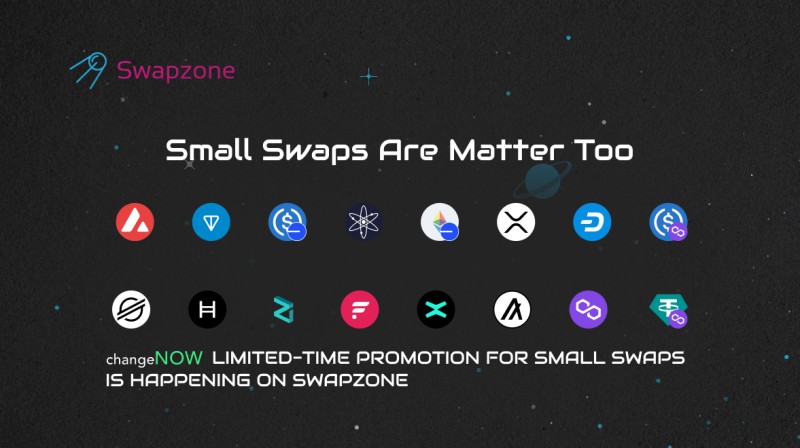
Percentage fees hit small transactions harder. A 1% fee on $100 is $1 - a larger share of capital than $100 on $10,000. Aggregators like Swapzone compare rates across 28+ providers. ChangeNOW, a non-custodial instant exchange, ran a promotion with zero deposit commissions on 16 assets including AVAX, TON, USDC on Base, ATOM, ETH on Base, XRP, and several stablecoin networks. The promotion reduced platform fees but not blockchain gas. Features relevant to small traders: non-custodial, no KYC for most swaps, no minimum, fixed or floating rate, hundreds of pairs, fiat on-ramp via card. Strategies: dollar-cost average weekly, test new assets with $20–$50, rebalance more often, consolidate dust across chains, use stablecoins on low-cost L2s as temporary positions.
Bots, Grid Trading, and Fee Sensitivity
Grid bots place limit orders at fixed intervals. Profit per grid equals step percentage minus round-trip fees. At a 0.5% step and 0.1% maker fee each side (0.2% round trip), the grid nets 0.3%. If fees rise to 0.2% per side, the net drops to 0.1%. A bot doing 50 trades a day on $10,000 capital at 0.10% taker pays $100 daily ($3,000 monthly). At 0.05% maker, it pays $50 daily ($1,500 monthly) - an $18,000 annual difference. Settings: enable post-only, make grid spacing at least twice the combined round-trip fee, use 0.3%–0.5% spacing when fees total 0.1%, consider above 1% for volatile alts. Pionex offers flat 0.05% on built-in grid bots. MEXC sometimes runs 0% promos on selected pairs.
Maker Rebates and High-Volume Tiers
Some programs pay makers instead of charging them. Bybit offers up to -0.015%. Bitfinex has negative maker rates at the highest tiers (typically >$15 million monthly volume). Gate.io offers up to -0.012% spot maker rebate. Hyperliquid cites 0% maker at a rolling $7 billion volume threshold. These thresholds put rebates out of reach for most retail traders. The practical focus stays on ordinary volume tiers, native-token discounts, and clean maker execution.
Fee Verification and Risk Reminders
Fee schedules change. Volume tiers, promotions, token discounts, withdrawal fees, and network costs can shift without notice. Before every transaction, verify: current maker and taker rate, your account or VIP tier, product interface, asset and network, deposit method, withdrawal amount, exchange fee, blockchain fee, spread or convenience fee, subscription or token requirement, promotion expiration. Cryptocurrency trading carries high risk. Fee comparisons describe costs and features - they do not eliminate market, custody, smart-contract, liquidity, regulatory, or fraud risk.
The lowest total cost depends on the trader's volume, order type, assets, payment method, withdrawal frequency, network choice, account tier, and any subscription, custody, spread, or token-holding charges.
Final Thoughts on Picking a Platform
There is no single crypto exchange with lowest fees for everyone. The top cryptocurrency exchange for a high-volume maker on Binance Global with BNB is different from the right choice for a U.S. retail trader using Coinbase Advanced, or someone doing small swaps on an aggregator. Treat every fee table as a snapshot. Build your own comparison with your real numbers. Check the non-fee factors that can cost more than the fee spread. And always verify the live schedule before you send a transaction.










Comments on “How to Compare Cryptocurrency Exchanges by Lowest Fees and Total Cost”
No comments yet. Be the first to share your thoughts.