
Why the Lowest Fee Headline Lies
I spent weeks comparing fee schedules across dozens of platforms. The headline number never tells the full story. Some exchanges show a 0.1% trading fee but charge $25 to withdraw Bitcoin. Others have zero trading fees on certain pairs but embed a 1.5% spread in the price. The real cheapest exchange depends entirely on how you actually trade.
A low trading fee is only one piece. The total cost includes bid-ask spreads, payment processing, withdrawal charges, blockchain network fees, custody fees, account fees, and the cost of waiting for settlement. An active trader cares about maker-taker rates and volume discounts. A first-time buyer gets hit harder by card fees, spreads, and verification delays. A small-position trader loses a meaningful percentage to fixed costs. A long-term holder may care more about custody fees than the spot rate.
Centralized vs Decentralized Fee Models
Centralized exchanges run the order book, hold your funds, and control the matching process. They use trading fees, spreads, withdrawal charges, and account services to cover server maintenance, cybersecurity, support, compliance, and liquidity incentives. Decentralized exchanges let you trade directly through smart contracts and automated liquidity pools. Fees go to liquidity providers or get redistributed through the protocol. DEXs have lower infrastructure costs but you still pay blockchain network fees for on-chain activity. You also face smart-contract risk, liquidity risk, and you manage your own keys.
A CEX gives you simpler UX, customer support, fiat deposits, withdrawal rails, and compliance controls. A DEX gives you custody control and permissionless access. The lower quoted fee on either model doesn't mean lower total cost without checking the other charges and risks.
Exchange Fees Are Not Gas Fees
Exchange fees are set by the platform. They apply when buying, selling, swapping, withdrawing, using account features, or accessing services. The rate may depend on volume, transaction type, account activity, interface, or jurisdiction.
Gas fees go to the blockchain network to process and confirm transactions. Ethereum, Solana, Polygon - each uses different fee systems. Gas rises when the network is congested and falls when activity drops. Ethereum is often more expensive than Solana or Avalanche, but actual costs change with conditions. Exchanges don't control blockchain gas prices. They may display the network fee, include it in a withdrawal estimate, or pass it directly to you. A low exchange withdrawal fee can still mean high total cost if the selected chain is congested.
How Tiered Maker-Taker Schedules Work
Most exchanges use a tiered maker-taker model based on rolling 30-day volume. Some lower fees start around $1,000 to $10,000 monthly volume. Others reserve best rates for six-figure monthly volume. A maker places an order on the book without immediate fill - adds liquidity. A taker submits an order that matches immediately - removes liquidity. Maker fees are usually lower. The structure encourages frequent, high-volume trading. As cumulative 30-day volume rises, the fee tier usually falls. Some high-volume maker rates hit 0%. Coinbase offers 0% maker above $250M monthly volume. Gemini removes maker fees above $10M. Some platforms use fixed rates for both. Others bundle costs into the spread. Less active traders often pay a per-transaction charge even outside the lowest tier.
The Fee Types You Actually Pay
Main fee categories
- Trading fees - apply on every buy, sell, or swap. Structured as maker/taker, flat percentage, or spread plus commission. Discounts may exist for holding native token, using pro interface, or subscription.
- Deposit and funding fees - crypto deposits often free at exchange level but sender pays network fee. Fiat via bank transfer may be free. Credit or debit card typically 2% to 5%. E-wallet fees sit between card and bank transfer.
- Withdrawal fees - flat exchange charge, percentage, both, or dynamic with network conditions. May also include blockchain network fee on top. Varies by asset and network. Small withdrawals hurt most when fixed fee divides across small amount.
- Spread fees - difference between buy price (ask) and sell price (bid). Built into quoted price, not shown as separate fee. Wide spread reduces capital after round-trip. Coinbase embeds roughly 0.5% to 2% in retail buy price per one analysis.
- Payment processing fees - card and bank charges separate from exchange trading rate. Credit/debit commonly 3% to 5%. ACH or bank transfer often free but takes three to five business days.
- Network and gas fees - set by blockchain, not exchange. Congestion, complexity, asset type all affect cost. Ethereum-based tokens cost more than Solana, Avalanche, or BNB Chain. Smart-contract interactions cost more than simple transfers.
- General account and service fees - inactivity fees, margin interest, account maintenance, internal transfer charges, advanced feature costs. Listing fees paid by token projects, not end traders.
- Custody fees - for holding assets after deposit. Based on total balance, per-asset value, or both. Gemini example: 0.4% or $30 per asset per month, whichever higher. Institutional custody ~0.05% to 0.15% annually. Matters more than trading fees for large held balances.
- Order-flow and spread-based costs - commission-free doesn't mean cost-free. Payment for order flow routes orders to market makers who compensate platform, potentially affecting execution. Wider spreads mean quoted price less favorable than mid-market.
What Drives Fee Differences
Trading volume and frequency are among the biggest variables. Exchanges reduce rates as rolling 30-day volume increases. One cost breakdown example: 0.25% maker below $50K monthly volume, 0.15% above $1M. Each exchange defines its own tiers. Asset and market conditions matter - stablecoins often get lower fees than volatile assets like Bitcoin or Ethereum. High demand can increase volume and improve liquidity, prompting fee cuts. Volatility increases risk and may cause fee or spread adjustments.
Location and regulation change everything. U.S. requirements - FinCEN, SEC, state regulators - limit assets and services, often raising fees. Gate.io restricted U.S. users in 2022 due to regulatory restrictions. Paybis operates in 180+ countries and 48 U.S. states. India passes a 30% GST to users. Japan, Singapore, Switzerland have more favorable environments. Always check fee schedules and availability for your actual jurisdiction.
Asset availability and liquidity: no exchange supports every cryptocurrency. Coinbase lists 250+ assets, Kraken 250+ pairs, Gemini 70+. Large list doesn't guarantee deep liquidity on every pair. Low order-book depth means wider spreads, more slippage, longer execution. Check available assets, network support, and withdrawal options alongside quoted fee.
Security features affect total cost because a breach, freeze, or failed transaction creates larger losses than a small trading fee. Look for 2FA, cold storage, encryption, proof of reserves, regular audits, insurance, 24/7 monitoring. Proof of reserves doesn't eliminate custodial risk but adds transparency. Cold storage keeps assets offline. 2FA reduces password-only access risk.
Speed and settlement time matter when prices move fast. Binance claims 1M+ orders per second. KuCoin has reputation for quick processing. These are platform claims, not guarantees. Bank transfer taking three to five days may cost less than card but creates opportunity cost if price changes while clearing. Card is faster but carries higher payment fee.
Withdrawal limits determine how much you can remove at once and how fast. Limits may vary by account level, verification status, asset, or jurisdiction. Platforms distributing to many users need high limits and efficient mass-payout tools. A low fee is less useful if you can't withdraw what you need or face long verification and settlement.
User experience and support: beginners want simple interface, guided onboarding, clear dollar balances, mobile access. Active traders want detailed charts, multiple order types, market data, advanced fee tiers. Long-term investors weight custody, proof of reserves, recurring purchases, regulatory oversight. Support factors: live chat availability, response time, language coverage, mobile functionality, human vs automated support. Reviews reveal unresolved withdrawals, ignored tickets, repeated delays.
Published Low-Fee Exchange Snapshots
The fee schedules in the source span multiple years, interfaces, and jurisdictions. A CoinTracker comparison dated September 2025 and updated April 2026. CoinRabbit guide January 2025, updated November 2025. Paybis analysis February 2026. INXY guide January 2026. Ledn updated April 2026. AlphaPoint May 2026. Different figures must be read in their published context. Global Binance lists 0.10% maker and taker. Binance.US has separate schedule starting 0.60% taker and 0.40% maker in one table, zero-fee Tier 0 pairs, and elsewhere described as 0% to 0.1%. Kraken shown as 0.40% taker and 0.25% maker in first tier but also starting around 0.16% maker and 0.26% taker in other profiles. Coinbase listed as 1.49%+ for consumer, 0.40% maker and 0.60% taker on Advanced, 0.5% in Pro description, zero under $29.99 subscription. Gemini distinguishes ActiveTrader, consumer app, and custody fees. Gate.io Trustpilot rated 1.3/5 and 1.2/5 in different parts. Paybis worked examples show 5.1% and 5.6% for $500 purchases, other passages describe typical 6% to 7%.
Coinbase
Coinbase leads U.S. by volume, supports 250+ cryptos. Advanced trading schedule under $1M monthly volume: $0-10K at 0.60% taker / 0.40% maker, $10-50K at 0.40% / 0.25%, $50-100K at 0.25% / 0.15%, $100K-1M at 0.20% / 0.10%. Maker fee reaches 0% above $250M volume. Another schedule shows maker 0% and taker 0.05% above $400M. Consumer fees often 1.49%+. Coinbase One subscription $29.99/month for zero trading fees up to $10K monthly trades. Paybis analysis: retail purchases include 0.5% to 2% embedded spread, 3.99% debit-card fee, separate Coinbase fee. Worked $500 example: $5-10 spread, $7.45 Coinbase fee, $19.95 card fee, $3 withdrawal = $35.40 to $40.40 total (7.1% to 8.1%). Publicly traded on Nasdaq, FinCEN registered, beginner-oriented. Strong U.S. compliance but bank transfers take 3-5 days, support may route to automated systems. Higher fees than many alternatives but clean interface, educational content, established mobile app.
Gemini
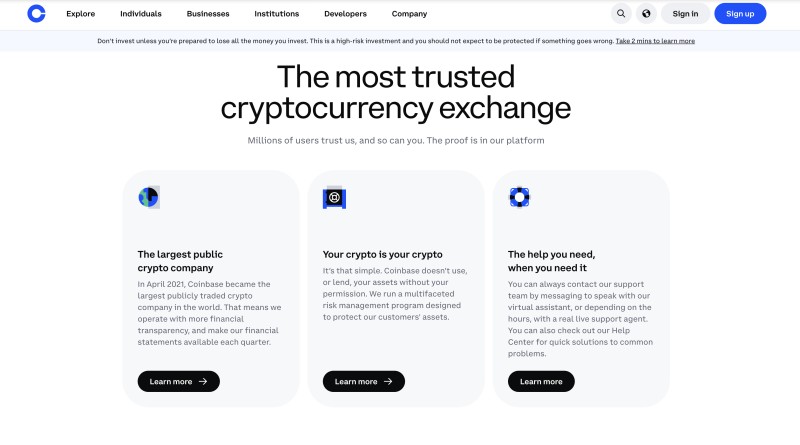
U.S.-based, 70+ cryptos. ActiveTrader under $1M monthly: under $10K at 0.40% taker / 0.20% maker, $10-50K at 0.30% / 0.15%, $50-100K at 0.25% / 0.10%, $100K-1M at 0.20% / 0.08%. CoinTracker says maker fees removed above $10M volume. One 2025 comparison says no withdrawal fees beyond blockchain fee. Another says website and mobile app minimum 1.49% charge, ActiveTrader starts 0.20% maker / 0.40% taker. Founded 2014 by Winklevoss twins, regulated by NYDFS. Compliance, institutional-grade security, insured custody. Simple consumer app and lower-cost pro interface. Bank deposits free, debit card 3.49%. Crypto deposits generally free, withdrawals may include flat exchange fee plus dynamic network fee. Custody fee 0.4% or $30 per asset per month - separate from trading schedule, makes platform expensive for holders who don't trade.
Kraken
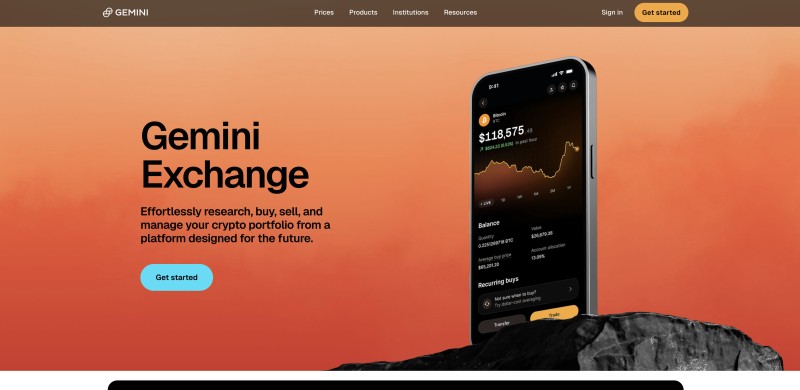
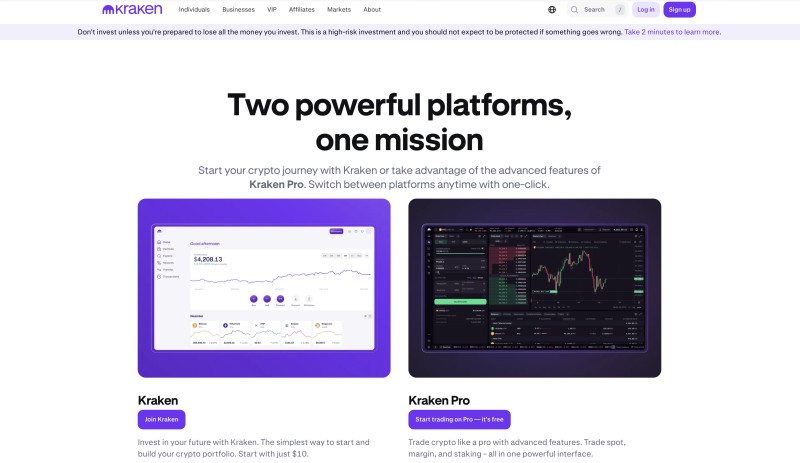
One of oldest U.S. CEXs, founded 2011, launched 2013. Advanced tools, multiple order types, spot and futures, security, proof-of-reserves audits. Kraken Pro schedule: $0-10K at 0.40% taker / 0.25% maker, $10-50K at 0.35% / 0.20%, $50-100K at 0.24% / 0.14%, $100-250K at 0.22% / 0.12%, $250-500K at 0.20% / 0.10%, $500K-1M at 0.18% / 0.08%. Other profiles list starting fees ~0.16% maker / 0.26% taker - may refer to different schedule, interface, date, or volume definition. One guide uses 0.0005 BTC as Bitcoin withdrawal example. Crypto deposits free, fiat methods and withdrawal costs vary. Suitable for beginners and experienced traders, lower rates relevant to active users. FinCEN registered, licensed in several states, proof-of-reserves audits.
Binance.US and Global Binance
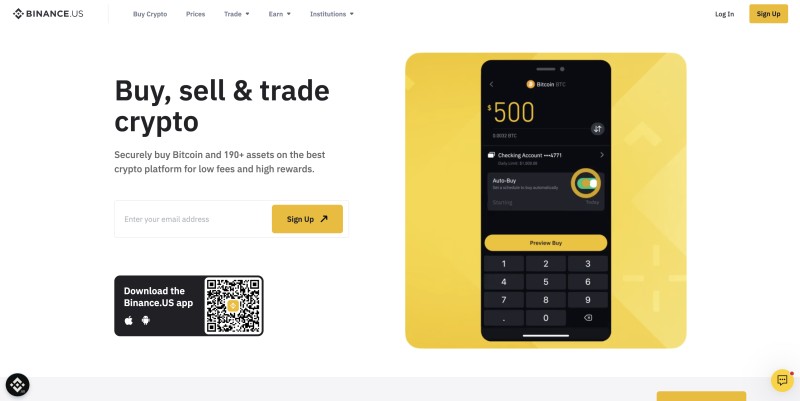
Binance.US is U.S. subsidiary of global Binance (world's largest by volume). Launched 2019, FinCEN registered. Smaller asset selection than international due to U.S. regulations, but high liquidity. Tier 1 schedule: under $10K at 0.60% taker / 0.40% maker, $10-50K at 0.40% / 0.25%, $50-100K at 0.25% / 0.15%, $100K-1M at 0.20% / 0.10%. Tier 0 pairs (all include Bitcoin) have zero trading fees. BNB reduces fees further. One profile describes Binance.US maker/taker starting ~0% to 0.1% - different schedule or time period. International Binance: standard 0.10% maker and taker, 25% discount paying with BNB, VIP tiers reduce further, high-volume ~0.075%. Founded 2017 by CZ, 180M+ users, nearly 200 countries, substantial liquidity. Fees still combine with spreads, withdrawals, payment costs, network fees.
Gate.io
Advertises 0.1% maker and taker at VIP 0 - $1,000 trade = $1 fee. Primarily aimed at professional traders, not beginners. Interface shows 2,500+ trading pairs, futures up to 100x leverage, margin tools. U.S. users restricted - regulatory restrictions also affect Canada, China, others. Supports 3,600+ assets (2,500 pairs vs 3,600 assets measure different things). Withdrawal examples: 0.0001 BTC (~$5), 0.002 ETH (~$7). Monthly withdrawal = $60-84/year. Debit card $10,000 USDT purchase produced 9,494 USDT = 5.32% cost. KYC1: 2M USDT/day with government photo ID. KYC2: 5M USDT/day plus proof of address. Casual $1,000 buyer may find limits excessive. Trustpilot 1.3/5 and 1.2/5 - reports of unanswered questions, copy-paste responses, delayed appeals, one user waiting on ~$3,000. Established 2013, proof of reserves above 100%, cold storage, multi-factor auth. May suit traders moving $50K+/month outside U.S. who understand order books, futures, margin. VIP 10: maker 0% at $100M 30-day volume. Promotion waiving USDT withdrawal on TRC-20 and BSC for withdrawals over 20 USDT through March 31, 2025 - time-limited, not permanent rule.
Other Notable Platforms
Quick reference
- KuCoin - 0.1% trading fee, user-friendly, large altcoin variety. Variable BTC withdrawal 0.0001 BTC, no crypto deposit fee. Grouped with Binance and Gate.io for high-volume traders.
- Bitfinex - ~0.1% trading with company discount, no crypto deposit fee, variable withdrawal ~0.0004 BTC example. Margin trading and derivatives focus.
- Crypto.com Exchange - 100M+ users, standard 0.075% maker/taker. Rates vary with 30-day volume and CRO stake. Elite tier reaches 0% maker/taker. Consumer app uses spread-based model, not maker-taker - compare specific product.
- Phemex - 0.30% maker, 0.40% taker. Highlights zero withdrawal fee for regular transfers. Suitable for small and large institutional users.
- Coinbase Pro (now Advanced) - formerly GDAX, 0.5% starting with tiers, variable withdrawal (0.0005 BTC example), no wire deposit fee. Lower than consumer interface.
- CoinRabbit - fast exchange, privacy-focused, aggregates liquidity from multiple exchanges. Transparent fee model, all costs in estimated rate. No separate maker-taker percentages provided.
- Paybis - crypto purchase service, not order-book exchange. Calculator shows service fee, payment-processing fee, network fee before confirm. First card transaction waives service fee. After: 1.49% service fee, 4.5%-8.5% card processing, variable network fee. $1,000 BTC example after first: $14.90 service, $45 processing (4.5%), ~$3 network = $62.90 total. KYC under 2 minutes for most. Card instant after approval, settlement under 15 minutes vs Coinbase 3-5 days. 180+ countries, 48 U.S. states. 24/7 live chat in 9 languages, 1-2 min avg response. Trustpilot 4.1/5 from 30K+ reviews, 77% five stars (Paybis-provided claims). More expensive raw percentage than Binance but focuses on speed, transparency, simplicity, support.
- Ledn - custody-focused, trade BTC against USDC. No added trading fees, time-limited quote, displayed price = price paid. Keeps bitcoin custodied, doesn't lend for interest. Proof of reserves published. Combines trading, custody, BTC-backed loans. $10B+ loan originations since 2018. For users wanting fewer transfers, clearer pricing, more control over BTC holding and collateral.
- Cash App and PayPal - convenient mobile bitcoin purchase. Cash App allows BTC withdrawal to external wallet. PayPal does not allow withdrawal of purchased bitcoin to external wallet - affects custody, transfer, storage options.
- Swan Bitcoin - long-term investment platform founded 2019. Dollar-cost averaging, recurring purchases, education, savings-first. Encourages withdrawal to cold storage, promotes self-custody. Transparent fees but higher than high-volume trading platforms. For gradual position building, not frequent trades.
How to Calculate True Cost
A practical comparison structure: trading fee + spread or execution cost + deposit/payment fee + withdrawal fee + blockchain network fee + custody/account fee + opportunity cost.
Step 1: Compare exchange price with market price. Search current Bitcoin price, compare with exchange displayed price. Paybis uses 0.5% as rough threshold for whether gap represents spread. Example: market $50,000 vs Coinbase purchase $50,750 = 1.5% spread, $7.50 on $500 before separate Coinbase fee. Use same asset, network, timestamp, transaction type. Retail buy price may not compare with pro exchange best bid/ask.
Step 2: Add withdrawal fee. Check schedule for exact asset and network if moving to hardware wallet or another exchange. Paybis uses 0.0001 BTC for Gate.io, 0.0002 BTC for Binance. At $50K BTC, ~$5-10 per withdrawal. Schedules change. Promotional waivers have limits, networks, minimums, expiration dates. Gate.io USDT waiver on TRC-20 and BSC over 20 USDT through March 31, 2025.
Step 3: Factor payment method. ACH usually free but 3-5 business days. Credit/debit faster but ~3-5%. Cited: 3.99% Coinbase debit, 4.5% Paybis card, 1-3% Binance via partners like Simplex. Card or bank fee can exceed exchange headline trading fee, especially for small purchase.
Worked Cost Examples
Real numbers from the analysis
- $500 Bitcoin on Coinbase: spread $5-10, Coinbase fee $7.45, card fee $19.95, withdrawal $3 = $35.40-40.40 total (7.1%-8.1%)
- $500 Bitcoin on Paybis first purchase: service fee $0 (waived), processing $22.50 (4.5%), network $3 = $25.50 (5.1%)
- $500 Bitcoin on Paybis subsequent: service $7.45 (1.49%), processing $22.50, network $3 = $32.95 (5.6%)
- $500 scenario with spread and charges: $537 total cost
- $1,000 Paybis after first: $14.90 service (1.49%), $45 processing (4.5%), ~$3 network = $62.90
- $10,000 Gate.io card USDT: received 9,494 USDT = 5.32% cost
- Repeated withdrawals: 0.0001 BTC = $5, ten withdrawals = ~$50. 0.002 ETH = ~$7, twelve monthly = $84
- Time and volatility: bank transfer 3-5 days. 5% BTC increase during wait = $250 difference on $5,000. 3% increase over 3 days = $30 on $1,000. 4% = $20 on $500. BTC moves 2-5% daily - reason to consider settlement speed and price risk, not trading return estimate
ChangeNOW and Swapzone Small-Swap Promotion
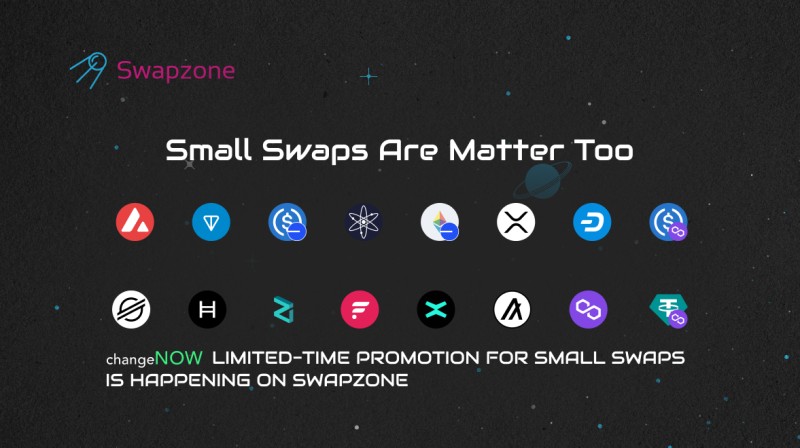
Swapzone and ChangeNOW ran optimized fees for 16 cryptos during a limited period November 20 through December 10, 2025. Relevant for dollar-cost averaging, small recurring purchases, portfolio rebalancing, exploratory trades. Featured: AVAX, TON, USDC on Base, ATOM, ETH on Base, XRP, DASH, USDC on Matic, USDT on Matic, MATIC on Mainnet, XLM, HBAR, ZIL, FLR, EGLD, ALGO. Zero deposit commissions or optimized fees through ChangeNOW. Network fees still apply. 1% fee on $10,000 swap = $100, same 1% on $100 swap = $1 - fixed or percentage cost hits small positions harder even when dollar amount small.
ChangeNOW: non-custodial instant exchange, prioritizes privacy and speed. Processes swaps directly without surrendering custody to CEX. 850+ cryptos, most swaps no KYC, no minimum transaction, fixed or floating rates. ChangeNOW Pro adds features. Aggregates liquidity from multiple providers. Swaps in minutes. Fiat-to-crypto via Visa/Mastercard. Small purchases $50, $100 possible through fiat providers.
Swapzone: crypto-swap aggregator comparing ChangeNOW with 28+ other platforms. Displays rates, estimated times, provider-specific fees. Filter by rate, speed, reputation. 0.2% rate difference matters little on $10,000 but meaningful on $100.
Strategies to Reduce Exchange Costs
Practical moves
- Use maker strategies - place limit orders instead of market orders. Limit order may become maker if added to book without immediate execution. Maker fees generally lower than taker.
- Increase volume within a rational plan - many exchanges lower rates at higher 30-day volume tiers. Compare expected discount with total platform cost. Higher volume reduces percentage fee but increases market risk and withdrawal size.
- Use exchange-native tokens - Binance up to 25% discount paying with BNB. Crypto.com reduces rates with CRO staking, elite tier reaches 0%. Native-token discounts lower trading costs but expose you to that token's price, liquidity, availability.
- Evaluate subscription plans - Coinbase One $29.99/month eliminates trading fees up to $10K monthly trades. Useful when volume high enough for monthly fee to offset avoided trading charges. Include subscription cost in total calculation.
- Compare round-trip execution - calculate cost of buying then selling, not just one order. Low maker fee may be offset by wide spread, high taker fee on exit, or withdrawal charge.
- Choose cheapest network for the asset - lower-cost network reduces gas but may affect compatibility, confirmation, receiving service support. Ethereum, Solana, Avalanche, BNB Chain, Polygon, Base, Tron, others have different cost and availability profiles.
- Minimize unnecessary withdrawals - repeated withdrawals create fixed monthly charge. Consolidate withdrawals or keep funds on exchange when needed for trading. Weigh against custodial risk - exchange controls private keys while assets held there.
- Use bank transfers when delay acceptable - ACH usually free but slower. Cards faster but cost more. If you can wait, lower payment cost. If facing immediate price movement, faster method may save more.
- Check fee schedules before transferring - exchanges change maker-taker tiers, payment fees, withdrawal fees, spread structures, promotions. Check before large trade or transfer. Review terms of any limited promotion.
- Monitor promotions carefully - Gate.io USDT waiver and ChangeNOW promotion are time-limited with expiration dates and asset/network conditions. Temporary zero or reduced fee is not a permanent rate.
Picking an Exchange by User Type
Beginners: prioritize simple onboarding, mobile usability, dollar balances, educational material, support, custody protections. Coinbase, Gemini, Cash App, PayPal described as more beginner-oriented than pro order-book platforms. Consumer interfaces may have higher spreads or fees than advanced products.
Active traders: prioritize maker-taker discounts, order types, liquidity, charts, market data, low spreads. Kraken and Binance.US useful for advanced tools and lower fees. High volume qualifies for lower tiers but compare discount with withdrawal and network costs.
Long-term investors: prioritize proof of reserves, regulated custody, insurance, self-custody options, recurring purchases, account fees. Gemini and Swan presented for users emphasizing custody, regulation, or dollar-cost averaging.
Institutions: need deep liquidity, high withdrawal limits, mass payouts, regulated custody, insurance, reporting, dedicated support, formal compliance. May evaluate matching engine, API, white-label capabilities, fee tiers by client or jurisdiction.
Small and recurring traders: pay attention to minimum withdrawal amounts, fixed network costs, spread markups, card fees, percentage of position consumed by transaction costs. Lower percentage fee can still cost more in dollars if platform has large fixed withdrawal charge or wide spread.
Security, Custody, and Operational Risks
Exchange selection involves risks beyond advertised fee. Hacks and outages happen. Some platforms go offline during heavy trading. Regulatory requirements change, affecting service operation or asset offerings. Custodial risk exists because exchange controls private keys when assets held there. Network congestion delays withdrawals and increases fees. Low fee offset by weak liquidity or poor execution quality. Identity verification delays access. Support systems affect problem resolution.
Source identifies 2FA, cold storage, encryption, regular audits, proof of reserves, insurance, 24/7 monitoring as relevant security features. Proof of reserves helps assess asset backing but doesn't remove need for account security or self-custody. User holding bitcoin on exchange doesn't control private keys - may need to transfer to external wallet for direct control.
Stablecoins described as less volatile than many digital assets, potentially useful for preserving capital between trades. Stablecoin value not identical to fiat value. Availability, regulation, network choice still matter. Ethereum, Solana, Avalanche, BNB Chain, Base, Polygon, Tron, others offer different fee and settlement conditions.
Recordkeeping and Tax Tracking
Tracking crypto transactions and changing costs is difficult even for experienced traders. CoinTracker section describes software connecting to hundreds of CEXs, DEXs, and wallets including Coinbase and Gemini. Monitors investments, fees paid, staking, overall gains/losses. Claims 2M+ crypto traders rely on it, free start. Disclaimer: tax info is informational, not tax advice. Tax professional recommended for individual questions.
Key Terms
Definitions
- Maker fee - charged when limit order placed on book and not immediately matched. Order adds liquidity.
- Taker fee - charged when market order or immediately matched limit order removes liquidity from book.
- Spread - difference between highest buyer price and lowest seller price. Wider spread increases effective cost.
- Withdrawal fee - exchange charge for sending crypto to external wallet or address.
- Network fee - blockchain cost paid to miners or validators for confirming transaction. Separate from exchange's own fee.
- Payment-processing fee - card, bank, or payment-provider charge for funding account.
- Custody fee - fee for holding assets on platform, sometimes based on per-asset value or total balance.
- Commission-free - marketing description that may still include spread, payment for order flow, or other embedded cost.
- DEX - decentralized exchange using smart contracts and liquidity pools instead of centralized operator.
- CEX - centralized exchange operating order book, holding customer funds, controlling matching process.
- Proof of reserves - published or independently verified statement showing platform holds enough assets to back customer balances.
- Dollar-cost averaging - purchasing fixed amount at regular intervals instead of one large purchase.
FAQ Highlights
The answer depends on whether the comparison emphasizes headline trading fees, maker-taker rates, spread, card processing, withdrawal fees, custody, speed, or support. High-volume trading comparisons often cite Binance, Gate.io, KuCoin, Crypto.com, or similar platforms. Consumer-purchase comparisons may find that Coinbase or Gemini has a different total cost. Swap services and aggregators may be more relevant for small transactions.
No. The effective cost also includes spread, payment processing, withdrawals, network fees, custody, account fees, and time. A platform with a 0.1% trading rate can cost more than one with a 2% headline rate if the lower-rate platform uses a wider spread, higher withdrawal fee, slower settlement, or geographic restriction.
The Gate.io analysis states that the platform was established in 2013 and uses proof of reserves above 100%, cold storage, and multi-factor authentication. It also states that U.S. access is restricted and that the platform is unavailable in the United States, Canada, China, and other jurisdictions. The analysis cites complaints about customer support, including delayed or ignored requests.
Some costs embed in quoted price rather than shown as separate commission. Coinbase's 0.5% to 2% retail spread is one example. $500 purchase resulting in $537 charge another. Other platforms show service, processing, and network fees separately before confirmation.
Important factors beyond fees: security, regulation, liquidity, supported assets, transaction speed, withdrawal limits, custody, customer support, mobile usability, language availability, your trading strategy.
Beginner-oriented platforms have simpler interfaces and stronger educational or support features. Professional platforms may offer lower trading rates but more complex interfaces. Appropriate choice depends on your experience, trade frequency, payment method, and custody needs.
Ledn profile states bitcoin bought through PayPal cannot be withdrawn to external wallet. Cash App allows external BTC withdrawal.
Ledn profile states exchange controls private keys when bitcoin held on platform - creates custodial risk. Users wanting direct control may choose self-custody or other custody arrangement.
Many platforms support large purchases. Liquidity, regulatory compliance, custody, and fees matter more than headline rate alone. Withdrawal limits and mass-payout capabilities should be checked for large transactions.
Final Reality Check
Fees, promotions, supported assets, withdrawal limits, KYC requirements, and regulatory availability change. Check the relevant exchange's current fee schedule and terms before trading or transferring funds. Crypto trading involves high risk of loss. Don't invest unless prepared to lose all money invested. Don't expect protection if something goes wrong. Information is educational, not financial advice. Tax information is informational, not tax advice. Trading, custody, and loan products involve risks. Availability, pricing, and rates vary by jurisdiction.
The honest answer: there is no single lowest fees crypto exchange for everyone. The cheapest platform for you depends on your volume, assets, payment method, withdrawal frequency, jurisdiction, and whether you hold or trade. Compare the full stack - not just the headline rate. That's the only way to actually save.









Comments on “Crypto Exchange Lowest Fees: What You Actually Pay and Where to Save”
No comments yet. Be the first to share your thoughts.