
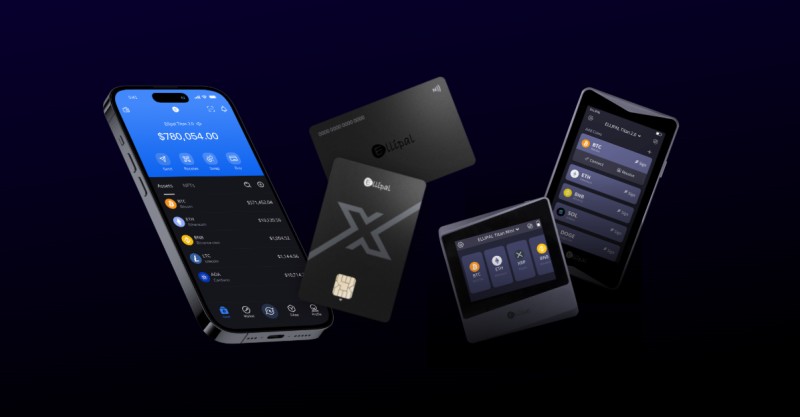
What a cryptocurrency card is
A cryptocurrency card connects a crypto payment processor to a crypto wallet instead of a checking account. It lets you spend digital assets at any merchant that takes regular debit cards. The processor handles the conversion from crypto to fiat at the moment of purchase. The merchant sees a normal card transaction. You see crypto leaving your wallet.
Most shops still don't take Bitcoin or other coins directly. Legal uncertainty, price swings, and low public understanding of blockchain keep retailers cautious. A crypto debit card bridges that gap by running on existing card networks like Visa or Mastercard.
The card and its payment network handle the familiar merchant-facing transaction, while the crypto wallet and processor handle the digital-asset side.
How a cryptocurrency purchase settles
The flow looks familiar at first. You present the card. The merchant runs it through the card network. Then the processor steps in. It calculates how much crypto is needed for the fiat amount. It sells that crypto from your wallet. The merchant gets fiat. The source says this can happen in seconds.
You need enough balance in the linked wallet to cover the purchase plus any fees and conversion spread. If the wallet is empty, the transaction fails. That's one of the stated disadvantages.

Crypto debit cards and traditional debit cards
Both work at merchants that accept debit cards. The difference is the funding source. A traditional debit card pulls from a bank account. A crypto debit card pulls from a crypto wallet and converts to fiat during the transaction.
Some cards support multiple cryptocurrencies. Others only support one token. You might not need a traditional bank account, but you still need an account with a crypto exchange, wallet provider, or card issuer.
General advantages of crypto debit cards
- Spend cryptocurrency like fiat currency
- Reduced or waived foreign-conversion fees on some cards
- Multi-currency support for diversified spending
- Cash-back rewards in cryptocurrency on some cards
- Waived ATM withdrawal fees from some issuers
Stated disadvantages
- Spending cryptocurrency may trigger a taxable event
- Geographic restrictions may apply
- You must maintain a balance in the connected wallet
Many crypto cards don't impose foreign-exchange fees. The reasoning: crypto is decentralized, so converting Bitcoin to dollars is similar to converting it to rubles. But the same source notes providers can charge foreign-exchange fees to reimburse Visa or Mastercard. The absence of such fees isn't universal. Check the specific provider's terms.
Crypto-funded debit cards and cryptocurrency rewards credit cards are not the same
A crypto-funded debit card uses cryptocurrency as the payment source. The card converts crypto to fiat as part of the purchase.
A cryptocurrency rewards credit card works like a regular credit card. You pay with credit. The card rewards you in crypto. The purchase itself doesn't require you to spend cryptocurrency. This introduces reward categories, caps, automatic staking, issuer terms, and the network used to distribute rewards.
The customer is not necessarily using cryptocurrency to purchase the coffee, groceries, fuel, or other goods in the Gemini model. The crypto asset is the reward rather than the primary source of payment.
Gemini's Solana Credit Card offers up to 4% back on gas, EV charging, and rideshare. 3% on dining. 2% on groceries. 1% on other purchases. Up to 10% at selected merchants. Rewards can be automatically staked on the Solana network. Staking locks the crypto to validate transactions and secure the network. Stakers may receive rewards for that participation.
Gemini also released an XRP edition on the Mastercard network. The CEO said it gives customers new ways to earn XRP and express their passion. Ripple's CEO said the card makes crypto simple and approachable.
Stablecoin push-to-card payments
This is a different model. A business or platform sends a stablecoin-funded payout to an eligible debit or credit card. The recipient doesn't need a crypto wallet. They just get funds on their existing card.
Wirex announced Stablecoin Push-to-Card powered by Visa Direct. Coverage: over 3 billion cards across more than 200 countries and territories. Funds arrive in under 30 seconds in many cases. Operates 24/7/365. No IBAN, SWIFT, or routing info needed - just the 16-digit card number.

The process: enter recipient's card number, select amount and currency, get confirmation. The service targets contractor payments, employee reimbursements, and supplier settlements. It replaces the need to build international payout infrastructure market by market.
Digital, prepaid, and gift cards used with cryptocurrency
Here, cryptocurrency buys a conventional gift card, prepaid card, or digital voucher. After that, the card works like the payment instrument it represents. Not the same as a crypto-funded debit card.
Jour Cards covers digital gift cards, prepaid cards, online shopping, and crypto payments for gamers, online shoppers, digital nomads, freelancers, and students. Topics include buying gaming cards, subscription vouchers, prepaid payment cards, and digital gift cards with crypto. Also regional restrictions, redemption, payment methods, and safe online transactions.
Examples from Jour Cards blog
- Buy Mastercard online with crypto - instant digital delivery
- Buy Amazon gift card with Bitcoin - fast, secure, instant
- Buy American Express gift card with cryptocurrency
- Buy League of Legends skins with crypto
- Buy Bitcoin with Amazon or iTunes gift cards
- Pay real-life expenses with Tron (TRX)
The blog also covers where you can spend crypto through gift cards, how to buy crypto using various methods, and where to buy crypto with a prepaid card . It's a different entry point - you purchase crypto or spend it indirectly via prepaid balances.
Direct cryptocurrency payments for small businesses
This is distinct from using a crypto card. The merchant receives crypto directly on-chain. An xPortal article listed seven benefits for small businesses.
Benefits of direct crypto acceptance
- Increased security and fraud prevention - blockchain verifies each transaction, chargebacks are near impossible
- Lower transaction fees - crypto fees can be as low as 0.5% vs 2-3% for credit cards
- Faster settlements - minutes or seconds vs several business days
- Global reach - accept payments worldwide without currency conversion
- Improved customer trust - signals attention to privacy and security
- Streamlined bookkeeping - blockchain record simplifies reconciliation
- Innovation positioning - attracts tech-savvy customers
The business accepting crypto is presented as offering a secure and efficient payment method while attracting tech-savvy customers.
Implementation starts with choosing a crypto-enabled payment processor. XMONEY (powered by MultiversX) is one example - it lets the business choose settlement in crypto or fiat. The xPortal app also offers card activation: download, create account, activate card, add to Apple Pay or Google Pay. Account creation can take 10 seconds.
Factors to compare when choosing a crypto card
Geographic availability matters. A card may work wherever its network is accepted, but crypto rules vary by jurisdiction. Some countries have moved against cryptocurrency. Turkey, China, and India were cited as possible locations for full bans in a 2021 article. The US was considering a national digital currency while allowing crypto trading. Have a backup payment method for crypto-hostile jurisdictions. Wirex also states product availability is subject to jurisdictional limitations.
Supported cryptocurrencies vary. A card might support a single asset (Bitcoin only), several major coins, a stablecoin, or a rewards token different from the spending asset. If a card only supports one coin, you can't spend another unless you convert first.
Account and balance requirements: you may not need a traditional bank account, but you need an exchange, wallet, or issuer account. It must be funded before purchase. A rewards credit card uses a conventional credit account. A prepaid or gift card must be purchased or loaded first. A push-to-card recipient gets funds on an existing eligible card.
Fee types providers can charge
- Crypto-to-fiat conversion fees
- Card transaction fees
- Deposit or funding fees
- ATM withdrawal fees
- Foreign-exchange fees
- Annual spending thresholds for fee waivers
- Separate service or network charges
In a 2021 provider survey, most didn't charge deposit fees but all charged withdrawal fees. Some waived withdrawal fees after an annual crypto-spending threshold. No complete fee schedule was provided.
Exchange rates and geographic costs: the price is in fiat, your wallet is in crypto. The applied conversion rate and any foreign-exchange margin affect how much crypto gets deducted. Provider-specific terms matter more than blanket claims. Some cards charge foreign-exchange fees to reimburse Visa or Mastercard.
Card-network acceptance: most crypto debit cards run on Visa or Mastercard. Accepted wherever those cards work, subject to geographic availability, card eligibility, and issuer limitations.
Rewards and staking: a rewards card can offer cash back in crypto by purchase category. The Gemini Solana card has different percentages for gas, EV charging, rideshare, dining, groceries, other purchases, and selected merchants. Automatic staking means rewards may be locked rather than liquid. Staking involves locking crypto to validate transactions and secure a network. The full reward terms include categories, caps, reward asset, staking process, and treatment of rewards.
Tax reporting and taxable use of crypto
The US tax discussion comes from a 2021 article. The IRS treats cryptocurrency as property and capital assets, not currency. Similar to bonds and stocks. You may need to report capital gains or losses when crypto is used through a debit card to buy goods or services. Tax may be owed if the crypto's price is higher when spent than when acquired. The amount depends on holding period and profit.
Capital-loss harvesting: a loss position may offset capital gains. This taxable-event issue is listed as a disadvantage of crypto debit cards. This reflects the 2021 source's US discussion only - not tax rules for other jurisdictions or newer changes.
Exchange-rate volatility and merchant adoption
Crypto debit cards were introduced partly to overcome limited direct merchant acceptance. The 2021 explanation identified exchange-rate volatility, processor regulation, and limited public understanding of blockchain as barriers. The card doesn't eliminate those issues. The merchant receives fiat, but you remain exposed to the crypto market between funding the wallet and converting for a purchase. The card mainly changes the interface and settlement path.
Security, custody, and hardware-wallet considerations
ELLIPAL describes crypto card wallets as tools bridging digital assets and everyday spending, letting crypto be used like a debit card. But they distinguish crypto cards from full self-custody. Their hardware-wallet articles focus on offline asset protection, exchange risk, seed phrases, supported coins, device security, and supply-chain tampering.
A hardware wallet becomes particularly relevant when the value of cryptocurrency rises or when the user wants self-custody instead of relying on an exchange.
Factors to examine before buying a hardware wallet: security features, seed-phrase safety, supported coins, brand reputation, offline storage of digital assets. For a cryptocurrency card or wallet product, you need to distinguish a convenient payment interface from the underlying custody arrangement. A card supporting a blockchain doesn't reveal where keys are stored or whether transactions require online access.
Recovery phrases: two wallets sharing the same recovery phrase is theoretically possible but practically impossible odds-wise. The concern is around wallet handling and not assuming independently created wallets will share recovery info.
Hardware-wallet swaps: a guide covers swap risks, protection offered by hardware wallets, and step-by-step instructions. Supply-chain attacks: a compromised supply chain can affect a device before it reaches you. Package or device tampering is an issue. Users should know how to inspect the product from delivery through setup. This applies to the full product chain, not just the card network. Authenticity, firmware, device setup, and storage practices affect whether the product operates as intended.
If you're wondering whether you can buy crypto with a debit card , the answer depends on the exchange or platform. Some support it directly. Others require a bank transfer. You can also buy crypto with a credit card on many platforms, though fees are often higher. Credit card purchases of cryptocurrency may be treated as cash advances by your issuer. Capital One and other major banks have their own policies - some block it, some allow it with fees. Some platforms let you buy crypto with no minimum purchase amount. And if you prefer a virtual crypto card instead of physical plastic, several providers offer that option too.











Comments on “How Cryptocurrency Cards Work and What You Should Watch Out For”
No comments yet. Be the first to share your thoughts.