Top Rated Cryptocurrency Exchanges: How to Compare and Choose the Best
Top rated cryptocurrency exchanges can make a long list easier to handle. But a rating does not tell you whether an exchange is safe for your money, cheap for your trades, or legal where you live.
My method is simple. I check the legal entity, custody, real trading cost, liquidity, support, and ease of use. I do not let a long token list or a low fee hide a weak security setup.
A good ranking starts a comparison. It should not finish it.
Why Cryptocurrency Exchange Rankings Change
Top rated cryptocurrency exchanges are measured in different ways. One list may focus on trading volume. Another may focus on security, fees, regulation, supported assets, or ease of use.
The source rankings often place Binance, Coinbase, and Kraken near the top for general use, volume, or security. Other named platforms include Bitfinex, Upbit, OKX, Bitget, and Bybit. Their position depends on the test used.
Core exchange comparison points
- Trading fees and deposit costs
- Order-book depth and spreads
- Customer-fund custody
- Licenses and legal entities
- Supported assets and trading pairs
- Customer support and incident history
A dated daily-volume snapshot cannot be compared with a later fee table as if both describe the same market. User counts, token lists, products, and rules change, so every number needs a date and a source.

Start With the Job You Need the Exchange to Do
Before I compare a top cryptocurrency exchange , I name the main job. A simple Bitcoin purchase and a futures trade need very different tools.
Exchange choices by use case
- Simple fiat buying: Coinbase, Gemini, Bitstamp, Kraken, or Robinhood Crypto
- Broad spot markets: Binance, OKX, Kraken, Coinbase, or Bybit
- Advanced derivatives: BitMEX, Bybit, OKX, or Bitget
- Large altcoin catalogs: MEXC or Gate
- Korean won markets: Upbit
- Long-term custody: a hardware wallet with limited exchange balances
A search for the best U.S. exchange narrows the field, but you still need to check the exact state and federal rules. For a UK reader, best cryptocurrency exchanges UK is only a search label, not proof of FCA authorization.
If you saw best crypto exchanges for U.S. traders in a comparison, check whether the page mixes Binance with Binance US. Those are separate platforms with different rules and products.
Pick for the trade you plan to make, not for the largest list you can find.
Compare the Real Cost of Trading
Trading fees depend on the market, account level, trade size, and whether you make or take liquidity. Some exchanges also offer discounts for using a native token or reaching a volume tier.
Searching for a lowest-fee exchange is not enough. You need the fee for the exact product and the exact way you will trade.
Costs that belong in one exchange comparison
- Maker and taker fees
- Bid-ask spread
- Slippage on your order size
- Deposit and withdrawal charges
- Asset conversion charges
- Perpetual-swap funding costs
- Margin borrowing and interest costs
Perpetual swaps may use funding intervals of four or eight hours, but the contract terms can change. Check the funding history and the next payment rule instead of relying on a general fee page.
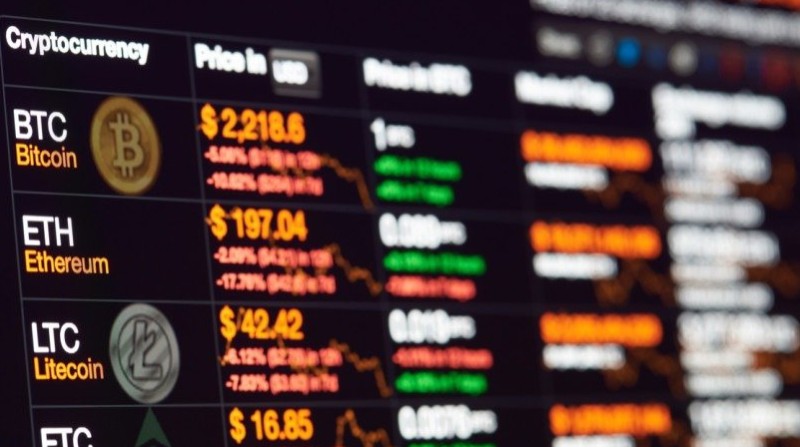
The 2017 fee table shows why old numbers need care. It listed 0.25% for Coinbase and Gemini, about 0.20% for Bitfinex, and about 6% for Coinmama. Those are historical facts, not a price list for a new account.
A zero-fee claim can also be narrow. It may depend on the market, token used for payment, account level, or date. I would copy the full fee rule into my notes and test the expected trade cost with a small order.
Check Liquidity by Trading Pair
Trading volume shows how much cryptocurrency was bought and sold during a set period. High volume can mean deeper order books, tighter spreads, and faster execution, but only for some markets.
An exchange may have strong Bitcoin liquidity and weak liquidity for a small altcoin. Aggregate volume does not answer the question you care about if you plan to trade that altcoin.
Pair-level liquidity checks
- Distance between the best bid and ask
- Depth within 1 percent of the mid-price
- Slippage for your usual order size
- Order cancellation and fill speed
- Price movement during fast markets
- Withdrawal network speed and cost
For derivatives, I would look at the contract order book and test whether a normal order can close without moving the price too far. A high-volume market can still punish a large order with poor placement or thin depth.
Judge the Interface and Asset List
A clean interface matters because a missed button or hidden fee can cost money. The best setup for a beginner is not always the best setup for an active trader.
Some platforms offer a simple app and a separate advanced area. The source describes this split for Coinbase, Kraken, and OKX, with beginner views for basic trades and deeper tools for charts, margin, and derivatives.
Interface checks
- Can you find deposits, withdrawals, orders, and support?
- Does the app show fees before you confirm a trade?
- Can advanced users set stop, conditional, or reduce-only orders?
- Are charts, layouts, and order forms easy to adjust?
- Does the platform warn you about leverage and liquidation risk?
- Can you manage API keys and devices from one clear page?
Asset count needs a second look. Dated source snapshots list MEXC with more than 2,900 altcoins, Gate with more than 2,000, and Bybit with 729 tokens. Those are snapshot counts, not live guarantees.
A long catalog can include weak projects. Check the Bitcoin and Ether markets first, then stablecoins, then the exact altcoin and fiat pair you need. NFT, staking, earn, copy trading, and DeFi tools can add risk and should not drive the main choice by themselves.
Security Controls I Would Test
Security is a system, not a logo. An exchange can use cold storage and still fail through weak account controls, poor fund separation, or an incident response that does not work.
Account security controls
- Two-factor authentication with an app or hardware key
- Withdrawal-address whitelisting
- A delay for new withdrawal addresses
- Device and location controls
- Multi-signature approval for large withdrawals
- API withdrawal disabling by default
- IP restrictions for API keys
- Real-time alerts for login and withdrawal activity
SMS-based two-factor codes can be stolen through SIM-swap attacks. A FIDO2 hardware key, YubiKey, or another strong method gives the account more protection. The source also points to multi-device approval and signed push prompts.
For API trading, I would give the key only the permissions it needs. A trading key should not also control withdrawals unless there is a clear reason. IP whitelisting, automatic logout, and alerts help limit damage if the key leaks.
If the exchange cannot explain who can move customer funds, that is already a red flag.
Custody Lessons From the FTX Collapse
FTX collapsed in November 2022 after customer deposits were not kept separate from corporate funds. More than $8 billion in customer deposits disappeared, and the failure changed how investors judge exchange custody.
The case shows why technical claims need legal and financial support. Cold storage, encryption, and monitoring cannot repair weak fund separation or an exchange that uses customer assets for risky corporate trades.
Evidence of safer custody
- Customer funds held apart from corporate assets
- Independent proof-of-reserves reports
- Clear reporting of assets and customer liabilities
- Named legal entities and custody partners
- Insurance terms that state what is covered
- Public incident and security-audit history
A proof-of-reserves report is useful, but it is not a full audit of every server, employee, wallet, and process. The strongest version uses an independent auditor and gives enough detail to compare reported assets with customer debts.
Insurance also has limits. The source says eligible U.S. dollar deposits at Coinbase can receive FDIC coverage up to $250,000, but that protection does not cover cryptocurrency. SIPC protection at Robinhood applies to qualifying securities, not every digital asset.
The security source reports 98% cold storage for Coinbase and 95% for Kraken, Gemini, and Binance US. The dates and definitions can differ, so read the method behind each percentage instead of comparing the numbers as if they were identical.
Regulation Depends on Where You Live
Regulation is tied to a country, state, legal entity, and product. A platform licensed for one market may restrict the same service in another region.
Regulatory checks by region
- United States: FinCEN, state money-transmitter rules, and SEC or CFTC rules for specific activities
- New York: BitLicense requirements named in the source
- European Union: MiCA requirements where they apply
- United Kingdom: FCA authorization
- Germany: BaFin authorization
A crypto top exchange label says nothing about the company that holds your balance. Find the exact legal name, country of operation, license number, and support entity before sending money.
KYC and AML rules can reduce fraud and theft, but they also reduce some privacy. That trade-off is real. Read what identity data is kept, why it is needed, and how you can reach support if verification blocks your account.
Coinbase and Kraken
Coinbase was founded in 2012 and Kraken in 2011. The source positions Coinbase as an easy entry point with a more technical interface, while Kraken offers a main platform and Kraken Pro for margin and futures.
Reported strengths
- Coinbase: beginner interface, advanced trading view, cold storage, reserve reporting, and withdrawal delays
- Kraken: tiered maker-taker fees, fiat and stablecoin support, cold storage, monthly reserve reports, and API withdrawal controls
- Both: account locks, two-factor authentication, and tools for users with larger balances
The source gives Coinbase a simple app plus a more technical trading area. It reports a 48-hour default delay for withdrawals to new addresses and strong controls for large accounts, but fee levels can change with product and volume.
Kraken is described as a security-focused exchange with 95% cold storage and a Global Settings Lock for withdrawal settings. The source also says Kraken publishes monthly reserve reports. You should still test support and withdrawal handling before keeping a large balance.
Binance and Binance US
Binance was founded in 2017 and became known for a broad set of spot pairs, derivatives, staking, and Web3 tools. Binance US operates as a separate US-focused platform, so features and rules should not be mixed.
Global Binance and Binance US differences
- Global Binance serves many international markets but faces limits in some countries
- Binance US focuses on US compliance and a smaller product set
- Account features, listings, and fees can differ between the two entities
- Security details for one platform do not automatically prove the other platform is the same
The source describes low fees, deep liquidity, and many spot pairs for global Binance. It also notes a complex interface and different product access by country, which can matter more than the raw token count.
For Binance US, the source reports 95% cold storage, monthly reserve reports, real-time reserve ratios, hardware security modules, and multi-signature wallets. Its security section also describes an emergency fund funded with 10% of trading fees. Keep those claims tied to Binance US rather than copying them to the global site.
OKX, Bybit, and Bitfinex
These three platforms serve different needs. OKX mixes spot, derivatives, margin, a wallet, and DeFi tools. Bybit leans toward derivatives and high-volume trading. Bitfinex is aimed more at professional and institutional users.
Platform profiles from the source
- OKX: spot, futures, perpetual swaps, options, margin, staking, and a Web3 wallet
- Bybit: futures, options, limit and conditional orders, stop-loss tools, and market data features
- Bitfinex: margin, lending, advanced order types, APIs, charting, and customizable interfaces
The OKX material gives conflicting descriptions of its base and US access, so I would verify the legal entity and country rules directly. It also flags support response and location limits as points to test.
Bybit's derivatives order types and fast tools can suit active traders, but the source notes limited fiat support in one dated profile. Bitfinex has a longer trading history, yet its old fee figures and location details should stay in the historical file.
Gemini, Bitstamp, and Upbit
Gemini and Bitstamp are often presented as straightforward choices, while Upbit is tied to South Korea and the Korean won market. Each has a different mix of licensing, storage, and market focus.
Regional and regulated-market profiles
- Gemini: launched in 2015, New York BitLicense focus, multi-signature wallets, 2FA, address controls, and third-party audits
- Bitstamp: founded in 2011, EU compliance claims, cold storage, 2FA, and a simple interface
- Upbit: South Korean market focus, KRW liquidity, broad assets, and a stated compliance-first approach
Gemini's source profile reports 95% cold storage and insurance through Aon. Bitstamp's profile emphasizes cold storage, two-factor authentication, and EU compliance. Upbit's profile stresses Korean market access and KRW pairs rather than one global product list.
These claims are useful for a first pass, not a promise. Check the legal entity, supported location, withdrawal rules, and current policy wording before you rely on any of them.
Derivatives Exchanges Need a Different Test
Derivatives exchanges need more than a spot fee and a long token list. Leverage, funding, liquidation, order handling, and API stability can decide whether a platform fits an active trader.
A dated comparison in the source placed BitMEX first, followed by MEXC, Gate, Bybit, and Bitget. The order reflects that comparison's data, not a promise that the same order will still exist.
Derivatives platforms and their stated strengths
- BitMEX: perpetual swaps, futures, strong reported liquidity, reserve reports, and regular audits
- MEXC: a very broad token and derivatives catalog
- Gate: many tokens, derivatives tools, and proof-of-reserves reporting
- Bybit: performance tools, futures, options, conditional orders, and a derivatives focus
- Bitget: copy trading, futures, margin, bots, and risk-management tools
Check cross and isolated margin, partial liquidation, auto-deleveraging, reduce-only orders, post-only orders, funding rules, and withdrawal controls. A high leverage number is not a sign that the product is safe for you.
The source says many traders use 3x to 5x and that experienced traders rarely use more than 10x. It also says some platforms offer 100x. That range does not make high leverage sensible; it makes liquidation rules more important to understand.
Liquidation math matters more than a long feature list.
Centralized, Decentralized, and Instant Platforms
A centralized exchange, or CEX, controls wallets and usually handles deposits, withdrawals, order books, and support. That makes buying and managing crypto easy, but it also creates custody and counterparty risk.
Exchange models to compare
- Centralized exchange: the platform controls custody and supports common order-book trading
- Decentralized exchange: smart contracts settle trades and users keep their private keys
- Hybrid exchange: a mix of centralized and decentralized systems
- Instant platform: quick token swaps instead of a deep conventional order book
- Fiat-to-crypto exchange: national currency is used to buy digital assets
- Crypto-to-crypto exchange: assets trade directly against other assets
DEX users avoid a centralized operator, but they take on smart-contract bugs, exploit risk, impermanent loss, front-running, and key-management duties. A regulated CEX may add stronger legal recourse and support, yet it can still fail or freeze an account.
There is no single model that wins for every person. I would use a CEX for a small trading balance when its custody and legal setup are clear. I would use self-custody for long-term holdings only if I can manage the keys and recovery process.
Support, Reputation, and Red Flags
Support quality is part of security. A fast answer matters during a withdrawal problem, login lock, or market event. Slow replies can also point to weak security staffing.
Test support before you make a large deposit. Ask how the exchange handles a failed withdrawal, a changed device, a locked account, and a suspected API leak. Compare the answer with the written policy.
Reputation checks
- Withdrawal speed and failed-withdrawal reports
- Customer-service response time
- How complaints are resolved
- Security incidents and public explanations
- Regulatory penalties or enforcement actions
- Independent security reviews and reserve reports
- Consistent comments from Reddit, reviews, and user communities
Community reports can point to a problem, but they are not proof by themselves. Check the claim against official statements, transaction records, independent research, and the exact dates involved.
Red flags to take seriously
- No clear legal entity or license
- Unclear custody of customer funds
- Hidden deposit and withdrawal fees
- No useful reserve or audit disclosure
- A large reserve share held in the platform's own token
- Anonymous leadership with no clear responsibility
- Unresolved security incidents
- Claims that an exchange or asset has zero risk
If the fee page is clear but the custody page is vague, stop there and ask questions.
Protect the Account After Signup
Security starts before the first trade. Turn on the strongest two-factor method you can use, keep withdrawals off API keys, and save recovery codes somewhere offline.
Monthly account review
- Check active sessions and signed-in devices
- Review API keys and IP restrictions
- Remove unknown withdrawal addresses
- Check email and phone changes
- Confirm that two-factor authentication still works
- Review recent trades, transfers, and support messages
Set a delay for new withdrawal addresses and use a hardware key for a large balance. If the exchange offers a Global Settings Lock or a master key for high-value withdrawals, learn how to turn it on before you need it.
Keep an emergency exit plan. Record the support channel, expected withdrawal times, verification steps, backup authentication method, and hardware-wallet recovery process. If an account is locked, you should not have to guess how to reach your funds.
Test the exit before you make the deposit large.
Keep Only Trading Funds on an Exchange
The source gives 5% to 10% of total crypto holdings as a general on-exchange guideline. It also notes that active traders may keep 20% to 30% there for quick access. These are rough limits, not rules for every person.
Long-term holdings have a stronger home in a hardware wallet such as a Ledger or Trezor device. The device keeps private keys away from an internet-connected computer, but you still need to protect the recovery phrase and test the backup.
A sensible custody split
- Keep only the amount needed for active trades on a centralized exchange
- Store long-term holdings in a hardware wallet or other cold storage
- Spread exchange balances across two or three platforms
- Check that each platform has a real withdrawal path
- Review the split after a security incident or market shock
Using two or three top rated cryptocurrency exchanges can reduce one-platform risk, but it does not remove custody risk everywhere. It also creates more accounts, more API keys, and more places to make a mistake. Keep the list small and review it on purpose.
A Repeatable Exchange Comparison
I like a one-page comparison sheet. It stops a long feature list from turning into a decision based on brand names, token counts, or one attractive chart.
A practical exchange scorecard
- Legal status: exact entity, license, product permission, and country restrictions
- Custody: fund separation, cold storage, reserve reporting, and insurance scope
- Trading cost: maker, taker, spread, funding, deposits, and withdrawals
- Liquidity: depth and slippage for the exact pair
- Access: fiat methods, supported assets, order types, and API limits
- Security: 2FA, hardware keys, withdrawal controls, and API permissions
- Support: response time, account help, and incident communication
- Reputation: verified reports, audits, complaints, and past failures
Give the hard safety items the most weight for your situation. Then compare the cost and features that match your trading style. A beginner buying a small amount of Bitcoin does not need the same interface as a derivatives trader with an API.
Make a small test trade, ask support a real question, and try a withdrawal before committing more. If the exchange cannot give clear answers about legal status, custody, or fees, remove it from the shortlist.
Choose the exchange you can explain to yourself in one minute, then keep checking that explanation.





Comments on “Top Rated Cryptocurrency Exchanges: How to Compare and Choose the Best”
No comments yet. Be the first to share your thoughts.