
What a Cryptocurrency Trade App Actually Does
Cryptocurrency is digital money held in virtual form. It runs on cryptographic security protocols. No physical coins, no paper bills. You buy it, sell it, trade it all through a mobile app or web interface. The app works as the exchange: it shows you real-time prices, takes your deposits, and lets you move between coins and fiat. Bitcoin got this whole thing started in 2009. Now there are tens of thousands of coins, each with a price that jumps around with supply, demand, and market events.
A cryptocurrency exchange application handles the core loop. You deposit money, pick an asset, place an order, and the app matches you with someone on the other side. Prices update in real time. The app tracks your holdings, records your trade history, and manages withdrawals. Some apps are pure exchanges. Others wrap in a custodial wallet, add a trading interface, throw in a debit card, and call it a day. Coinbase started as an exchange app and grew into all of those pieces: wallet, pro trading tools, physical cards, merchant payment processing, and services for big institutions. Revolut began as a traditional money app and added optional crypto buying on top.
Asset Coverage and Market Types
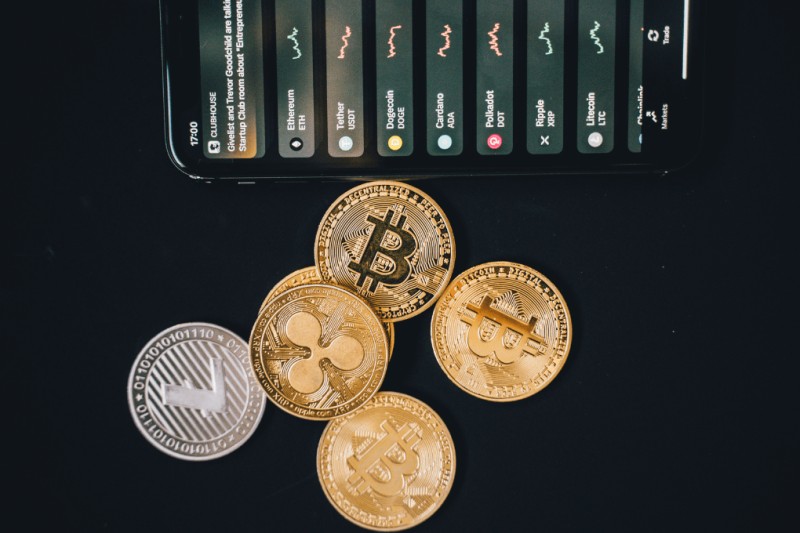
The number and type of assets vary a lot between platforms. Some give you access to 50 coins. Others list over 1,000 markets. What matters is whether the asset you want to trade is actually there. A platform with broad coverage lets you build a more diversified portfolio. One that focuses on a single token or blockchain concentrates your exposure. You end up holding whatever they decided to list.
Trading types go beyond simple buy-and-hold. You can do spot trading (the basic swap), perpetual futures (leveraged bets without expiry dates), dated futures (contracts that settle on a date), options (the right but not the obligation to buy or sell), crypto-to-crypto swaps, crypto-to-fiat conversions, or fiat-to-crypto purchases with your bank card. BISON added Chainlink and Uniswap to its tradable selection back in September 2021. Delta Exchange lets you tell futures, options, and spot transactions apart in your account.
Asset coverage across major platforms
- eToro lists over 50 cryptocurrencies including Bitcoin, Ethereum, Cardano, and AAVE
- Crypto.com supports more than 250 digital assets across its service
- Coinbase covers the top 25 digital tokens by market capitalization
- Binance offers more than 1,000 markets across a wide selection of crypto assets
- Bitstamp provides access to 50+ cryptocurrencies like BTC, ETH, and various altcoins
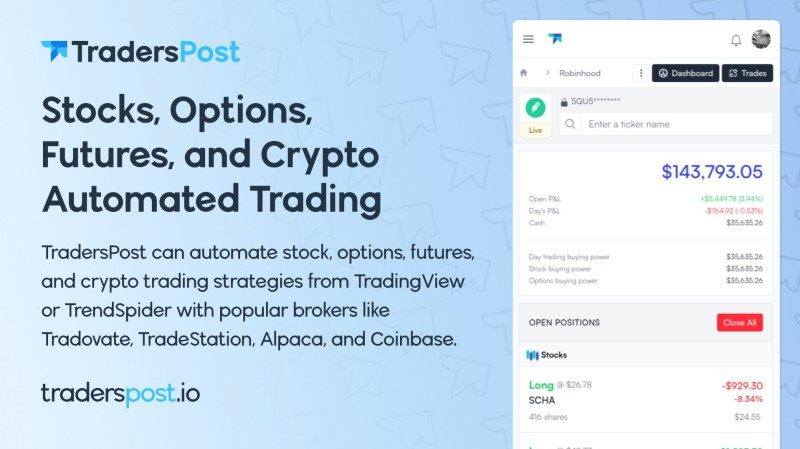
Auto-import tools matter here too. TradesViz syncs with Delta Exchange and pulls in trades automatically. That saves you from manually entering transactions. The integration covers futures, options, and spot trading. You just connect your API key and walk away.
Trading Fees and How They Actually Work
A trade app might charge a direct buying or selling fee, a maker or taker commission, a bid-ask spread, or some combination. The price you see on screen often differs from the base trading commission. What looks cheap can end up expensive fast.
eToro charges 1% to buy and 1% to sell cryptocurrency. Crypto.com charges 2.99% for instant card purchases and 0.40% per market taker order, which works out to about $4 per $1,000 traded. Binance maxes out at 0.10% - $10 per $1,000 - with lower rates for active traders and BNB token holders. Bitstamp charges 0.5% flat, dropping to 0.25% once you cross $10,000 in monthly volume. Fees shift with market conditions, the asset you're trading, order size, and whether you're using a limit, market, or other order type.
Common fee structures to watch for
- Direct buy and sell fees (eToro: 1% each way)
- Market taker commissions (Crypto.com: 0.40% per trade)
- Maker-taker tier systems with volume discounts (Binance: up to 0.10% max)
- Bid-ask spreads built into the execution price (Altify bundles these with trading fees)
- Payment method premiums (instant card purchases hit the highest rates)
Liquidity, Slippage, and Price Execution
Liquidity is one of the main factors for faster and less risky cryptocurrency transactions. Highly liquid coins with high trading volume experience lower slippage. Thinly traded tokens can mean longer settlement times, worse rates, or orders that don't fill at the price you expected. You can lose money just from slippage on a bad trade.
Order-book analytics measure the spread between exchanges, the cost of liquidity for each asset, total market volume, slippage, and order-book depth. Regular exchanges match buyers and sellers, updating rates as orders come in. Decentralized exchanges use automated liquidity pools and smart contracts instead. Peer-to-peer markets match counterparties directly, which can give you more rate flexibility but settles slower. If you're trading an illiquid token, expect wider spreads and potential execution problems.
A highly liquid cryptocurrency with substantial trading volume is more likely to support a faster sale and lower slippage.
Security and Account Protection
Security measures across cryptocurrency applications include identity verification, two-factor authentication, encryption, cold storage, secure API handling, and protection against common application and network attacks. Coinbase requires a user-selected PIN plus a two-factor authentication code sent via SMS. Bitstamp stores 98% of customer assets in cold storage and encrypts personal data. Crypto.com runs a quick KYC process where you upload a photo of an ID. Binance lets new accounts get funded with debit or credit cards after an ID upload.
A secure cryptocurrency application also needs registration and sign-in flows, profile management, and account settings. It must collect personal data and verify identity. KYC and AML checks add real development weight. Two-factor authentication and high-level encryption for data in transit and at rest are non-negotiable. You need SQL injection prevention, anti-denial-of-service protection, biometric authentication, CSRF and SSRF protection, strong password policies, separate admin controls, customer-support systems, API connection monitoring, and clear deposit-withdrawal handling. KvaPay's password rules require uppercase and lowercase letters, numbers, and special symbols. Don't use easily guessed phrases - it's not worth the risk.
Essential security features in a crypto app
- Identity verification and KYC/AML integration
- Two-factor authentication (SMS, authenticator apps, hardware keys)
- End-to-end encryption for data in transit and at rest
- Cold storage for the majority of customer funds
- Biometric authentication (fingerprint, face unlock)
- SQL injection prevention and CSRF/SSRF protection
- Anti-denial-of-service protection and rate limiting
- Secure API handling with permission scopes and IP whitelisting
Payment Methods and Cash-Out Options
Common payment methods include debit cards, credit cards, ACH, SEPA transfers, ordinary bank transfers, PayPal, Skrill, Visa, MasterCard, and cryptocurrency deposits. Availability varies by country and account type. Crypto.com supports debit cards, bank transfers, and its own credit card. Coinbase offers an optional Visa debit card with up to 4% back on purchases. Revolut handles cards, transfers, and multicurrency payments alongside crypto buying. KvaPay supports SEPA transfers, crypto deposits, EUR and CZK withdrawals, bank transfers, and cash withdrawals through its Kvakomat ATM network.
The asset you're selling affects cash-out execution. A highly liquid cryptocurrency with substantial trading volume supports faster sales and lower slippage. The destination currency, payment network, identity-verification status, and exchange processing requirements all determine how and when your proceeds become available. Some platforms hold withdrawals for a period if they flag your account for review.
Popular payment and cash-out methods
- Debit and credit cards (Visa, MasterCard)
- Bank transfers (ACH for US, SEPA for EU, SWIFT globally)
- PayPal and Skrill for some platforms
- Cryptocurrency deposits for topping up
- Platform-specific debit cards (e.g., Coinbase Card, Crypto.com Credit Card)
- ATM networks for cash withdrawals (e.g., KvaPay's Kvakomat network)
Beginner vs. Advanced User Interfaces
Beginner-oriented apps emphasize guided buying, simple interfaces, clear confirmations, and educational material. A first-time user can tap through a few screens and end up owning some Bitcoin. Coinbase presents itself as accessible for people with little or no prior digital-asset experience. The mobile purchase process walks you through step by step. eToro is also easy to use without requiring previous investment experience. Minimum deposits start around $10 on most platforms.
Advanced platforms go the other direction. They emphasize order types, APIs, derivatives, charting tools, advanced metrics, and high-speed execution. Binance fits this category - it's more suitable for intermediate and advanced traders who want granular control. The interface gets dense fast. If you're just starting out, you'll want the simpler apps. If you're running bots or doing technical analysis, you'll want the pro tools.
A cryptocurrency exchange needs an interface that can be used by people who do not work in finance.
Price Transparency and Global Liquidity
Some platforms aggregate prices and order books from multiple exchanges to build their quotes. Altify's Smart Trade System is a good example of this approach. It uses smart order routing to collect information from global exchanges like Binance and Kraken, combining their prices and figuring out the best route for your trade.
Altify says every cryptocurrency price and tradable market on its dashboard comes from hundreds of globally aggregated order books. The system evaluates multiple execution routes based on your asset selection, trade size, and available price. A generated quote is held for 10 seconds. If you don't proceed within that window, you get a refreshed quote. Markets move fast - sometimes more than 10% within seconds - so stale quotes are a real problem.
What affects price transparency and execution quality
- Smart order routing across multiple exchanges
- Aggregated order books from global liquidity sources
- Quote holding periods (typically 10 seconds before refresh)
- Market volatility that can shift prices by 10%+ rapidly
- Trade size impact on achievable execution prices
Trade Records, Analytics, and Research Tools
Trade journals and analytics systems can auto-import transactions and organize your performance data. TradesViz syncs directly with Delta Exchange and gives you charts, journaling, and analytics once the import is done. No manual file uploads needed. You set up an API key with Trading permissions, and the rest happens automatically. The API secret shows only once - you have to save it immediately when you create the key.
Gemini built an internal order-book analytics platform around spread comparisons, liquidity cost, market volume, capitalization, slippage, and order-book depth. Their system tracks historical price movements, runs time-series analysis, supports backtesting, and models volatility. The architecture uses a lakehouse setup where bronze tables receive raw ingested data. Silver and gold tables hold aggregated metrics. Engineers use SQL, Python, and R to query it all. The platform handles multi-terabyte queries and returns results in milliseconds.
A development overview by Alexa Trachim emphasized that a cryptocurrency app handles money, sensitive data, and transaction processing systems. The cost and construction vary widely based on security requirements, custom design, supported platforms, integrations, backend complexity, testing, and maintenance. No two projects are identical, even when they serve similar markets. The tech stack choices matter - Java or Node.js for backend, Angular or Vue.js for frontend, Swift for iOS, Kotlin for Android, Flutter for cross-platform. You can start with web and add mobile later. More features and platforms mean more investment.
Regional Access and Multilingual Support
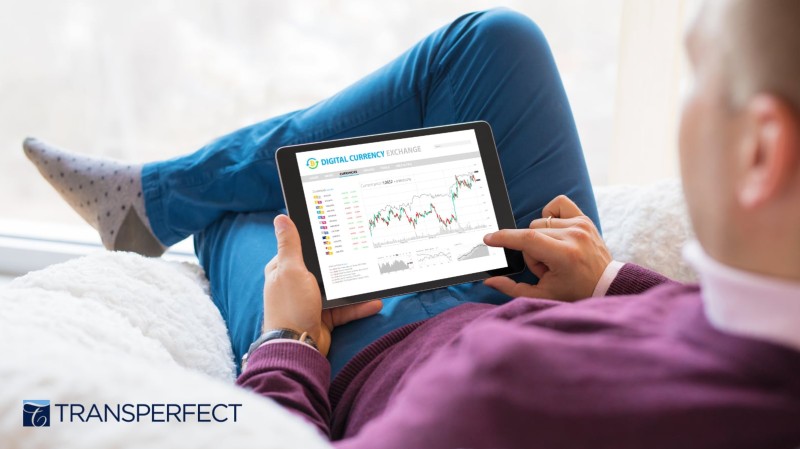
A cryptocurrency exchange serves a global and decentralized market. But users may not read English as their first language. Multilingual content covers marketing, account registration, trading interfaces, compliance, help documentation, and employee training. Global support affects customer trust and platform access. The relevant details include supported languages, translated financial terminology, local payment methods, regional compliance, identity requirements, and whether customer support speaks your language.
A TransPerfect article noted that nearly half of cryptocurrency holders bought their first digital asset in 2021, with a global population of 300 million crypto users at that point. Cryptocurrency terminology like Proof of Stake, altcoins, hash rate, tokens, and whale doesn't always translate directly. Marketing, educational, compliance, and trading materials need translators who understand both the technical concepts and the financial context. Getting translations wrong erodes trust fast.
Platform Comparison: Five Apps Reviewed
Let me break down five platforms that represent different approaches to the cryptocurrency trade app space. Each one has a different user base, fee structure, and feature set. The right choice depends on what you actually need to do - quick mobile buys, advanced trading, institutional services, or something else entirely.
Five cryptocurrency platforms compared
- eToro : Over 50 cryptocurrencies, 1% buy and 1% sell fees, minimum deposit $10, no prior investment experience needed, optimized for iOS and Android, supports fractional purchases
- Crypto.com : Founded in 2016, serves 50+ million users worldwide, 250+ digital assets, 2.99% instant card fee, 0.40% market taker fee, quick KYC via photo ID upload, savings accounts with interest
- Coinbase : One of the most accessible options for first-time buyers, guided step-by-step mobile purchases, top 25 digital assets by market cap, PIN plus SMS two-factor authentication, optional Visa debit card with up to 4% back
- Binance : More than 1,000 markets, 0.10% max trading fee, lower rates for active traders and BNB holders, described as the world's largest exchange by trading volume and liquidity, suitable for intermediate and advanced traders
- Bitstamp : Established in 2011, one of the longest-running exchanges, 50+ cryptocurrencies including BTC and ETH, 0.5% standard fee reduced to 0.25% above $10,000 monthly volume, 98% cold storage for customer assets
Finding the Best Apps for Trading Crypto
If you're shopping around for the best apps for trading crypto , start with your actual use case. Are you making small regular buys on mobile? Are you running trading bots with API access? Are you staking coins or just holding a few? Different apps optimize for different paths.
For beginners, Coinbase and eToro lead the pack. They guide you through the trading process without drowning you in charts. For intermediate to advanced users, Binance offers depth in order types and derivatives. The key metrics to compare are fees, asset coverage, security track record, and whether the platform you want actually supports the coins you care about. Don't just chase the lowest fee - a platform that doesn't list your target asset is useless regardless of cost.
Profitable participation depends on understanding the market and using a reliable application with appropriate information and tools.
Peer-to-Peer Trading Mechanics
P2P trading means finding a counterparty directly rather than using a centralized exchange to execute the trade immediately. You propose an exchange of one coin for another at a stated rate. Another user accepts the order. A supported platform can lock the transaction in a smart contract to give you assurance that both sides will complete the agreed exchange.
The protection matters even when the participants know each other. A buyer could send cryptocurrency without receiving the agreed asset. A seller could keep funds after the buyer's payment clears. Smart-contract escrow holds the relevant assets until the specified trade conditions are met. The platform becomes critical because it controls order matching, transaction records, escrow, and dispute handling. Without that, you're just trusting a stranger on the internet.
P2P trading risks and safety practices
- Only trade with counterparties you can verify - check reputation, history, and reviews
- Never pay for duplicate or repeated orders - confirm once and move on
- Stay within the platform's protected transaction process - don't move conversations outside
- Double-check the counterparty's wallet address or payment details before sending funds
- Payment reversals are a real risk - a buyer can get crypto and then cancel the bank payment
For flexible rates, P2P lets you pick a rate that differs from the prevailing market price. That helps with low-liquidity tokens or transactions that would face high exchange slippage. A targeted buyer might offer more or less than the market rate. P2P also handles NFT purchases well since negotiated transactions can be structured around a specific asset and settlement method. Some P2P transactions feature low or zero platform fees since users transact directly. You can even find arbitrage opportunities - buy cheap on one marketplace, sell high on another.
Decentralized Exchanges and Liquidity Pools
On September 30, 2021, BISON added Chainlink and Uniswap to its tradable app. At that time, LINK and UNI were among the world's top 15 cryptocurrencies by market cap. Those two tokens joined Bitcoin, Ethereum, Litecoin, XRP, and Bitcoin Cash in BISON's listed portfolio.
Uniswap is a decentralized exchange that uses open-source software and automated mechanisms instead of a conventional order book. Launched in 2018 by Ethereum developer Hayden Adams, the network has more than 200 decentralized finance integrations. UNI serves as the platform's governance token. It helps secure and manage the protocol, and UNI holders vote on decentralized governance decisions about the project's future.
Transactions execute without a traditional intermediary. Liquidity pools hold assets, and smart contracts define which trading pairs are possible and process requests. An algorithm adjusts exchange rates based on pool conditions. The rate comes from pool liquidity, not from matching orders in a book. That's why Uniswap's architecture doesn't use the same supply-and-demand order-book mechanism you find on centralized exchanges. The platform fee is 0.3% per exchange, with actual costs affected by liquidity conditions.
Token providers deposit assets into a pool. When someone wants to acquire a token, another pool asset pays for it. Smart contracts validate and process the exchange. After a trade, the pool inventory recalibrates automatically. Low liquidity in a pool means bigger price swings. You can end up paying more or receiving less than expected, especially on smaller or newer token pairs.
Uniswap and liquidity pool mechanics
- Automated liquidity pools replace traditional order books
- Smart contracts define valid trading pairs and process exchanges
- Algorithm adjusts exchange rates based on pool inventory
- UNI governance token launched in September 2020 as an ERC-20 token
- 0.3% platform fee per exchange, modified by liquidity conditions
KvaPay Walkthrough: Selling and Cashing Out
KvaPay documentation describes cryptocurrency selling as a process for converting digital assets into fiat currency. The platform runs a crypto exchange, wallet, payment links, point-of-sale terminal, e-commerce checkout, API, business account, and cash withdrawals through its Kvakomat ATM network. The exchange supports swaps for EUR or CZK, along with fiat, cryptocurrency, and cash withdrawal options. KvaPay holds a license to provide crypto-asset services under the MiCA Regulation and is supervised by the Czech National Bank.
Choosing what to sell depends on your desired proceeds, the symbol, demand, and liquidity. Highly liquid cryptocurrencies with high trading volume support faster processing and reduce price slippage. The account holder must verify their identity before buying or selling. KvaPay runs a KYC procedure where you upload ID documents. The registration process starts at their web app. You enter an email, create a complex password (uppercase, lowercase, numbers, special symbols), and avoid easily guessed phrases. After email confirmation, you log in, click "Verify now," choose personal or business, enter a phone number, and complete the KYC flow.
Depositing crypto starts on the Deposit page under the Crypto tab. Select the coin you want to sell. The site shows a wallet address. You send your cryptocurrency to that address and wait. KvaPay says this usually takes less than 10 minutes. Once the deposit lands, you move to the Exchange page. Select the coin to sell from the "From" menu, pick your destination currency in the "To" menu, enter the amount, and review the displayed exchange rate. If it works for you, click Exchange and confirm. The sale is done.
Withdrawing fiat gives you two routes. A SEPA bank transfer requires going to the Withdraw page and selecting "Send to bank." Pick EUR or Czech koruna, enter the amount, and supply your destination bank account number. For cash, select "Withdraw cash at ATM." Choose your currency, find a Kvakomat ATM on the map, enter the amount, and collect the cash in person. The ATM network handles the physical side, while the platform manages the digital transfer.
Altify: Global Pricing and Quote Systems
Altify's Smart Trade System routes orders through aggregated global liquidity. Its displayed cryptocurrency prices combine information from exchanges like Binance and Kraken. The system continuously checks global order books and looks for the best execution route based on your asset, trade size, and available price. You don't need to compare prices manually across exchanges - the platform does it for you.
Every price and tradable market on Altify's dashboard comes from hundreds of globally aggregated order books. The system evaluates multiple execution routes according to trade size, asset selection, and price. A generated quote is held for 10 seconds. If you don't act within that window, you get a refreshed quote. Markets move fast - Altify notes that cryptocurrency prices can fluctuate by more than 10% within seconds. Your portfolio value can differ from the initial estimate because of market movement, fees, or spread.
Cryptocurrency markets are highly volatile and prices can move by more than 10% within seconds.
Altify's market eligibility rules require a cryptocurrency to be tradable against Tether (USDT). It also needs a trading pair with a currency like EUR, GBP, or ZAR against either USDT or BTC. Their example calculation for the SOL/ZAR market goes like this: Price of SOL/ZAR = (SOL/USDT ÷ BTC/USDT) × BTC/ZAR. Plug in the numbers - SOL at $195.00, BTC at $70,800, BTC/ZAR at R1,380,000 - and you get R3,800 per Solana. That's how cross-currency pricing from aggregated order books works.
Altify's broader service offerings
- Buy and sell over 50 crypto assets with recurring weekly or monthly dollar-cost averaging
- Index investing with exposure to large cryptocurrencies or sectors like Web 3.0 and DeFi
- Crypto bundles that automatically update and diversify holdings
- Stablecoins and crypto yield products for idle assets
- Over-the-counter desk for large orders and high transaction volumes
- Digital-asset custody in partnership with Fireblocks for institutional needs
Building a Cryptocurrency Trade App: Technical Considerations
A development overview emphasized that a cryptocurrency app handles money, sensitive data, and transaction-processing systems. Different products address different needs. An exchange platform supports buying and selling. A wallet stores digital assets. Remote custodial wallets need an online account, while physical cold wallets are managed through mobile or web applications. A broader product can combine exchange, wallet, card, merchant-payment, professional-trading, and institutional services. Traditional finance apps can add cryptocurrency as an optional function.
The number and sophistication of features determine your technology stack and team needs. You need registration and sign-in flows, profile settings, and account management. Since you're handling money and personal data, identity verification and anti-money-laundering controls add significant development weight. The trading engine must process transactions securely and quickly - handling many buys and sales concurrently, matching transactions, and maintaining exchange rates. User-facing flows should stay intuitive while backend systems validate balances, orders, settlement, and market conditions.
Core components of a cryptocurrency app
- Product scope: exchange, wallet, cards, merchant payments, professional trading, institutional services
- User accounts: registration, sign-in, profile, settings, and identity verification
- Trading engine: concurrent order processing, matching, and real-time rate updates
- Notifications: push alerts for new coins, features, maintenance, and operational updates
- Administration: user management, content control, financial transaction oversight, and support tickets
- Security: 2FA, encryption, SQL injection prevention, DDoS protection, biometric auth, CSRF/SSRF protection, KYC/AML integration
Tech choices matter and depend on your product goals, user expectations, and resources. Backend options include Java and Node.js. Frontend choices are Angular and Vue.js. Native mobile development uses Swift for iOS and Kotlin for Android. Flutter works for cross-platform. You can start with a web app and add mobile later. Push notifications handle alerts. Testing covers security, API connections, integrations, performance, and usability. The release phase covers app-store submission and marketing. Maintenance resolves defects, provides support, updates software, and adds features. A service-level agreement defines ongoing support responsibilities. The development flow goes from workshops to UX/UI design, then backend and user-facing application builds, testing, release, and maintenance.
Risk Disclosures: Read Before You Trade
Trading and investing in cryptocurrency involves significant risk. You can lose your entire investment. Crypto markets change fast - a position can lose value between the moment you place your order and when it settles. P2P trading adds risks from delayed counterparties, low liquidity, duplicate-order scams, incorrect addresses, payment reversals, and attempts to move transactions outside protected platforms. Futures and forex trading can involve substantial risk and isn't suitable for every investor. Past performance does not indicate future results.
You should not invest more than you can afford to lose and before investing, please take into consideration your level of experience, investment objectives, and seek independent financial advice if necessary.
Cryptocurrency markets can experience sudden and substantial fluctuations. Prices can move by more than 10% within seconds. Past performance does not guarantee future results, and returns cannot be guaranteed. Some platforms' assets are not covered by deposit guarantee or investor compensation schemes. Tax treatment depends on your individual circumstances and may change. Services and features can be limited by local laws and eligibility criteria. These are not theoretical risks - they're the reality of trading digital assets. I wanted to make sure I covered the technical landscape of crypto trading apps that exist today, but none of this changes the fundamental risk. Do your homework, start small, and never bet more than you can lose.
If you're comparing platforms , focus on what you actually need: asset availability, true total costs (fees plus spreads), security track record, payment method support in your country, and interface complexity that matches your skill level. I've walked through the major pieces here - from fee structures and liquidity mechanics to security implementations and development architecture. The right platform for you depends on your use case, not marketing claims or community hype. Take the time to set up two-factor authentication, use strong passwords, and understand how each platform's withdrawal process works before you need it. The space moves fast, but these fundamentals stay the same.
The app acts as the exchange: it shows you real-time prices, takes your deposits, and lets you move between coins and fiat.








Comments on “How to Choose the Best Cryptocurrency Trade App for Your Needs”
No comments yet. Be the first to share your thoughts.